
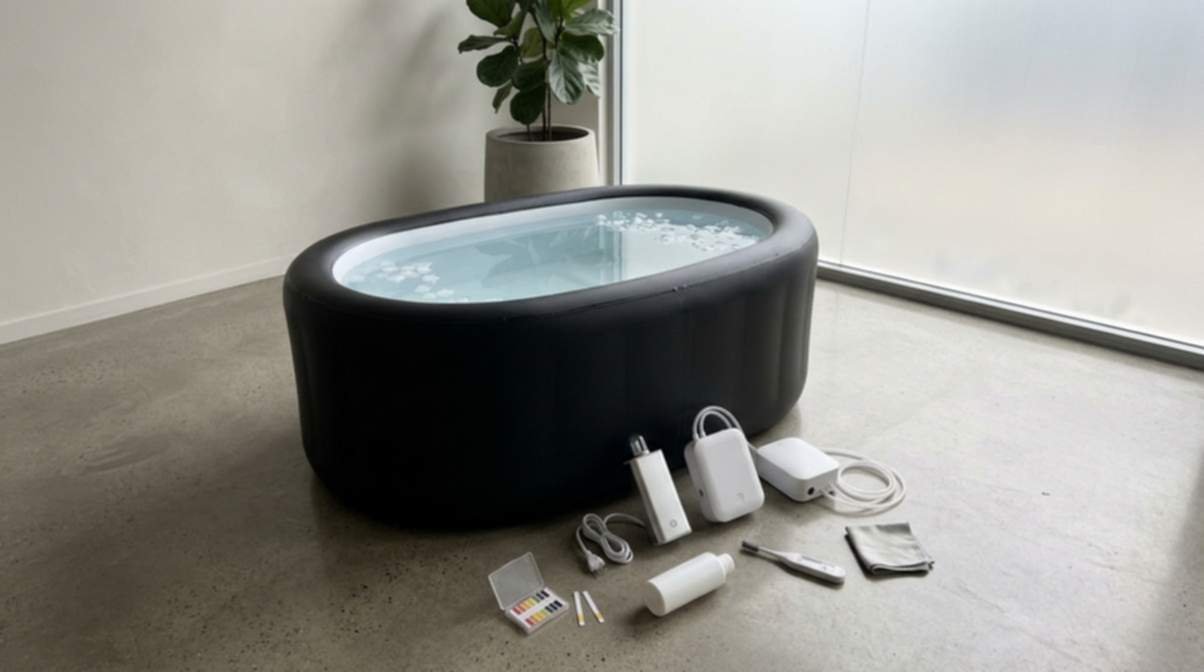
KEY TAKEAWAY: For most single-person cold plunges, UV-C plus mechanical filtration is the simpler, lower-maintenance setup. Ozone is stronger for oxidising sweat, body oils and some biofilm, but neither ozone nor UV leaves a lasting sanitiser in the water, so shared or high-use tubs still need tested chlorine or bromine plus clean filters.
You know the feeling: you lift the cover, the water looks clear, and the plunge is sitting at the perfect bitey temperature. But clear water is not the same as safe water. A cold plunge collects sweat, body oils, skin cells, hair, dirt from feet, and whatever is sitting in the plumbing between sessions.
That is where the ozone vs UV cold plunge debate gets messy. Brands often talk as if one technology magically replaces all water care. It does not. UV and ozone are useful tools, but they do different jobs. UV disinfects water as it passes through a chamber. Ozone is an oxidiser that reacts with organic contaminants in the circulation line.
If you are comparing tubs, this guide sits alongside our comparison of the best ice baths in Australia. If you already own a setup and want the wider maintenance picture, see our guide on how to keep cold plunge water clean.
Below, we break down how UV and ozone work, what each one is good at, what each one misses, and the non-negotiable part most marketing skips: water needs circulation, filtration, testing, hygiene, and in many shared or high-use setups, a residual sanitiser.
Safety warning before you plunge This article is about water treatment, not medical advice. Cold water immersion still carries shock, breathing, hypothermia, cardiac and drowning risks. Start warmer and shorter than you think you need: 10-15°C is generally considered a safer range for most people, and beginners should begin with short durations while acclimatising. Keep your head and neck out of the water. Do not plunge alone. People over 50, pregnant users, anyone with cardiovascular, blood pressure, respiratory, neurological or fainting-related conditions, and anyone on medication that affects heart rate or blood pressure should speak with a GP first. Royal Life Saving Australia also notes that CWI water may need appropriate sanitation depending on bather load, filtration and circulation.
Safety source: Royal Life Saving Society Australia – Cold Water Immersion Therapy position statement.
Already know what you’re after? The Prodigy X water chiller is one of our top picks for treating cold plunge water, so feel free to check current pricing below.
ozone vs UV for cold plunge water treatment
| Factor | UV-C water treatment | Ozone water treatment | Plain-English verdict |
| Main job | Inactivates microbes as water passes the UV chamber. | Oxidises contaminants and can inactivate a wide range of microorganisms when dissolved in water. | UV is a disinfecting pass-through tool. Ozone is an oxidation tool. |
| Best at | Low-maintenance microbial control in clear, well-filtered water. | Breaking down sweat, oils, odours and some plumbing biofilm load. | For solo home plunges, UV is often simpler. For higher bather load, ozone has a stronger oxidation role. |
| What it misses | Does not remove debris, sweat, oils or biofilm by itself. No residual protection after water leaves the chamber. | Does not remove debris. No lasting residual after ozone is consumed or removed. | Both need a proper filter. Neither is a complete water-care plan alone. |
| Safety / comfort | No ozone gas. Lamp sleeves need cleaning and bulbs need replacing. | Ozone gas can irritate lungs if it off-gasses. Systems need correct design, off-gas control and ventilation. | UV is easier to live with indoors. Ozone needs more respect. |
| Best fit | Single-person home tubs with good filtration, showers before use and regular testing. | Daily use, shared tubs, outdoor tubs, or users who need stronger oxidation and are willing to maintain the system. | Choose by bather load, not by marketing headline. |
| Still needs | Circulation, filtration, cleaning, water testing, and often chlorine or bromine in shared/high-use settings. | Circulation, filtration, ozone-safe plumbing, gas control, water testing, and often chlorine or bromine. | The boring basics do most of the work. |
What cold plunge water treatment actually has to do
KEY TAKEAWAY: A clean cold plunge system has to do four jobs: circulate the whole volume, catch physical debris, reduce microbial risk, and control organic load from bathers. UV and ozone only cover part of that job.
A cold plunge is a small body of recirculated water with a high bather-to-water ratio. That means one sweaty session can matter more than it would in a large pool. The treatment system has to handle:
- physical debris such as hair, lint, leaves and skin cells
- dissolved organics such as sweat, oils, sunscreen and moisturiser
- microorganisms introduced by bathers or the environment
- biofilm risk inside hoses, pipes, pumps and filter housings
- water balance, especially if chlorine or bromine is used
Public health guidance on cold plunge tanks is still thinner than the guidance for pools and hot tubs, but the direction is consistent: ozone or UV should be treated as support systems, not magic replacements for residual disinfection. The National Collaborating Centre for Environmental Health states that ozone or UV must be used with a bromine or chlorine disinfectant because they do not provide residual disinfection in the water; it also notes that UV effectiveness is affected by water turbidity. NCCEH source.
That is the key distinction: a system can kill or inactivate organisms inside a treatment chamber, then still leave the rest of the tub vulnerable between circulation cycles if there is no residual sanitiser in the bulk water.
How UV-C cold plunge water treatment works
KEY TAKEAWAY: UV-C treats water only while that water is passing the lamp chamber. It can be very useful in clear, well-filtered water, but it does not clean the tub walls, remove debris, or leave any ongoing sanitiser behind.
UV-C systems place a lamp inside a sealed chamber in the recirculation line. As water flows past, the light damages microorganisms so they cannot replicate. Queensland Health describes UV as a powerful secondary disinfectant that inactivates microorganisms by damaging nucleic acid, while also noting that UV has no lasting residual and is not considered a primary disinfectant. Queensland Health source.
For cold plunges, that creates a practical rule: UV works best when the water is already moving and clear. If the filter is clogged, the flow rate is wrong, or the quartz sleeve around the lamp is dirty, the dose reaching the water drops. Queensland Health also notes that water clarity and flow rate can affect UV effectiveness, and that lamp sleeves need regular cleaning to maintain the correct dose. Queensland Health source.
For a home user who showers first, plunges alone, keeps the filter clean and tests the water, UV-C can be a neat option. There is no ozone smell, no off-gassing system to worry about, and maintenance is mostly about keeping the sleeve clean and replacing the lamp on schedule.
Where UV is strong
- Low daily fuss for a single-user or low-use home tub.
- Good microbial control when water is clear and the unit is correctly sized.
- No ozone gas, which makes it more comfortable for indoor bathrooms, garages and wellness rooms.
- Simple plumbing compared with properly designed ozone injection systems.
Where UV falls short
- It only treats the water that passes the lamp.
- It does not oxidise sweat, body oils or moisturiser the way ozone can.
- It does not remove leaves, grit, hair or fine particles. The filter does that.
- It gives no residual protection once the water is back in the tub.
- Dirty sleeves, old lamps, poor flow and cloudy water can all reduce performance.
How ozone cold plunge water treatment works
KEY TAKEAWAY: Ozone is a strong oxidiser. In a cold plunge, its value is less about “chemical-free magic” and more about breaking down organic load before the water returns to the tub.
Ozone systems generate O3 and inject it into the circulation line, usually through a venturi or mixing point. When ozone dissolves in water, it reacts with microorganisms and organic material. Queensland Health describes ozone as a highly reactive gas that can inactivate a wide range of disease-causing microorganisms, but also says it is not a primary disinfectant because it provides no lasting residual. Queensland Health source.
This is why ozone is popular in higher-use cold plunge setups. It can help with the stuff users actually notice: less odour, less cloudiness, less gunk in the plumbing, and fewer gross filter changes. But those benefits depend on correct system design. A weak ozone unit bubbling into the tub is not the same thing as a controlled ozone contact system with safe off-gas management.
The safety part matters. Queensland Health notes that ozone can cause respiratory irritation when it returns to gas and that treated water should be quenched before it returns to where bathers are exposed. The US EPA also states that inhaled ozone can damage the lungs and that low amounts can cause coughing, chest pain, shortness of breath and throat irritation. Queensland Health source EPA source.
Where ozone is strong
- Oxidising sweat, oils and organic contamination introduced by bathers.
- Helping with odour and water clarity when paired with filtration.
- Reducing some contaminant load before the residual sanitiser has to work.
- Supporting higher-use tubs where the water takes more abuse between changes.
Where ozone falls short
- It still does not remove physical debris. You need a filter.
- It does not leave lasting residual protection in the tub water.
- It needs correct plumbing, contact time, one-way valves and gas management.
- Ozone can irritate lungs if the system off-gasses into an enclosed space.
- It can be harder on some components if the equipment is not ozone-rated.
So, is ozone or UV better for a cold plunge?
KEY TAKEAWAY: There is no universal winner. UV is usually the easier choice for low-use home tubs; ozone is the stronger choice when bather load and organic contamination are the bigger problems.
If you want the cleanest possible answer, use bather load as the decision point.
| Cold plunge setup | Better first choice | Why |
| Solo home user, 2-4 sessions per week | UV-C plus filtration | Low fuss, no ozone smell, simple maintenance, enough support when water is clear and the user showers first. |
| Daily home user or two-person household | UV-C or ozone, depending on tolerance for maintenance | UV is simpler. Ozone helps more with organic load if the tub is used heavily. |
| Outdoor tub exposed to leaves, sunscreen and dust | Ozone plus strong filtration | The main problem is often organic load and debris, not just microbes passing a UV lamp. |
| Shared recovery space, gym, studio or clinic | Professional system with filtration, residual disinfectant and secondary treatment | Do not rely on UV or ozone alone. Follow local public health requirements and keep documented testing records. |
| Indoor bathroom or poorly ventilated garage | UV-C is usually more practical | Ozone needs proper off-gas control and ventilation because inhaled ozone is a respiratory irritant. |
| DIY chest freezer plunge | Filtration plus carefully managed sanitiser first; UV or ozone only if properly installed | Cheap UV aquarium clarifiers and basic ozone gadgets can create false confidence if the water is not tested. |
Cut-the-BS version: a brand saying “ozone is chemical-free” or “UV means no chemicals” is skipping the inconvenient part. Public aquatic guidance treats UV and ozone as adjuncts or secondary systems. NSW Health lists ultraviolet light without chlorine or bromine and ozone without chlorine or bromine as unsatisfactory disinfectant systems for public swimming pools and spa pools. NSW Health source.
What neither UV nor ozone replaces
KEY TAKEAWAY: UV and ozone are not substitutes for filtration, hygiene, testing or residual sanitiser where the bather load requires it.
Mechanical filtration
Filters catch what UV and ozone do not: hair, grit, skin flakes, lint and other particles. A cleanable cartridge or inline filter is the part that makes water look clean. UV and ozone are there to support water quality, not physically strain the tub.
Circulation
Water treatment only works if water moves. Dead zones around steps, seats, hose bends and low-flow plumbing can stay dirty even while a treatment device is running elsewhere.
Pre-plunge hygiene
Showering before entry is one of the cheapest ways to improve water quality. Less sweat, deodorant, sunscreen and body oil means less oxidiser demand and fewer filter problems.
Water testing
You cannot smell safe water. Test strips are imperfect, but they are better than guessing. For tubs using chlorine or bromine, follow the product label and local guidance for pH and residual levels.
Regular draining and cleaning
No treatment system makes water immortal. Drain frequency depends on water volume, bather load, hygiene habits, filter condition, water chemistry and whether the tub is outdoors.
CDC hot tub guidance recommends checking disinfectant and pH with test strips and lists pH 7.0-7.8, chlorine at least 3 ppm and bromine 4-8 ppm for hot tubs. Cold plunge requirements vary by setup and jurisdiction, so treat these as a public-health reference point, not a private-tub prescription. CDC source.
If you’d rather sort your water treatment setup now, the Prodigy X water chiller is the pick we’d point you towards from this guide.
Australian-specific considerations
KEY TAKEAWAY: In Australia, the safest way to think about UV and ozone is as support technology. If a cold plunge is shared, public-facing or commercial, get water-quality advice that fits your state or territory rules.
Private home cold plunges are one thing. A gym, recovery studio, Airbnb, clinic or wellness centre is another. Once other people are paying, sharing, or relying on your setup, the risk profile changes. You need clearer rules for testing, record keeping, cleaning, bather load and emergency response.
Queensland Health recommends secondary disinfection for new high-risk public aquatic facilities for extra protection against Cryptosporidium and explains that UV and ozone are secondary disinfectants, not primary disinfectants. Queensland Health source CDC guidance for public aquatic operation also tells operators to ensure disinfection, secondary disinfection such as UV and ozone, recirculation systems and filters are operating, and to inspect for biofilm where relevant. CDC source.
For IceBathLab readers comparing equipment, this is why our testing methodology looks beyond the tub shell. Filtration, chiller reliability, insulation, covers, water-care access and maintenance burden all affect whether a cold plunge stays usable after the first month.
Simple maintenance protocol by setup type
KEY TAKEAWAY: The best water-treatment system is the one you will actually maintain. Start with hygiene and filtration, then add UV or ozone based on use.
| Setup | Daily / each use | Weekly | Monthly / as needed |
| Solo home tub with UV | Shower first. Keep lid on. Check water clarity and smell. | Rinse filter. Test pH and sanitiser if used. Wipe scum line. | Inspect UV sleeve and replace lamp per manufacturer schedule. Drain if water is cloudy, smells off or testing is unstable. |
| Home tub with ozone | Run circulation/ozone cycle as designed. Do not inhale trapped gas when opening the lid. | Rinse filter. Check ozone tubing, check valve and connections. Test water. | Inspect ozone generator and off-gas path. Replace parts per manufacturer schedule. Drain and clean when water quality drops. |
| DIY cold plunge | Shower first. Cover the tub. Do not rely on clear water alone. | Clean filter thoroughly. Test and adjust sanitiser carefully. | Drain and clean more often than a purpose-built tub, especially in warm weather or high use. |
| Shared or commercial tub | Check and record water tests before use. Control bather load. Enforce showering. | Clean filters, inspect plumbing and review logbook. | Use a professional water-quality plan, documented maintenance and state/territory advice. |
If you are still choosing the tub itself, compare water-care setup alongside chiller power, insulation and warranty. Our best portable ice baths in Australia guide is a good place to compare lower-fuss options, and our DIY cold plunge guide explains why homemade systems usually need more frequent water changes.
IceBathLab recommendation
KEY TAKEAWAY: If you are buying for one person at home, choose the system that makes maintenance easy. If you are buying for multiple users, prioritise water-quality control over convenience claims.
For most home users, we would rather see a well-filtered UV-C setup that gets maintained than a poorly installed ozone system that smells sharp, scares users and never gets checked. UV is not perfect, but it is straightforward.
For higher-use tubs, ozone becomes more attractive because the water is dealing with more organic load. The important phrase is “properly installed”. Ozone should be generated, mixed, given contact time, managed for off-gas, and paired with filtration and testing. A small bubbling gadget does not equal a water-treatment system.
For any shared setting, do not frame this as ozone versus UV alone. The safer question is: what complete water-care system will keep the tub within safe limits between every user? That answer usually includes circulation, filtration, a validated sanitiser plan, routine testing, cleaning records and staff who know what to do when the water fails a check.
Keep the Water Clean
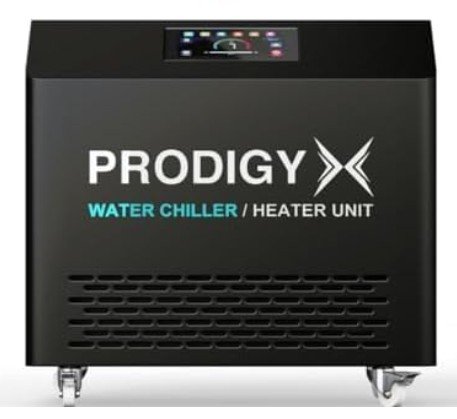
TOP PICK
Prodigy X Water Chiller
The Prodigy X water chiller is the top pick from our chiller and water-treatment guide, keeping tub water at a stable, controlled temperature.
FAQs: ozone vs UV cold plunge water treatment
Is ozone or UV better for a cold plunge?
Ozone is better for oxidising sweat, oils and organic load, while UV is simpler for low-use microbial control in clear water. For most solo home users, UV-C plus filtration is easier; for shared or high-use tubs, ozone can be useful if it is properly installed and paired with testing and residual sanitiser.
Do I still need chlorine or bromine with UV in a cold plunge?
Shared or high-use cold plunges should not rely on UV alone because UV leaves no lasting residual in the water. NCCEH says ozone or UV must be used with bromine or chlorine because neither provides residual disinfection. NCCEH source.
Do I still need chlorine or bromine with ozone in an ice bath?
Ozone can reduce contaminant load, but it does not provide lasting residual protection in the tub water. Public aquatic guidance treats ozone as a secondary or adjunct system, not a stand-alone primary disinfectant. NSW Health source.
Does ozone work in cold plunge water?
Yes, ozone can work in cold water, but the system design matters more than the sales claim. It needs correct injection, mixing, contact time, ozone-safe components and off-gas control.
Is ozone safe for an indoor cold plunge?
Ozone can be safe only when the system is designed so users are not inhaling ozone gas. Ozone is a respiratory irritant, so indoor tubs need proper equipment, ventilation and off-gas management. EPA source.
Can UV remove sweat, oils and body products?
No, UV does not remove sweat, oils, sunscreen or body products. It inactivates microbes as water passes the lamp, while the filter and oxidisers handle other parts of the water-quality problem.
Can ozone replace a cold plunge filter?
No, ozone cannot replace a filter. Ozone can react with dissolved contaminants, but a filter is still needed to catch hair, dirt, leaves and fine particles.
How often should I run UV on a cold plunge?
UV should run according to the manufacturer’s circulation and flow-rate requirements. In practical terms, it only treats water while water is moving through the UV chamber, so circulation time matters.
How often should I run ozone on a cold plunge?
Ozone should run according to the ozone system design and manufacturer instructions. More is not automatically better because ozone needs correct contact time and safe off-gas control.
What is the best water treatment for a home ice bath?
The best home ice bath water treatment is usually a combination of pre-plunge showering, a good lid, strong circulation, a clean filter, routine testing and either UV-C or ozone depending on use. For a low-use solo tub, UV is often the lowest-fuss option.
What is better for a commercial cold plunge: ozone or UV?
Commercial and shared cold plunges need a complete water-quality plan, not just ozone or UV. Use professional advice, local requirements, documented testing, filtration, residual disinfection and secondary treatment where required.
Is clear cold plunge water safe water?
Clear water is not automatically safe water. Some microbial or chemical problems are not visible, which is why testing, filtration, cleaning and bather hygiene still matter.
National Collaborating Centre for Environmental Health. Cold plunge tanks: Considerations for environmental public health.
Royal Life Saving Society Australia. Position Statement: Cold Water Immersion Therapy. 2024.
Centers for Disease Control and Prevention. What You Can Do to Stay Healthy in Hot Tubs. Updated 20 May 2025.
Centers for Disease Control and Prevention. Operating and Managing Public Pools, Hot Tubs and Splash Pads. Updated 10 Jan 2025.
Queensland Health. Water quality guidelines for public aquatic facilities: managing public health risks. December 2019. See sections 4.2.3.1 and 4.2.3.2.
NSW Health. Public Swimming Pool and Spa Pool Advisory Document. See section 4.5, Other disinfection systems.
US Environmental Protection Agency. Ozone Generators that are Sold as Air Cleaners.
Jarin M, Ly J, Goldman J, Xie X. Water Disinfection Systems for Pools and Spas: Advantages, Disadvantages, and Consumer Views in the US. ACS ES&T Water. 2025;5(2):525-538. DOI: 10.1021/acsestwater.4c00612.
Medical disclaimer: This article is general information only and is not medical advice. Cold water immersion may not be suitable for everyone. Speak with a qualified healthcare professional before starting cold exposure if you have a medical condition, are pregnant, are over 50, take medication affecting heart rate or blood pressure, or have any concerns.
