
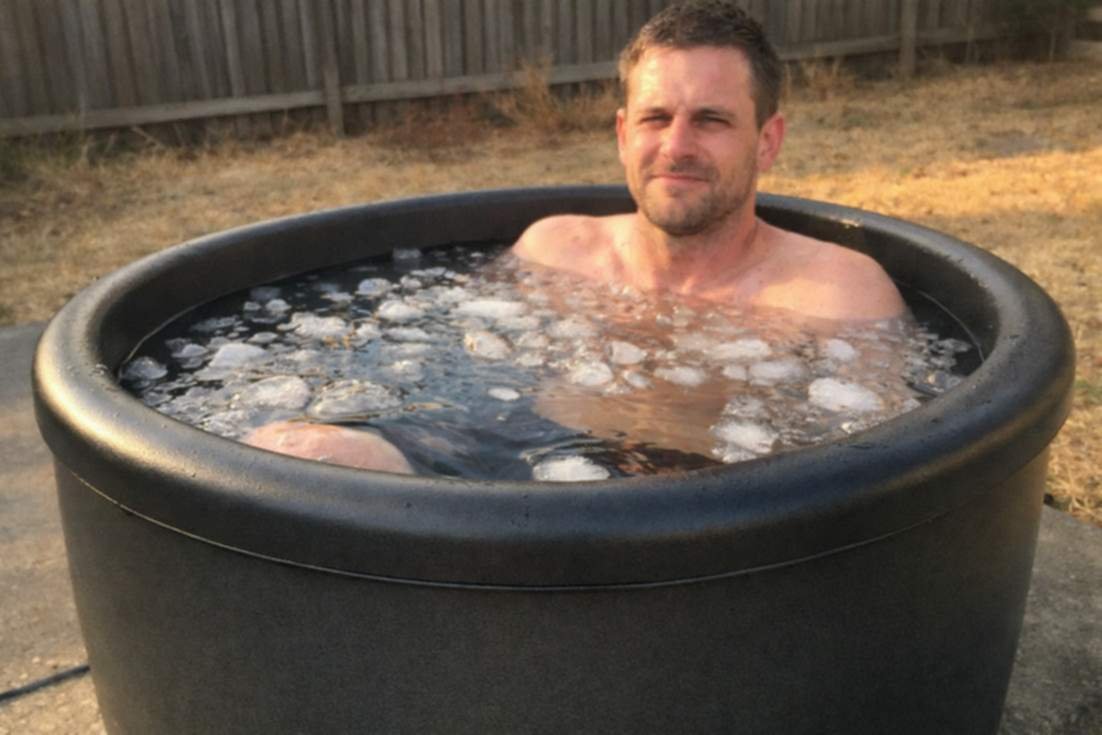
The first ten seconds are the worst. Skin tightens. Breathing turns sharp and shallow almost gasping. Every part of the brain screams the same thing: get out.
Then something strange happens around the 30-second mark. The breathing slows. The panic fades into something quieter. The legs that were throbbing after this morning’s deadlifts or last night’s footy training start to feel… different. Not numb exactly, but settled. Like someone turned the volume down on the soreness.
By the time two minutes have passed, most people stop thinking about the cold entirely. What’s left is a clarity that’s hard to describe and harder to get any other way a clean, alert stillness that sticks around long after the towel comes out.
That feeling is why ice baths went from physio rooms at NRL clubs and AIS training camps to suburban backyards across the country. From Bondi garages to Barossa Valley sheds, cold therapy in Australia is no longer a fringe thing done by elite athletes and Wim Hof disciples. It’s a 6am ritual for gym junkies, weekend runners, shift workers chasing better sleep, and CrossFitters who just want to squat again on Thursday without wincing.
The Australian market has caught up to the demand. There are now more than a dozen brands shipping from local warehouses, covering everything from $180 inflatable tubs to $8,000 cedar-and-stainless setups with Wi-Fi chillers that form actual ice. But more products also means more noise dropshippers relabelling imports as “premium recovery systems,” review sites quietly run by the brands they recommend, and health claims pulled from Instagram captions with nothing published behind them.
This guide cuts through that. Ten ice baths, all shipping from Australian, rated on build quality, temperature performance, usability, value, and comfort. Health claims backed by cited research. Honest pros and cons for every product including one that should be avoided entirely. And a straight answer to the question most guides dodge: what’s actually worth the money, and what isn’t.
Read This Before Anything Else
Cold water immersion has real health risks. This is not a warm bath with extra steps.
- Start at 12–15°C. Not 3°C. Not “as cold as possible.” 12–15°C.
- First sessions: 1–2 minutes. Build from there over weeks.
- Never plunge alone particularly in the first month.
- Hard no: cardiovascular disease, uncontrolled blood pressure, Raynaud’s disease, cold urticaria, pregnancy, open wounds.
- Over 50 or on blood pressure medication? Talk to a GP first. Seriously.
- If anything feels wrong numbness, chest tightness, dizziness get out. Immediately.
These aren’t suggestions. They’re the minimum. (Sources: Royal Life Saving Society Australia, AUSactive & SPASA, Position Statement on Cold Water Immersion Therapy Safety, 2024 ; Machado et al., Sports Medicine, 2016
The Short Version – Top Picks
| Category | Product | Price (AUD) | Score |
|---|---|---|---|
| Best Overall | Plunge City Sub-Zero | from $3,500+ | 4.5 / 5 |
| Best Premium Timber | Ritual Recovery Roman | from $4,800 | 4.3 / 5 |
| Best Value + Chiller | Vital+ Arctic White + X2 | from $1,828 | 4.3 / 5 |
| Best Budget + Chiller | Primal Ice Tub + Chiller | from $1,999 | 4.2 / 5 |
| Best Portable | Ritual Recovery Stoic | from $700 | 4.1 / 5 |
| Best Premium Cedar | Alpine Spas Cedar | from $7,500 | 4.4 / 5 |
| Best Handmade | Plunge By Pratt | from $4,500 | 4.0 / 5 |
| Best Under $200 | Ritual Recovery | from $200 | 3.9 / 5 |
| Best Ultra-Budget | Kylin Portable Oval | from $180 | 3.8 / 5 |
| For Teams / Commercial | PlusLife Health | from $5,500+ | 4.2 / 5 |
Full Specs Comparison
| Product | Type | Gets To | Litres | Chiller? | Warranty |
|---|---|---|---|---|---|
| Plunge City Sub-Zero | Composite tub | -2°C | 460L | Yes | 2 yr (5 yr avail.) |
| Alpine Spas Cedar | Cedar + 316 SS | 3°C | 350L+ | Yes | 5 yr / 2 yr |
| Vital+ White + X2 | Inflatable + chiller | 3°C | 300L | Yes (X2) | 1 yr |
| Ritual Recovery Roman | Cedar + SS | 3°C | 460L | Optional | 2 yr |
| Primal Ice + Chiller | Inflatable tub | 0°C | 300L | Yes (1HP) | 2 yr |
| PlusLife Health | Custom builds | 3°C | 500L+ | Yes | 2 yr + lifetime |
| Ritual Stoic | Inflatable | 3°C (w/ chiller) | 370L | Optional | 1 yr |
| Plunge By Pratt | Handbuilt | 3°C | 350L+ | Yes (0.8HP) | 2 yr / 1 yr |
| Vital+ Starter | Inflatable | Ice only | 300L | No | 1 yr |
| Kylin Oval | Inflatable | Ice only | 265L | No | 1 yr |
Top 10 Best Ice Baths
Best Overall: Plunge City Sub-Zero
IceBathLab Score: 4.5/5
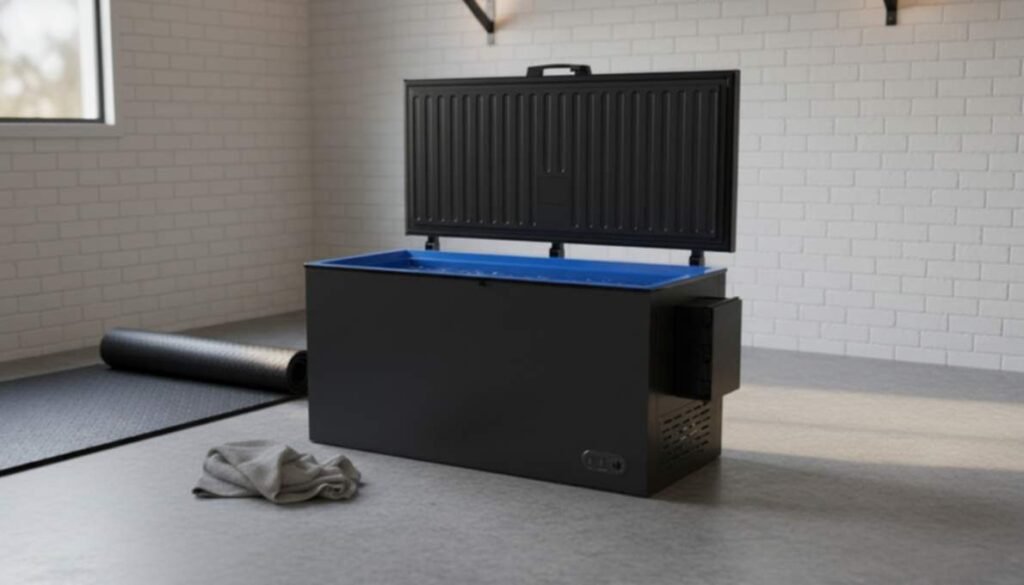
This is what happens when Australians get fed up with importing cold plunges from overseas and decide to build their own. Plunge City operates out of Sydney with a second showroom in Brisbane meaning the product can actually be seen and touched before buying. That alone puts it ahead of 90% of the market.
The Sub-Zero earns its name. It reaches -2°C cold enough to form solid chunks of ice inside the tub. At 153cm long, 72cm wide, and 82cm tall with a 460-litre capacity, it comfortably fits users up to 198cm (6’6”). The founder, Joel, is 6 foot and 95kg and uses it as his personal daily plunge, which says something about the sizing confidence.
Build quality is serious thick composite walls (2–3 times thicker than inflatable competitors), leak-proof drop-in construction, and materials rated for year-round Australian outdoor conditions. Temperature is controlled via an app or directly on the built-in digital display. The filtration system keeps water clean for months with minimal effort a fortnightly filter rinse is all that’s required.
Customer reviews mention the same things repeatedly: quiet operation, premium build feel, and customer support being unusually good for a small company.
Scores
| Category | Score | Notes |
|---|---|---|
| Build Quality | 5 / 5 | Thick composite walls, commercial-grade construction. Built for Aussie conditions. |
| Temperature | 5 / 5 | Reaches -2°C. Forms actual ice. Few competitors match this. |
| Setup & Usability | 4 / 5 | Plug into 240V, fill, set temperature. App or manual control. |
| Value | 4 / 5 | Premium price but undercuts comparable imports by thousands. |
| Comfort & Size | 4.5 / 5 | 460L, fits 6’6”. Full neck immersion with head-dunk option. |
Pros
- Reaches -2°C
- Sydney + Brisbane showrooms
- 2-year warranty (5-year upgrade available)
- App control
- Quiet operation
- Exceptional customer support reviews
- 24-hour dispatch
Cons
- Higher price than inflatable options
- Requires dedicated floor space
- Not portable once filled
Good for: Daily plungers who want the coldest, toughest option from an Australian company with local support and a real showroom.
Skip if: Budget is under $2,000 look at Vital+ Arctic White or Primal Ice instead.
Best Premium Timber: Ritual Recovery Roman
IceBathLab Score: 4.3/5
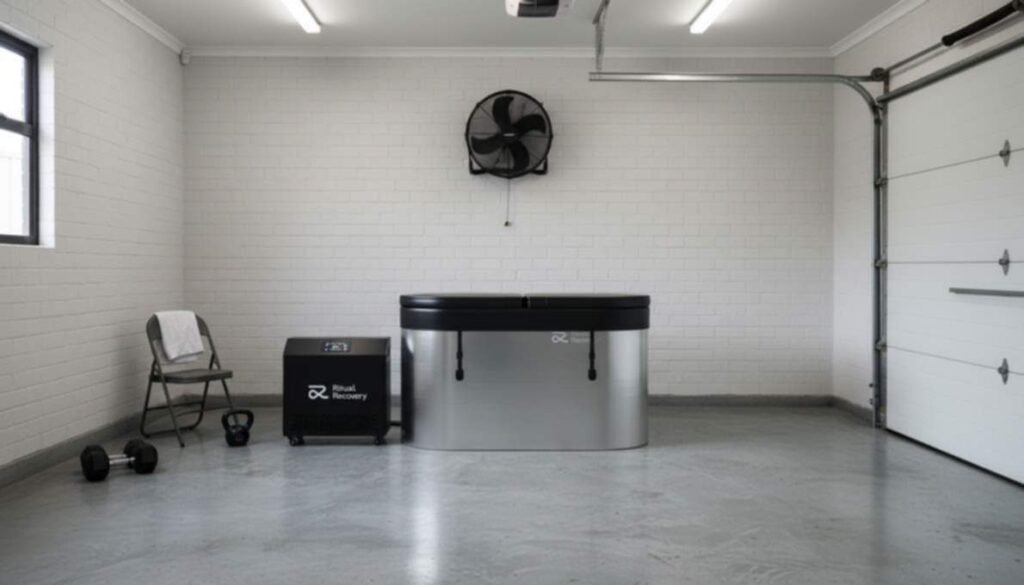
If the ice bath is going to live permanently in the backyard, it might as well look good. The Roman does. Stainless steel interior with red cedar timber panelling the kind of thing that makes neighbours ask questions over the fence.
Ritual Recovery is an Australian veteran-owned brand that ships free Australia-wide. The Roman is their flagship: 350 litres, built to handle UV, rain, and the full range of Australian temperatures. The chiller is sold separately (1HP standard or 2HP for hotter climates), and there’s a Wi-Fi app for controlling temperature remotely. Hot and cold capability on the Pro chiller models means the same unit handles contrast therapy without a separate setup.
One caveat worth flagging: the Roman was showing pre-order delivery for late May 2026 at time of writing. Check current lead times before ordering this is a handmade product, not warehouse stock.
Scores
| Category | Score | Notes |
|---|---|---|
| Build Quality | 5 / 5 | Stainless steel + cedar. Built for permanent outdoor Australian installation. |
| Temperature | 4.5 / 5 | 3°C with 1HP chiller. 2HP recommended for Darwin/Brisbane. |
| Setup & Usability | 3.5 / 5 | Heavier setup than inflatable. Needs flat, stable surface. |
| Value | 4 / 5 | From $4,800 for the tub. Free AU shipping is a solid inclusion. |
| Comfort & Size | 4.5 / 5 | 460L. Comfortable for users up to 206cm (6’9”). |
Pros
- Stunning cedar + stainless design
- Free AU-wide shipping
- Veteran-owned brand
- Wi-Fi app control
- Hot + cold on Pro model
- Military and first responder discounts
Cons
- Chiller adds $2,000–3,500 to the price
- Pre-order lead times (check current availability)
- Heavy requires permanent placement
Good for: Buyers who want a permanent, furniture-grade ice bath that earns its spot in the backyard.
Skip if: Quick delivery is needed, or the total budget including chiller is under $6,000.
Best Value With Chiller: Vital+ Arctic White + Ultra X2
IceBathLab Score: 4.3/5
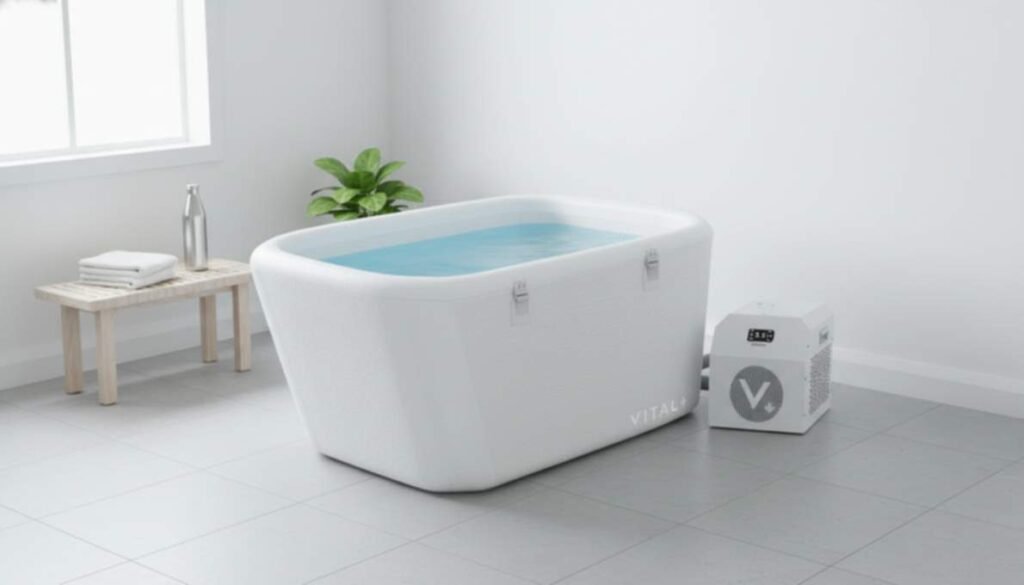
Here’s the maths that matters: $1,828 for a tub and chiller that reaches 3°C, shipped free from Sydney, with 290+ verified reviews averaging 4.9 out of 5. For context, most competitors charge $3,500+ for a comparable setup.
Vital+ is Australian-owned, designed in Sydney, and has shipped to over 55,000 customers (according to the company). The Ultra X2 chiller is the standout it’s the only unit on the market with built-in triple-stage purification, which keeps water clean for up to 8 weeks between changes. That’s roughly double what most competitors manage. App-controlled temperature scheduling means setting the morning plunge the night before it’s ready at the target temperature before feet hit the floor.
The tub itself is military-grade fibreglass-reinforced PVC with extra-thick insulation (rated at 10x their original model). Not as visually premium as cedar or acrylic, but functionally hard to fault at this price. Fits users up to 193cm.
The 30-day return policy removes the risk of buying blind uncommon at this price point.
Pros
- $1,828 for tub + chiller (on sale)
- Triple-stage filtration 8 weeks between water changes
- 290+ reviews at 4.9/5
- 30-day returns
- Ships from Sydney, 2–5 day delivery
- App control with scheduling
Cons
- 1-year warranty (competitors offer 2)
- Inflatable construction functional, not furniture
- Sale pricing may change
Good for: The sweet spot a chiller-equipped ice bath under $2,000 from a well-reviewed AU company with hassle-free returns.
Skip if: Aesthetics matter as much as performance. This is a workhorse, not a showpiece.
Best Budget With Chiller: Primal Ice Tub + Chiller
IceBathLab Score: 4.2/5
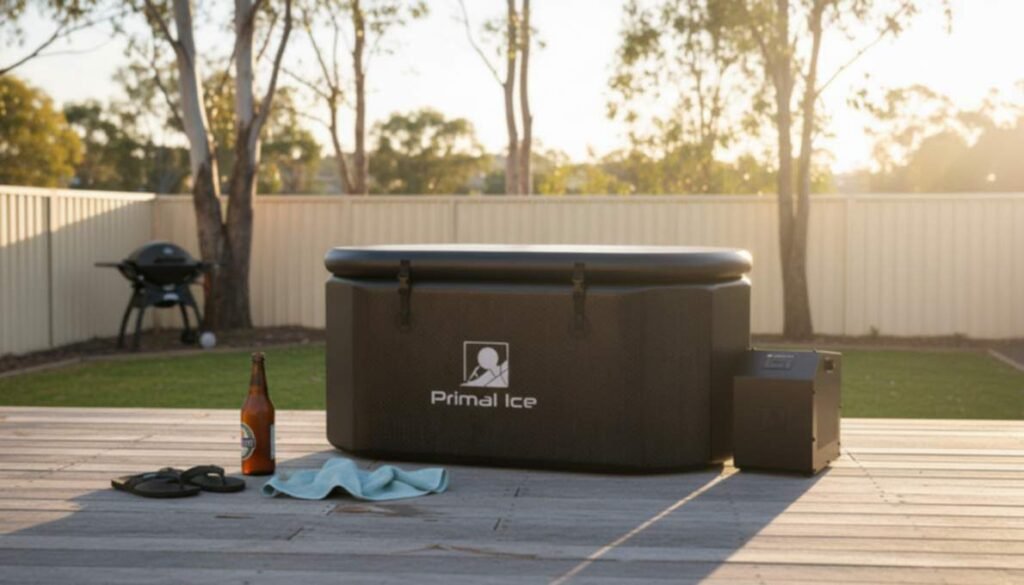
Primal Ice has one party trick that most competitors above $5,000 can’t match: the chiller reaches 0°C and actually produces ice. At $1,999 for the complete tub-and-chiller package, that’s remarkable.
The 1HP chiller comes with 20-micron filtration and full iOS/Android app control. The inflatable tub uses patented high-density drop-stitch construction and military-grade PVC, measuring 160cm x 75cm x 67cm. It’s a lay-down design that fits users up to 213cm (7’), with enough room to stretch legs fully.
Running cost sits around $0.50/day, comparable to Vital+ and significantly cheaper than buying servo ice. The 2-year warranty is also a step above several competitors at this price.
Pros
- $1,999 for tub + 1HP chiller
- Reaches 0°C literally makes ice
- 20-micron filtration + ozone
- App control
- 2-year warranty
- ~$0.50/day running cost
Cons
- Inflatable build won’t match acrylic/steel longevity
- Less visually premium than hardshell competitors
Good for: Anyone who wants the coldest possible water at the lowest possible price. The 0°C capability at under $2,000 is unmatched.
Skip if: A permanent hardshell build matters more than portability consider Plunge City or Alpine Spas instead.
Best Portable: Ritual Recovery Stoic
IceBathLab Score: 4.1/5
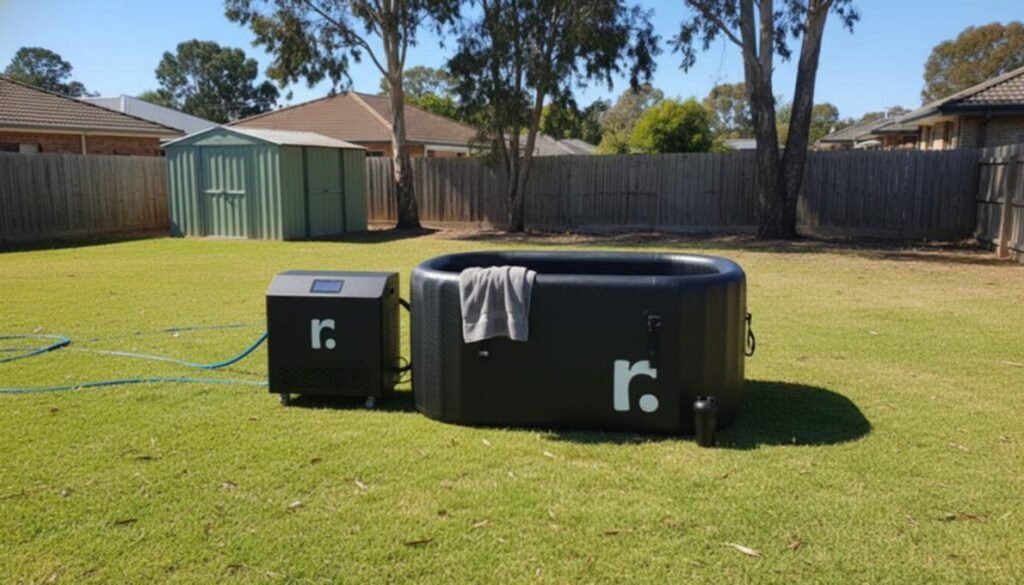
At $700 for the tub alone, the Stoic removes the biggest barrier to starting cold therapy: cost. It’s a military-grade drop-stitch PVC tub that inflates in under 15 minutes, holds 370 litres from a garden hose, and packs down into a carry bag that fits in a car boot. Two people can carry it empty without breaking a sweat.
The chiller is optional ($2,000–3,500 extra for a 0.8HP unit). Without it, 2–3 bags of servo ice gets the water to around 8–12°C fine for beginners and most general wellness use. With the chiller, it reaches 3°C but be realistic about the timeline. Manufacturer claims of “3-hour cool-down” don’t hold up in practice. Expect 10–14 hours from room-temperature tap water to minimum temperature, regardless of what the marketing says.
The tub comes loaded with accessories: lockable cover, carry bag, non-slip mat, pump, filter, and skimming net. Free Australia-wide shipping.
Pros
- $700 for a full-size tub
- Genuinely portable carry bag, car-boot friendly
- Free AU shipping
- Military-grade construction
- Accessories included
- Hot + cold on chiller model
Cons
- 0.8HP chiller is slower than 1HP competitors tough in Darwin/Brisbane summer
- Without chiller, ice costs ~$10–15/session
- Fits up to ~185cm taller users bend knees
Good for: Renters, athletes who train at multiple spots, anyone who wants to start at $700 and add a chiller later.
Skip if: Over 190cm, or in a tropical climate wanting guaranteed sub-5°C without a bigger chiller.
Best Premium Cedar: Alpine Spas Cedar Ice Bath
IceBathLab Score: 4.4/5
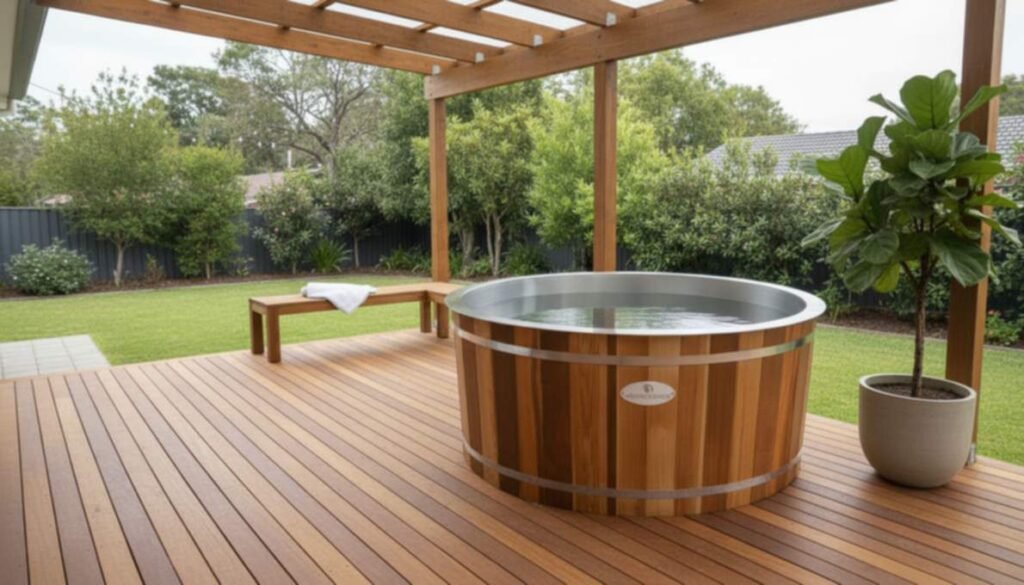
The Alpine Spas Cedar is what the Odin should have been if Odin hadn’t collapsed. Certified Canadian Red Cedar exterior, 316 marine-grade stainless steel liner, and the AlpineChill unit handling temperatures from 3°C to 40°C via Wi-Fi app control. Available in standard and XL sizes.
The warranty tells the story: 5 years on the tub structure, 2 years on the chiller. That’s the longest in this roundup by a comfortable margin, and it signals genuine confidence in the build. Designed in New Zealand, built for Australian and NZ conditions, with insulation engineered for thermal stability across wildly variable climates.
The price reflects the premium positioning expect $7,500+ AUD. But for a permanent backyard installation that doubles as hot therapy, this is one of the strongest contenders at the top end of the market.
Pros
- 5-year tub warranty longest in this guide
- Cedar + 316 stainless construction
- 3°C to 40°C full contrast therapy
- Wi-Fi app control
- UV and weather resistant
Cons
- Premium price ($7,500+ AUD)
- Permanent installation not portable
- Chiller adds to footprint
Best Handmade: Plunge By Pratt
IceBathLab Score: 4.0/5
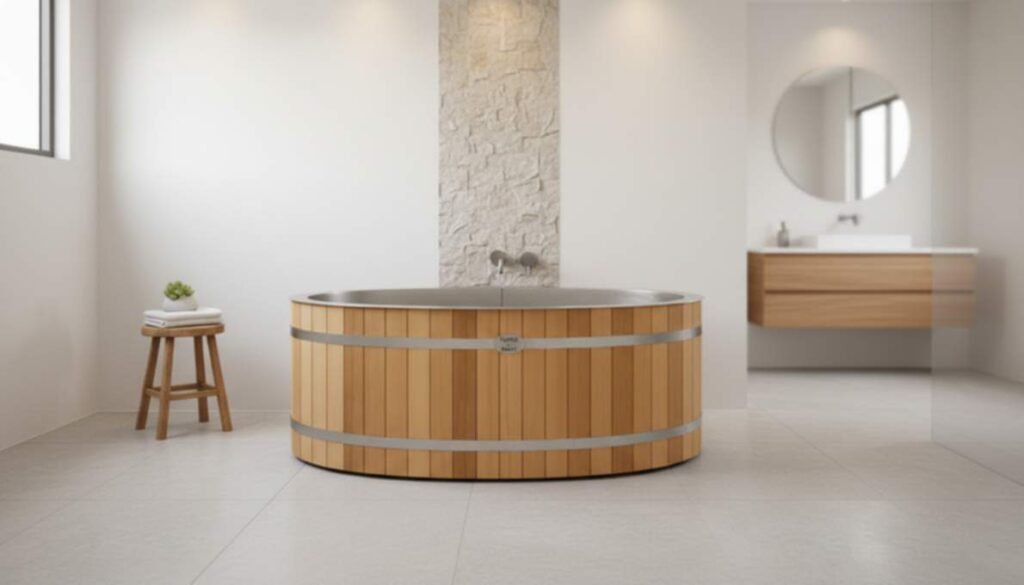
Flynn Pratt builds these by hand in the Barossa Valley, South Australia inspired, apparently, by the wine fermenters at his family winery. Each tub comes with a 0.8HP Wi-Fi chiller (3°C to 40°C), ozone filtration, and an insulated spa-style lid.
What makes this different from factory-produced competitors is the personal touch. Verified customer reviews reference Flynn by name his communication, setup guidance, and willingness to help post-purchase. It’s a small-batch product backed by someone who clearly cares whether customers are happy.
One option competitors don’t offer: hire before buying. Plunge By Pratt rents units for events or trial periods, which eliminates the risk of committing $4,500 to something untested.
Pros
- Handmade in South Australia
- Hot + cold (3°C–40°C)
- Wi-Fi + ozone
- Hire option available
- Fits 193cm+
- 2-year tub / 1-year chiller warranty
Cons
- Small-batch limited stock
- 0.8HP chiller slower than 1HP competitors
- Regional shipping may take longer
Best Under $200: Ritual Recovery Easy Plunge
IceBathLab Score: 3.8/5
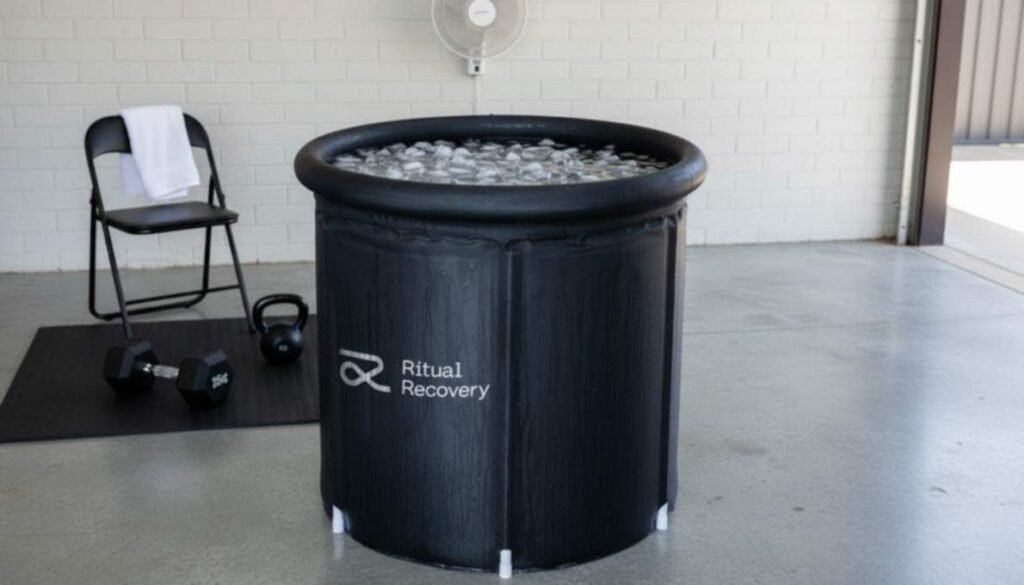
At $109 on sale (regular $139), the Ritual Recovery Easy Plunge is the cheapest full-size ice bath from an established Australian brand. It ships from Australia in 4–5 business days with free delivery nationwide.
The Easy Plunge comes from Ritual Recovery the same veteran-owned Australian brand behind the Stoic (reviewed above). It’s a lightweight inflatable tub with six support poles for stability, a multi-layered pearl cotton construction for insulation and puncture resistance, and UV-resistant material rated for indoor or outdoor use. Setup takes roughly two minutes: lay it out, insert the poles, inflate the rim, fill with water, and add ice. The 320-litre capacity fits users up to 200cm (6’7”), and it comes loaded with accessories inflatable lid, hand pump, protective cover, carry bag, and a floating thermometer.
This is not a permanent daily-driver product. It’s a $109 way to find out whether cold therapy is worth the discomfort before committing $2,000+ to a chiller setup. And because it comes from the same brand as the Stoic, upgrading later is seamless the chiller is compatible if the habit sticks.
Pros
- 109 (sale from $139) with AU shipping
- Trusted veteran-owned AU brand
- Includes lid, thermometer, carry bag, pump
- Multi-layer insulated + UV resistant
- 2-minute setup
Cons
- No chiller
- Temperature depends on ice + ambient conditions
- Support-pole design is less rigid than drop-stitch competitors
- Not built for heavy daily outdoor use long-term
Best Ultra-Budget: Kylin Portable Oval
IceBathLab Score: 3.5/5
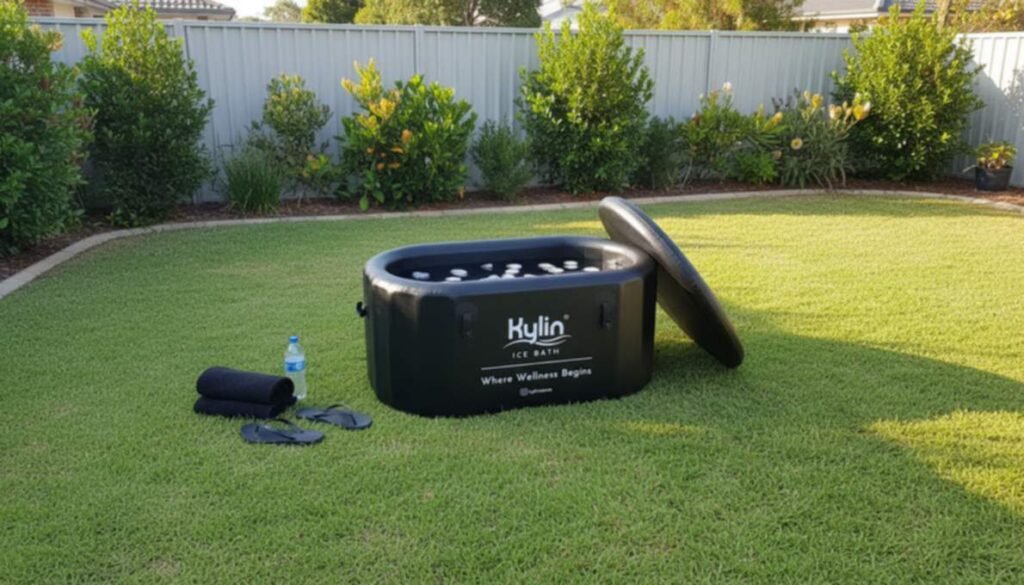
At roughly $180, the Kylin is the cheapest full-body ice bath available in Australia. It holds 265 litres, weighs 13kg empty, has a built-in drain plug, and doubles as a warm soak tub. There’s no insulation to speak of ice melts fast, especially in an Australian summer and the build quality reflects the price.
But that’s fine. This exists for one purpose: letting someone try cold therapy for less than the cost of a decent pair of runners. If the habit sticks, upgrade. If it doesn’t, the financial damage is minimal.
For Teams and Commercial: PlusLife Health
IceBathLab Score: 4.2/5
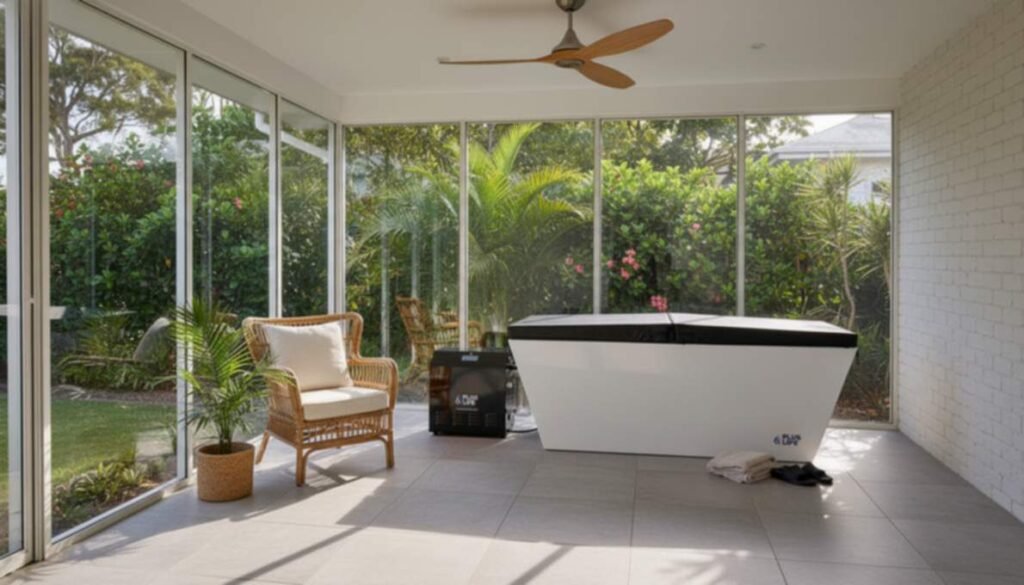
PlusLife Health operates out of Sydney with over three decades of experience in the wellness space. Their ice baths range from home units to large-format commercial setups designed for gyms, physio clinics, and team recovery rooms. Custom builds are available.
Construction uses sustainably sourced, heat-treated timbers certified under EU quality standards. Warranty: 2 years on ice baths with lifetime support they explicitly state they’re available long after the sale.
Payment plans via Zip Pay (interest-free) and 50% deposit options make the premium pricing more accessible. From $5,500+ AUD.
Buyer’s Guide, Research & More
This is the calculation nobody talks about:
| Approach | Upfront | Per Session | Per Year (3x/week) |
|---|---|---|---|
| Servo ice bags | $0 | $10–20 | $1,560–3,120 |
| Bulk ice delivery | $0 | $5–10 | $780–1,560 |
| 1HP chiller | $1,500–3,500 | ~$0.50 electricity | $78 |
A chiller pays for itself in 6–12 months for anyone plunging three or more times per week. Below that frequency, ice may be cheaper. Above it, buying a chiller is the financially obvious choice and it removes the barrier of having to plan, buy, and transport ice before every session.
Running cost reality: A 1HP chiller in maintenance mode draws about 0.5–1.0 kWh per day. At Australian average rates of ~$0.33–0.39/kWh, that’s roughly $0.50/day. About the same as running a bar fridge.
This matters more than most guides acknowledge:
| Region | Summer Tap Temp | What It Means |
|---|---|---|
| Darwin / Far North QLD | 28–32°C | 1HP chiller works hard. 2HP recommended. Ice melts in 20–40 min without insulation. |
| Brisbane / Gold Coast | 22–26°C | 1HP handles it. Allow 10–14 hours for initial cool-down from tap. |
| Sydney / Adelaide | 20–24°C | Standard chiller performance. Most products tested in these conditions. |
| Melbourne | 16–20°C | Tap water is already cool. Chillers reach target faster. |
| Hobart / Canberra | 10–16°C | Winter tap water may hit beginner temps without any ice. Cheapest place to cold plunge. |
A 300-litre ice bath weighs roughly 310kg when filled. Most Australian residential balconies are rated for 200–400kg/m². Before placing anything on an elevated surface:
- Check body corporate or strata by-laws first
- Confirm the balcony’s load rating with the building manager
- Ground floor or backyard is always the safer default
- Consider drainage where does 300L of water go when the tub is emptied?
Supported by evidence
Reduced muscle soreness: A 2016 meta-analysis in Sports Medicine analysed nine randomised controlled trials and found cold water immersion produced significant reductions in muscle soreness compared to passive recovery. The optimal protocol: 11–15°C for 11–15 minutes (Machado et al., 2016).
Reduced perceived fatigue: A 2025 network meta-analysis in Frontiers in Physiology confirmed that medium-duration immersion at 11–15°C for 10–15 minutes offered the best recovery-to-comfort ratio (Wang et al., 2025).
Mood and alertness: Cold exposure triggers noradrenaline release, associated with improved focus, energy, and mood. This is well-documented but mostly studied in single-session contexts long-term mood data is limited.
Mixed evidence
Muscle function recovery: Soreness goes down, but actual strength recovery doesn’t consistently improve. A 2018 trial in Scientific Reports found multiple cold immersions reduced damage markers but didn’t speed up functional recovery (Pereira Ramos et al., 2018).
Strength training interference: Regular ice baths after resistance training may blunt long-term strength gains. Current recommendation from sports scientists: avoid ice baths after strength sessions during base training, but use freely during competition phases when freshness matters more than adaptation.
Not supported (despite what the marketing says)
“Boosts metabolism by 22%” Based on short-duration observations, not sustained weight loss data. Cold exposure does activate brown fat, but the calorie impact is modest.
“Increases testosterone” Largely from animal studies and small, unreplicated human trials. The evidence doesn’t support this as a buying reason.
“Strengthens the immune system” Preliminary. Some studies show increased white blood cell counts after cold exposure, but clinical evidence for fewer actual illnesses is thin.
Being honest about what the science doesn’t support isn’t a negative it builds trust. And it’s the right thing to do.
Frequently Asked Questions
How cold should an ice bath be?
Research points to 11–15°C as effective for recovery, balancing benefit and tolerability (Machado et al., 2016). Experienced users often go to 3-10°C, but beginners should start warmer and reduce gradually.
How long per session?
For recovery: 10-15 minutes at 11-15°C. For general wellness at colder temperatures (3-10°C): 2-5 minutes. The widely cited Huberman protocol recommends 11 minutes total per week, split across sessions.
What does a chiller cost to run?
About $0.50/day for a 1HP unit in maintenance mode roughly $15/month at average Australian electricity rates.
Are ice baths safe for everyone?
No. Contraindications include cardiovascular disease, uncontrolled hypertension, Raynaud’s disease, cold urticaria, and pregnancy. Consult a GP before starting, particularly if over 50 or on medication affecting heart rate or blood pressure.
Chiller or ice – which is better?
A chiller is better for anyone plunging three or more times per week ($78/year vs $1,500+/year in ice). For occasional use, ice is cheaper upfront. The chiller also eliminates the friction of preparation the water is always ready.
What about warranties and Australian Consumer Law?
Under ACL, products must be of acceptable quality and fit for purpose regardless of the manufacturer’s warranty terms. If an ice bath fails within a reasonable period, Australian buyers have statutory rights to repair, replacement, or refund.
- Machado AF, et al. Can Water Temperature and Immersion Time Influence the Effect of Cold Water Immersion on Muscle Soreness? Sports Medicine. 2016;46(4):503–514. doi:10.1007/s40279-015-0431-7 (https://pubmed.ncbi.nlm.nih.gov/26581833/)
- Wang Y, et al. Impact of different doses of cold water immersion on recovery from acute exercise-induced muscle damage: a network meta-analysis. Frontiers in Physiology. 2025;16:1525726. doi:10.3389/fphys.2025.1525726 (https://www.frontiersin.org/journals/physiology/articles/10.3389/fphys.2025.1525726/full)
- Pereira Ramos G, et al. Multiple Cold-Water Immersions Attenuate Muscle Damage but not Alter Systemic Inflammation and Muscle Function Recovery. Scientific Reports. 2018;8:10961. doi:10.1038/s41598-018-28942-5 (https://www.nature.com/articles/s41598-018-28942-5)
- Leeder J, et al. Cold water immersion and recovery from strenuous exercise: a meta-analysis. British Journal of Sports Medicine. 2012;46(4):233–240. doi:10.1136/bjsports-2011-090061 (https://pubmed.ncbi.nlm.nih.gov/21297080/)
- Royal Life Saving Society Australia, AUSactive & SPASA. Position Statement on Cold Water Immersion Therapy Safety. 2024. (https://www.royallifesaving.com.au/research-and-policy/policy/position-statements/cold-water-immersion-therapy)
Medical disclaimer: This content is researched against peer-reviewed literature and is not medical advice. Consult a qualified healthcare professional before starting cold water therapy.
