
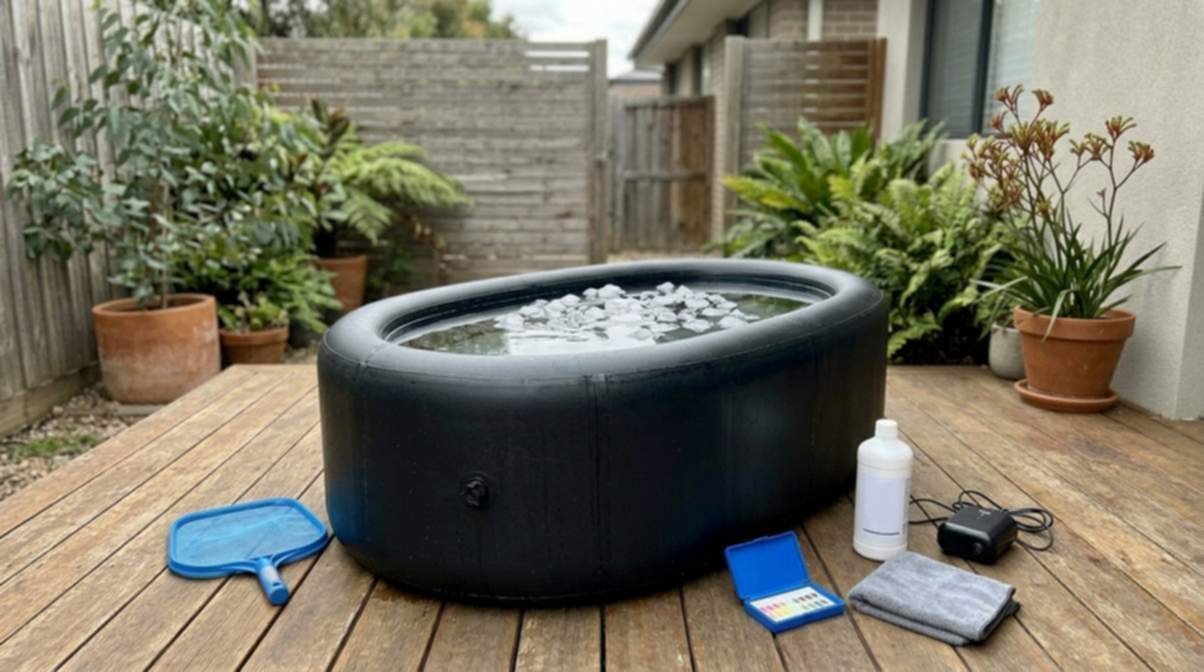
KEY TAKEAWAY The best UV light for a cold plunge is a UV-C unit (254nm wavelength) rated at 18–40W for a typical 80–150 gallon single-person tub, plumbed inline with your circulation pump and filter. UV-C is the lowest-maintenance sanitation option for home users it’s chemical-free and requires only an annual bulb replacement. For shared or commercial plunges, ozone provides stronger oxidation but requires ventilation. Either way, UV or ozone alone isn’t enough you still need mechanical filtration (20-micron minimum) and a small amount of chemical sanitiser (bromine, chlorine, or hydrogen peroxide) for complete water hygiene.
Maintaining clean water is crucial whether you’re using a chiller-based plunge or ice bath. While chillers offer temperature stability, ice baths require more frequent water changes to prevent bacterial growth from melting ice. DIY cold plunge
You spent good money on an ice bath. You’ve got the temperature dialled in. You’re plunging three times a week. And now your water smells like a forgotten gym towel.
Here’s the thing nobody tells you when you buy a cold plunge: cold water slows bacterial growth, but it doesn’t stop it. Every time you step in, you’re introducing sweat, skin oils, dead skin cells, and whatever was on your feet. Without proper sanitation, your therapeutic ice bath becomes a petri dish. best portable ice baths
In this guide, we’ll cover the best UV light for a cold plunge, how ozone compares to UV, a complete DIY maintenance protocol for budget setups, and the water chemistry basics that keep your plunge clean between changes. If you’re still choosing a tub, our comparison of the best ice baths in Australia notes which units come with built-in filtration and sanitation.
SAFETY WARNING Never use industrial-grade hydrogen peroxide (above 12%) without proper safety equipment. It can cause chemical burns on contact with skin. Ozone (O₃) is a respiratory irritant. If you use an ozone generator indoors, ensure adequate ventilation. Do not enter the room while the generator is running. Schedule it to run overnight or when the room is empty. UV-C light damages eyes and skin on direct exposure. Only use enclosed, inline UV-C systems never open or submersible units where the light is visible. If you notice slimy surfaces, foul odours, or cloudy water, do not plunge. Drain, scrub, and refill before your next session. Municipal tap water in Australia may contain chloramine, which requires different treatment than chlorine. Check your local water authority’s reports.
Already know what you’re after? The Prodigy X Water Chiller is one of our top picks for keeping cold plunge water clean, so you can check current pricing below.
Sanitation Methods Compared: UV vs Ozone vs Chemicals
| Method | How It Works | Best For | Limitations | Maintenance | Cost (AU) |
|---|---|---|---|---|---|
| UV-C (254nm) | Damages DNA/RNA of pathogens as water passes through an enclosed chamber. Prevents reproduction. | Single-user home plunges. Low maintenance. Chemical-free primary sanitation. | Only works on water flowing through the chamber. Doesn’t remove organic matter (oils, sweat). Needs clear water to be effective. | Replace bulb annually (~$30–80). Clean quartz sleeve monthly with vinegar. | $80–$400 for standalone units. Built into some premium tubs. |
| Ozone (O₃) | Oxidises bacteria, viruses, biofilm, and organic matter throughout the entire water volume. | Shared/commercial plunges. Heavy use. Breaking down oils and biofilm. | Produces O₃ gas respiratory irritant in enclosed spaces. Can corrode some metals. Less effective in very cold water. | Check/replace generator components annually. Monitor ozone output. | $150–$500 for corona discharge units. JED 303 popular in DIY community (~$200 USD). |
| Hydrogen Peroxide | Oxidises contaminants. Breaks down into water and oxygen no residue. | DIY setups. Budget-friendly. Sensitive skin. Minimal chemical footprint. | No residual sanitising effect needs regular dosing. Less effective against algae than bromine/chlorine. | Add weekly. Test with H₂O₂ strips. Target 30–100 ppm. | ~$15–25 per litre (3% food-grade). Very affordable. |
| Bromine | Chemical sanitiser. More stable than chlorine in cold water. Effective across wider pH range. | Easiest chemical option for cold water. Less odour than chlorine. | Still a chemical. Some skin sensitivity. Needs pH monitoring. | Test 2–3x/week. Maintain 3–5 ppm. Shock weekly. | ~$30–50 per tub for granules/tablets. |
| Chlorine | Traditional sanitiser. Kills bacteria and algae effectively. | Familiar, widely available, well-understood. | Less stable in cold water than bromine. Strong smell. Can irritate skin/eyes. | Test 2–3x/week. Maintain 1–3 ppm free chlorine. | ~$15–30 for granules. |
The key insight most articles miss: UV and ozone are sanitation methods (they kill or neutralise pathogens), but they don’t filter or oxidise organic matter the same way. You need all three layers for truly clean water: mechanical filtration (removes particles), sanitation (kills pathogens), and a low-dose chemical sanitiser or oxidiser (maintains ongoing cleanliness between uses).
Best UV Light for Cold Plunge: What to Look For
KEY TAKEAWAY For a typical home cold plunge (80–150 gallons), you need a UV-C unit rated at 18–40W with a 304 stainless steel chamber, operating at 254nm wavelength. The water must pass through the chamber slowly enough for the UV-C to damage pathogen DNA a flow rate under 1.5 GPM (gallons per minute) with at least 12 seconds of contact time is the benchmark for effective sterilisation. Budget units with 8W bulbs pushed at high flow rates are functionally decorative.
UV-C vs UV-A vs UV-B: why it matters
Not all UV light is the same. UV-C (254nm) is the germicidal wavelength that damages pathogen DNA. UV-A and UV-B are used in pond clarifiers to reduce algae and cloudiness, but they don’t sterilise water. Many cheap units marketed for “cold plunges” are actually aquarium/pond UV-A clarifiers repackaged. If the listing doesn’t specify UV-C or 254nm, it’s probably not a steriliser.
Sizing your UV-C unit
The general rule from Aqua Ultraviolet (a leading UV manufacturer) is approximately 10W per 150 gallons of freshwater for algae/bacteria control, with higher wattages for parasite-level sterilisation. For a cold plunge:
- 80–100 gallon tub: 12–18W UV-C is sufficient
- 100–200 gallon tub: 18–30W UV-C recommended
- 200+ gallon or commercial: 40W+ UV-C
Critically, the flow rate through the UV chamber must be matched to the wattage. A 12W unit is effective at ~1 GPM but useless at 4 GPM the water passes too quickly for sufficient UV-C exposure. Your circulation pump’s flow rate and the UV manufacturer’s rated flow must be compatible.
Key specs to check before buying
- Wavelength: Must be UV-C (254nm). If it says “UV” without specifying, skip it.
- Chamber material: 304 stainless steel interior reflects UV-C, increasing effectiveness.
- Wattage: 18W minimum for most home cold plunges.
- Flow rate: Must match or be lower than your circulation pump’s output.
- Lamp life: 8,000–10,000 hours is standard (roughly 12 months of continuous use). Replace annually.
- Temperature rating: Must operate at 1–15°C. Some units are designed for warm water only.
- Installation: Inline (plumbed into circulation system) is essential. Submersible “pond” units are less effective and expose materials to UV degradation.
What UV-C can’t do
UV-C neutralises pathogens as water passes through the chamber, but it does nothing to water sitting in your tub between sessions. It doesn’t break down body oils, sweat, or skin flakes. It doesn’t prevent biofilm from forming on surfaces. And it requires clear water to work turbid or cloudy water blocks UV penetration. That’s why UV should always be paired with filtration and a mild chemical sanitiser.
Ozone vs UV for Cold Plunge: Which Is Better?
KEY TAKEAWAY For most single-user home plunges, UV-C paired with a 20-micron filter and a small amount of sanitiser (bromine or H₂O₂) is the easiest, lowest-maintenance option. For shared, high-use, or commercial plunges, ozone provides stronger oxidation that breaks down organic matter UV can’t touch. If your plunge is indoors in a room without good ventilation, UV is the safer choice ozone gas is a respiratory irritant.
This is the most searched comparison in the cold plunge maintenance space, and the answer depends entirely on your setup.
When UV-C wins
- Single-user home plunge with good filtration
- Indoor installation (basement, garage) with poor ventilation
- You want minimal maintenance (annual bulb swap, monthly sleeve clean)
- You’re comfortable adding a small amount of chemical sanitiser (bromine or H₂O₂) for residual protection
When ozone wins
- Shared or commercial plunge (gym, wellness centre, Airbnb)
- Multiple users per day introducing higher organic load
- You want the strongest oxidation to break down biofilm, oils, and organic matter
- Outdoors or in a well-ventilated space where O₃ dissipation isn’t a concern
The AOP option (Advanced Oxidation Process)
Some high-end systems combine both UV and ozone in a single unit (called AOP). This creates hydroxyl radicals the most powerful oxidiser available for water treatment. AOP systems are overkill for most home users and start at $1,000+ USD, but they’re the gold standard for commercial installations.
Important note on ozone in cold water: some manufacturers (notably Chilly GOAT / MasterSpa) argue that ozone is less effective in cold water because the oxidation reaction is temperature-dependent. Others (Chest Freezer Cold Plunge, JED 303 community) report excellent long-term results. The truth is likely that ozone works in cold water but may require slightly longer contact time than in warm-water spa applications.
How to Keep Cold Plunge Water Clean (DIY Method)
KEY TAKEAWAY For a DIY setup (stock tank, chest freezer conversion, or portable tub), the minimum viable clean-water system is: a circulation pump running 24/7, a 20-micron filter cleaned weekly, food-grade hydrogen peroxide (3%) dosed at 30–100 ppm, and a shower before every plunge. This setup costs under $150 and keeps water usable for 2–4 weeks between changes.
The minimum viable setup
- Circulation pump: An aquarium pump (e.g. Marineland Magnum or similar) running 24/7 keeps water moving through the filter. Stagnant water = bacterial growth.
- Filter: 20-micron cartridge or bag filter. Rinse weekly, replace monthly. This removes physical debris (skin, hair, sediment).
- Sanitiser: Food-grade hydrogen peroxide (3% from any chemist). Add 1–2 cups per 100 gallons weekly. Test with H₂O₂ strips, targeting 30–100 ppm.
- Cover: A fitted cover keeps debris out, reduces evaporation, and slows bacterial growth from airborne contaminants.
- Pre-plunge shower: The single most impactful thing you can do. A 30-second rinse removes sweat, oils, lotions, and bacteria from your skin before they enter the water.
Upgrading your DIY setup
- Add an ozone generator: The JED 303 is the most popular unit in the DIY cold plunge community. It’s a corona discharge ozone generator with a built-in air pump no venturi injector needed. Schedule it to run for 30–60 minutes when you’re not using the plunge (overnight is ideal). With ozone, many users report going 6–12 months without a full water change.
- Add a UV-C inline unit: If you already have a circulation pump and filter, adding an 18W+ UV-C steriliser inline takes 30 minutes and provides continuous pathogen control.
- Skimmer net: A floating skimmer or handheld net removes surface debris (leaves, insects) that filters can’t catch quickly.
Water chemistry basics for DIY plunges
- pH: 7.2–7.8 (test weekly with pool/spa test strips)
- Total alkalinity: 80–120 ppm (acts as a pH buffer)
- Sanitiser level: Bromine 3–5 ppm, or free chlorine 1–3 ppm, or H₂O₂ 30–100 ppm
- Water change frequency: Every 2–4 weeks for basic setups. Every 1–3 months with UV/ozone.
For temperature guidance, see our ice bath temperature guide. For how long to stay in, see our duration guide.
Weekly and Monthly Maintenance Schedule
KEY TAKEAWAY Clean water requires consistent maintenance, not sporadic deep cleans. A 5-minute daily check and a 15-minute weekly routine prevents 90% of water quality issues. The moment your tub walls feel slimy, you’re overdue.
| When | Task |
|---|---|
| Before every plunge | Shower (30-second rinse). Check water clarity. Remove any floating debris. |
| Weekly | Test pH, alkalinity, and sanitiser level with test strips. Adjust chemicals as needed. Rinse/clean filter cartridge. Wipe the waterline with a cloth to remove oil buildup. Check UV bulb is illuminated (if fitted). |
| Fortnightly | Deep-clean filter (soak in diluted vinegar or filter cleaner). Wipe all submerged surfaces for biofilm (if anything feels slippery, scrub it). Top up sanitiser. Check ozone generator output (if fitted). |
| Monthly | Clean UV-C quartz sleeve with vinegar solution. Replace filter cartridge (or every 6–8 weeks if lightly used). Inspect pump strainer. Check for mineral/scale buildup. |
| Quarterly | Full water change. Deep-clean entire tub interior (drain, scrub with H₂O₂ or diluted vinegar, rinse thoroughly). Inspect all seals, hoses, and fittings. Replace UV bulb if approaching 9,000 hours. |
If you’re ready to sort your water treatment now, the Prodigy X Water Chiller is the pick we’d point you to from this guide.
What Most Articles Get Wrong About Cold Plunge Water Maintenance
KEY TAKEAWAY Most competitor content either says UV “eliminates the need for chemicals” (it doesn’t you still need residual sanitation) or recommends ozone without mentioning the respiratory risks of indoor use. None distinguish between UV-C and UV-A/B, which is the difference between a steriliser and a glorified algae lamp.
We reviewed the top-ranking pages for “how to keep cold plunge water clean” and found:
- Most brand-published articles claim their tub’s built-in UV or ozone “eliminates the need for chemicals.” This is misleading. UV and ozone provide excellent primary sanitation, but neither provides a residual sanitising effect when the pump is off and you’re between sessions.
- None distinguish between UV-C (germicidal, 254nm) and UV-A/UV-B (algae control only). Budget cold plunge UV units often use pond-grade UV-A bulbs that don’t sterilise water.
- Few mention flow rate matching as a factor in UV effectiveness. A 40W UV-C unit is worthless if water blasts through at 4 GPM pathogens need 12+ seconds of UV-C exposure.
- Ozone articles rarely mention respiratory risks or the need for ventilation in indoor settings.
- DIY guides often recommend massive doses of H₂O₂ (e.g. 35% food-grade) without adequate safety warnings. 35% H₂O₂ causes chemical burns on skin contact. 3% household-grade is safer and sufficient for most home plunges.
Australian-Specific Considerations
Australian tap water quality varies by state and region. In Melbourne and most of Victoria, tap water is soft and low in minerals great for cold plunges but may need calcium hardness adjustment. In Adelaide and parts of Queensland, harder water can cause scale buildup on equipment. Check your local water authority’s annual report for hardness and chloramine data.
In northern Australia (QLD, NT, WA), warmer ambient temperatures mean your tub warms faster when not in use, creating a more hospitable environment for bacteria. Stronger sanitation (ozone + chemical backup) and more frequent water changes may be necessary compared to cooler southern climates.
UV-C units rated for cold water (1–15°C operating range) are essential. Some units designed for spa use won’t perform well in ice bath temperatures. Check the specs before purchasing.
If you’re choosing between tubs, our best ice baths in Australia guide includes filtration and sanitation specs for every reviewed unit. For the science behind why you’re plunging in the first place, see our evidence-based benefits guide.
Our Pick for Water Treatment
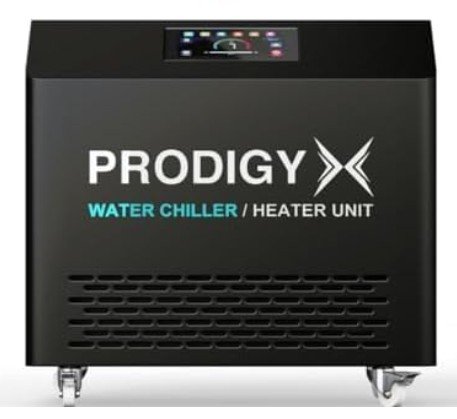
TOP PICK
Prodigy X Water Chiller
The Prodigy X water chiller is our top-rated pick from the full water-treatment guide for keeping tub water clean and at a stable temperature.
8. Frequently Asked Questions
What is the best UV light for a cold plunge?
A UV-C unit (254nm wavelength) rated at 18–40W in a 304 stainless steel enclosed chamber, matched to your circulation pump’s flow rate. For an 80–150 gallon home tub, 18–25W is usually sufficient. Ensure the unit is rated for cold water operation (1–15°C).
How do I keep cold plunge water clean?
Three layers: mechanical filtration (20-micron filter + circulation pump), primary sanitation (UV-C or ozone), and residual sanitation (bromine at 3–5 ppm, chlorine at 1–3 ppm, or H₂O₂ at 30–100 ppm). Shower before every plunge. Test water chemistry weekly. Change water every 2–4 weeks (or 1–3 months with UV/ozone).
Ozone vs UV for cold plunge which is better?
UV-C is better for single-user home setups (low maintenance, no respiratory risk, chemical-free primary sanitation). Ozone is better for shared or commercial plunges (stronger oxidation, breaks down organic matter). Indoors with poor ventilation, always choose UV. Both should be paired with filtration and a mild chemical sanitiser.
How do I keep cold plunge water clean DIY?
Run a circulation pump 24/7 with a 20-micron filter. Add 1–2 cups of 3% food-grade hydrogen peroxide per 100 gallons weekly, targeting 30–100 ppm. Cover the tub when not in use. Shower before every plunge. Change water every 2–4 weeks. Total setup cost: under $150.
Do I need chemicals if I have a UV light?
Yes. UV-C only sterilises water as it flows through the chamber. It provides no residual protection when the pump is off. A small amount of chemical sanitiser (bromine, chlorine, or H₂O₂) maintains ongoing cleanliness between sessions. With UV, you’ll use significantly less chemical than without it.
How often should I change cold plunge water?
With basic filtration only: every 1–2 weeks. With UV or ozone + chemical sanitiser: every 4–12 weeks. With AOP (UV + ozone) + good filtration: some users report 3–6 months. Signs it’s time: cloudy water, odours, slimy surfaces, or sanitiser levels that won’t hold.
Is hydrogen peroxide safe for cold plunges?
Yes, at the right concentration. Use 3% household-grade or food-grade H₂O₂ (not 35% industrial). Target 30–100 ppm. It breaks down into water and oxygen with no residue, no smell, and no skin irritation. Test with H₂O₂-specific strips (standard pool strips won’t work).
Can I use a pond UV clarifier for my cold plunge?
Only if it’s UV-C (254nm). Many pond units use UV-A, which controls algae but doesn’t sterilise water. Check the spec sheet for wavelength. Also ensure the flow rate is compatible with your pump and the unit is rated for cold water temperatures.
How do I prevent biofilm in my cold plunge?
Biofilm (the slimy layer on submerged surfaces) is the most common maintenance failure. Prevent it by: running your circulation pump 24/7, maintaining consistent sanitiser levels, wiping surfaces fortnightly, and cleaning your filter regularly. Ozone is particularly effective at breaking down biofilm. If surfaces feel slippery, the biofilm is already established drain and scrub immediately.
What’s the ideal pH for cold plunge water?
7.2–7.8. Below 7.0 (acidic), water corrodes equipment. Above 8.0 (alkaline), sanitisers become less effective. Test weekly with pool/spa test strips. Adjust with pH increaser (sodium bicarbonate) or pH decreaser (sodium bisulphate) as needed.
Royal Life Saving Society Australia, AUSactive, SPASA. Position Statement: Cold Water Immersion Therapy. 2024. royallifesaving.com.au
Aqua Ultraviolet. Choosing Your UV Sterilizer Size — Sizing Guide. 2023. aquaultraviolet.com
US EPA. Ultraviolet Disinfection Guidance Manual. EPA 815-R-06-007. Office of Water.
Cleveland Clinic. Benefits and Risks of Cold Plunges. 2024. clevelandclinic.org
Medical Disclaimer: This article is for informational purposes only. Cold water immersion and water treatment chemicals carry risks. Follow manufacturer guidelines for all sanitation products. Consult product safety data sheets before handling concentrated chemicals.
