
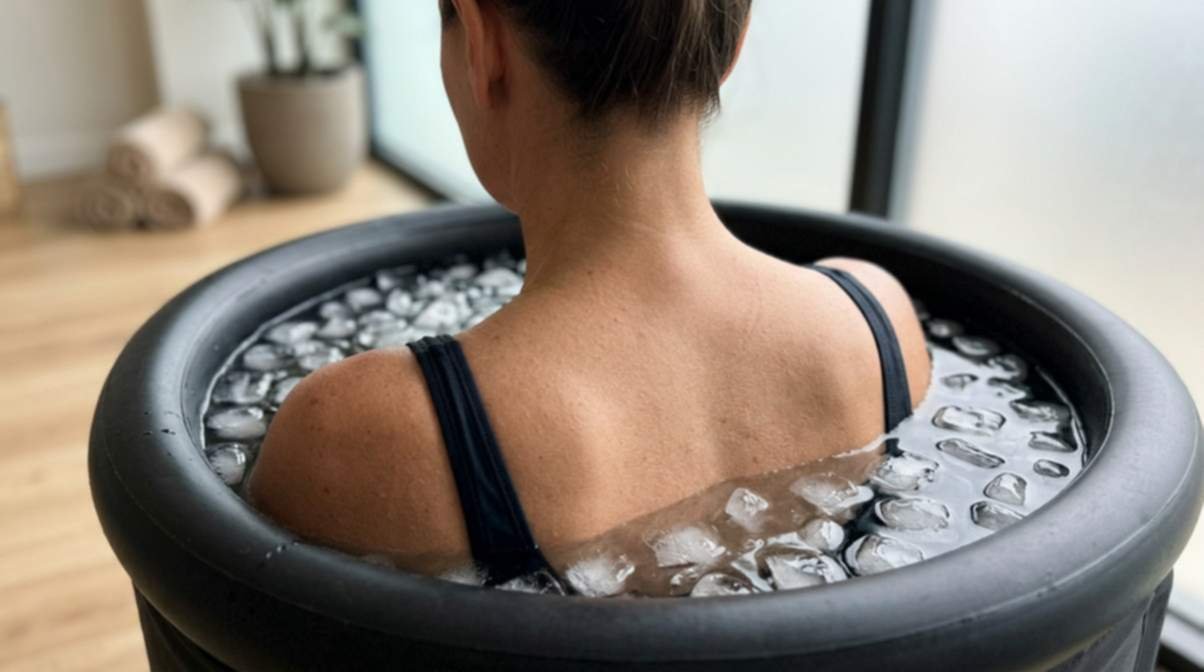
The first 20 seconds in cold water are not subtle. Your chest tightens, your breath wants to run away from you, and your body starts fighting to keep its core temperature steady. Under the skin, that fight is where brown fat activation becomes interesting.
Brown fat, or brown adipose tissue, is different from the white fat most people think about when they hear the word fat. White fat mainly stores energy. Brown fat uses energy to make heat. That means cold exposure can increase calorie burn, at least temporarily, because your body has to defend its temperature.
This is also where a lot of cold plunge marketing gets sloppy. Some brands make it sound like sitting in icy water melts body fat on command. It does not. The research supports a more useful answer: cold can activate brown fat and raise energy expenditure, but the effect is usually modest and highly individual.
If you are choosing a tub or chiller for regular cold exposure, start with our comparison of the best ice baths . This guide explains the calorie-burning side of the science, what the research actually says, and how to use cold water without treating it like a magic fat-loss shortcut.
Safety Warning: Read This Before Trying Cold Exposure
Key Takeaway: Start warmer than you think: 12-15°C for 1-2 minutes is enough for most beginners. Never plunge alone, and speak to a GP first if you are over 50, pregnant, taking medication, or have heart, blood pressure, circulatory, autoimmune, Raynaud’s or cold-sensitivity issues.
Cold water immersion has real risks, especially for new users. Royal Life Saving Society Australia warns that CWI can trigger shock responses such as hyperventilation, increased heart rate, increased blood pressure and, in extreme cases, cardiac arrhythmias. It also lists gasping, loss of breathing control, cramps, hypothermia, frostbite and panic as risks. Royal Life Saving Society Australia.
- Start at 12-15°C: Not 3°C. Not “as cold as possible”. Make your first sessions controlled, not heroic.
- Start with 1-2 minutes: Build slowly over weeks. More time is not automatically better.
- Never plunge alone: Especially in the first month, when you do not know how your body responds.
- Keep your head out: Avoid breath-holding, forced hyperventilation and full submersion.
- Get medical advice first: This matters if you are over 50, pregnant, have cardiovascular disease, high blood pressure, circulatory issues, Raynaud’s disease, cold urticaria, autoimmune conditions, open wounds or take blood pressure medication.
Brown Fat, Calories and Cold Exposure
| Question | Evidence-based answer | Practical takeaway |
| Does cold exposure activate brown fat? | Yes. Acute cold exposure activates brown adipose tissue and non-shivering thermogenesis in adults. | You do not need extreme cold to create a cold stimulus. |
| How many calories does it burn? | A 2022 review found mild cold around 16-19°C increased energy expenditure by about 188 kcal/day compared with 24°C conditions. | Useful, but modest. Do not “eat back” these calories. |
| Does it cause weight loss? | Not reliably. Some studies show higher energy use or lower fat mass, but weight loss is not guaranteed. | Use it alongside diet, walking, training and sleep. |
| What temperature should beginners use? | 12-15°C is the safest practical starting range for cold water immersion. | Begin at 1-2 minutes and build slowly. |
| Is colder better? | No. Colder water increases stress and risk; it does not guarantee more brown fat benefit. | Control your breathing and avoid chasing pain. |
| Who should avoid it? | People with key medical risks need screening first, especially heart, blood pressure, circulatory, cold-sensitivity and pregnancy-related risks. | When in doubt, ask a GP first. |
What Brown Fat Is and Why It Burns Energy
Key Takeaway: Brown fat is heat-making fat. It breaks down glucose and fat molecules to produce heat, which is why it becomes relevant when your body is exposed to cold.
Brown fat is formally called brown adipose tissue, or BAT. It gets its colour from iron-rich mitochondria, the small energy-producing structures inside cells. Cleveland Clinic explains that brown fat activates in cold temperatures, produces heat, burns calories and helps regulate glucose and fat metabolism. Cleveland Clinic.
The important difference is simple: white fat stores spare energy, while brown fat spends energy to help keep you warm. Brown fat is not “good” because it magically cancels out body fat. It is useful because it is metabolically active tissue that can burn fuel when the body needs heat.
In adults, brown fat is usually found around the neck, upper chest, spine, kidneys and heart region. You cannot feel it like a muscle, and you cannot target it like a bicep curl. You activate it indirectly by exposing the body to cold enough conditions that it needs to make heat.
How Cold Exposure Activates Brown Fat
Key Takeaway: Cold exposure activates brown fat through the sympathetic nervous system. Cold signals increase noradrenaline release, which stimulates brown fat cells and activates UCP1, the heat-making protein inside brown fat mitochondria.
When cold hits the skin, temperature sensors send a warning signal to the brain. The body responds by narrowing blood vessels near the skin, raising sympathetic nervous system activity and increasing heat production. A 2025 review in the Journal of Physiological Anthropology explains that noradrenaline released from sympathetic nerve endings stimulates brown adipocytes, which then hydrolyse triglycerides, oxidise fatty acids and activate uncoupling protein 1, or UCP1. Yoneshiro et al., 2025.
UCP1 is the key switch. Most cells use fuel to make ATP, the body’s usable energy currency. Brown fat can uncouple that process so more of the energy is released as heat. That is called non-shivering thermogenesis.
Shivering is different. Shivering is muscle-driven heat production. Brown fat is non-shivering heat production. In real life, the two can overlap. If the water is very cold or you stay in too long, shivering takes over, and the session becomes more stressful rather than more clever.
How Many Calories Does Cold Exposure Burn?
Key Takeaway: The best answer is “some, but not enough to sell cold plunges as a fat-loss shortcut.” In a 2022 meta-analysis, mild cold exposure increased energy expenditure by about 188 kcal/day under lab conditions, but that does not mean a short ice bath burns 188 calories.
A 2022 systematic review and meta-analysis in Frontiers in Physiology compared adults exposed to room temperature around 24°C with mild cold exposure around 16-19°C. It found energy expenditure increased by a mean difference of 188.43 kcal/day, and BAT volume and activity also increased. Huo et al., 2022.
That number is useful, but it is easy to misuse. The review looked at controlled studies with cold exposure protocols, not your exact 3-minute tub session after work. Water pulls heat from the body faster than air, but duration, water temperature, body size, sex, body fat, fitness, time of year and acclimatisation all change the response.
A smaller 2012 Journal of Clinical Investigation study used PET imaging in 6 healthy men under controlled cold exposure. The researchers found substantial glucose and fatty acid uptake by BAT, cold-induced activation of BAT oxidative metabolism, and an associated increase in total energy expenditure. They also reported resting energy expenditure increased about 1.8-fold during the cold exposure protocol. Ouellet et al., 2012.
That does not mean you should count an ice bath like a workout. It means cold exposure can make the body spend extra energy to defend temperature. The calorie burn is real, but it is not a free pass around nutrition.
What the Research Supports Strongly
Key Takeaway: The strongest claim is that cold exposure can activate brown fat and increase energy expenditure. The weaker claim is that this reliably causes meaningful weight loss in everyday ice bath users.
The science is most confident on the mechanism: cold exposure can activate BAT. A 2025 review summarised that acute cold exposure promptly activates BAT to induce non-shivering thermogenesis, while prolonged cold exposure can recruit BAT and improve cold tolerance. Yoneshiro et al., 2025.
The 2022 Frontiers meta-analysis also supports the short-term metabolic effect: mild cold increased energy expenditure, BAT volume, BAT activity and non-esterified fatty acid uptake compared with thermoneutral conditions. Huo et al., 2022.
A separate 2024 systematic review and meta-analysis in Biomedicines focused on metabolic markers in healthy adults during mild cold exposure. It included 7 studies and 85 participants. It found no significant fasting changes in glucose, insulin or triglycerides, but did find a significant increase in free fatty acids, likely reflecting fuel mobilisation for thermogenesis. Tabei et al., 2024.
So the fair summary is this: cold exposure can activate brown fat, raise energy expenditure and change fuel use. That is not the same as saying a cold plunge alone will make you lean.
Where the Evidence Is Mixed
Key Takeaway: Brown fat activation is real, but the long-term body composition claim is still mixed. Human studies are often small, lab-based and hard to translate directly into backyard ice bath routines.
The biggest issue is translation. Many BAT studies use cold rooms, cooling suits, PET imaging or carefully controlled protocols. Those studies help us understand the body. They do not perfectly answer what happens when someone in Sydney sits in a 9°C plunge for 4 minutes after a gym session.
The 2022 meta-analysis itself warns that while BAT activation is exciting, chronic cold exposure may not promote weight loss because maximal BAT activation for long periods is difficult in humans and prolonged cold can trigger compensatory increases in food intake. Huo et al., 2022.
A 2025 Nature Reviews Endocrinology research highlight also notes that adipose tissue thermogenesis is not simply proportional to colder temperatures. In the referenced Cell Metabolism work, shivering increased as mean skin temperature dropped, but adipose tissue thermogenesis did not keep rising in the same linear way. Tysoe, 2025.
That matters because a lot of cold plunge advice quietly assumes “colder equals more fat burn”. The body is messier than that. Past a certain point, colder water mostly adds stress and risk.
What the Science Does Not Support
Key Takeaway: Cold exposure is not a belly-fat hack. It can raise calorie burn, but it does not override energy intake, resistance training, sleep, protein or daily movement.
- “An ice bath melts fat.” No. Brown fat burns fuel to make heat. It does not selectively remove body fat from your stomach, hips or thighs.
- “Colder is always better.” No. Colder water raises cold shock risk, breath-control problems and hypothermia risk. It does not guarantee more useful BAT activity.
- “Shivering means it is working better.” Not necessarily. Shivering means muscle-driven heat production has kicked in. It can increase energy use, but it also means the session is more stressful.
- “Cold exposure replaces exercise.” No. Exercise has far stronger evidence for fat loss, insulin sensitivity, cardiovascular health and muscle retention.
- “Everyone gets the same calorie burn.” No. Brown fat amount and activity vary by age, body composition, acclimatisation, sex, season and individual biology.
If a brand claims a short cold plunge reliably burns hundreds of calories or guarantees fat loss, ask for the human evidence, the protocol and the actual measurement method. If they cannot provide it, that tells you enough.
A Practical Cold Exposure Protocol for Brown Fat Activation
Key Takeaway: Use the smallest cold dose that gives a clear cold stimulus while keeping your breathing controlled. For most healthy beginners, that means 12-15°C for 1-2 minutes, 2-3 times per week.
| Experience level | Temperature | Duration | Frequency | Notes |
| Beginner | 12-15°C | 1-2 minutes | 2-3 times/week | Focus on breathing and calm exit. Do not chase shivering. |
| Intermediate | 10-15°C | 2-5 minutes | 2-4 times/week | Only progress if breathing stays controlled. |
| Experienced | 5-10°C | 1-3 minutes | Individual | Higher risk. Use only with experience, supervision and a clear reason. |
| Recovery-focused | 11-15°C | 10-15 minutes | After selected sessions | Better aligned with recovery research, but avoid immediately after hypertrophy-focused lifting if muscle growth is the goal. |
For more detail on timing and cold dose, use our ice bath duration guide and ice bath temperature guide. If your main goal is fat loss rather than recovery, also read our guide on whether ice baths help you lose weight.
A good brown-fat-focused session should feel cold, sharp and controlled. It should not feel like panic, chest tightness, dizziness, numbness or a test of how much pain you can tolerate.
Australian Considerations: Heat, Tap Water and Chillers
Key Takeaway: Australian conditions change the cold dose. A tub in a Melbourne winter is not the same as a tub in a Brisbane or Darwin summer, so measure water temperature rather than guessing.
The practical problem in Australia is consistency. In cooler months, a basic tub may sit close enough to a useful cold range without much work. In summer, especially in warmer parts of the country, tap water can sit far above the range most people expect from a “cold plunge”.
That is where product choice matters. Ice-only setups are cheaper, but you will spend more time buying ice, draining water and guessing temperature. Chiller setups cost more upfront, but they hold a set temperature and make repeatable protocols easier. Our DIY cold plunge guide breaks down budget setups.
For a future topical cluster, this article should link to [INTERNAL LINK OPPORTUNITY: Best Ice Bath Chillers Australia] once that page is live.
FAQ
What is brown fat activation?
Brown fat activation is the process where brown adipose tissue turns on to produce heat and help maintain body temperature. Cold exposure is one of the best-known natural triggers because it stimulates the sympathetic nervous system and heat production pathways.
Does cold exposure burn calories?
Yes, cold exposure can burn extra calories because your body spends energy to stay warm. The effect is usually modest and depends on temperature, duration, body size, brown fat activity and whether shivering occurs.
Do ice baths activate brown fat?
Ice baths can activate brown fat, but most direct BAT studies use controlled cold exposure rather than standard backyard ice bath sessions. A cold plunge is a practical cold stimulus, but the exact calorie burn is difficult to measure without lab equipment.
How long does brown fat take to activate in cold exposure?
Brown fat can activate within minutes of acute cold exposure, but the size of the response varies between people. The goal should be a controlled cold stimulus, not staying in until you are shaking or numb.
What temperature activates brown fat?
Mild cold exposure around 16-19°C can activate brown fat in lab studies, while cold water immersion usually uses lower water temperatures because water removes heat faster than air. For beginners, 12-15°C is a safer practical starting range.
Is shivering needed to activate brown fat?
No, shivering is not required for brown fat activation. Brown fat is involved in non-shivering thermogenesis, while shivering is muscle-driven heat production that usually means the cold dose is becoming more stressful.
Can brown fat activation help with weight loss?
Brown fat activation may support energy expenditure, but it is not enough on its own for reliable weight loss. Nutrition, walking, resistance training, protein intake and sleep still do the heavy lifting.
Is cold exposure good for metabolism?
Cold exposure can increase energy expenditure and brown fat activity in adults, but long-term metabolic benefits are still being studied. Current evidence is stronger for short-term activation than for guaranteed body weight change.
Are cold showers enough to activate brown fat?
Cold showers may provide a cold stimulus, but they are harder to standardise than a measured plunge because water temperature, coverage and duration vary. They can be a lower-cost starting point before buying a tub.
How often should I use cold exposure for brown fat?
Two to three short sessions per week is a sensible starting point for healthy beginners. Increase only if your breathing stays controlled and you recover well afterwards.
Who should avoid cold plunges?
People with heart disease, uncontrolled blood pressure, circulatory problems, Raynaud’s disease, cold urticaria, pregnancy, serious chronic illness, open wounds or certain medications should avoid cold plunges unless cleared by a GP. Anyone over 50 should also get medical advice before starting.
Sources
Huo C, Zhang S, Yu X, et al. “Effect of Acute Cold Exposure on Energy Metabolism and Activity of Brown Adipose Tissue in Humans: A Systematic Review and Meta-Analysis.” Frontiers in Physiology. 2022;13:917084. DOI: 10.3389/fphys.2022.917084
Tabei S, Chamorro R, Meyhöfer SM, Wilms B. “Metabolic Effects of Brown Adipose Tissue Activity Due to Cold Exposure in Humans: A Systematic Review and Meta-Analysis of RCTs and Non-RCTs.” Biomedicines. 2024;12(3):537. DOI: 10.3390/biomedicines12030537
Ouellet V, Labbé SM, Blondin DP, et al. “Brown adipose tissue oxidative metabolism contributes to energy expenditure during acute cold exposure in humans.” Journal of Clinical Investigation. 2012;122(2):545-552. DOI: 10.1172/JCI60433
Yoneshiro T, Matsushita M, Sakai J, Saito M. “Brown fat thermogenesis and cold adaptation in humans.” Journal of Physiological Anthropology. 2025;44:11. DOI: 10.1186/s40101-025-00391-w
Tysoe O. “Adipose tissue thermogenesis is not proportional to temperature.” Nature Reviews Endocrinology. 2025;21:591. DOI: 10.1038/s41574-025-01163-3
Cleveland Clinic. “Brown Fat, Brown Adipose Tissue: What It Is & What It Means.” Cleveland Clinic
Royal Life Saving Society Australia, AUSactive and SPASA. “Position Statement: Cold Water Immersion Therapy.” 2024. Royal Life Saving Society Australia
Medical disclaimer This article is general information only and is not medical advice. Cold water immersion can be risky. Speak with a qualified health professional before starting if you have a medical condition, are pregnant, are over 50, take medication, or are unsure whether cold exposure is appropriate for you.
