
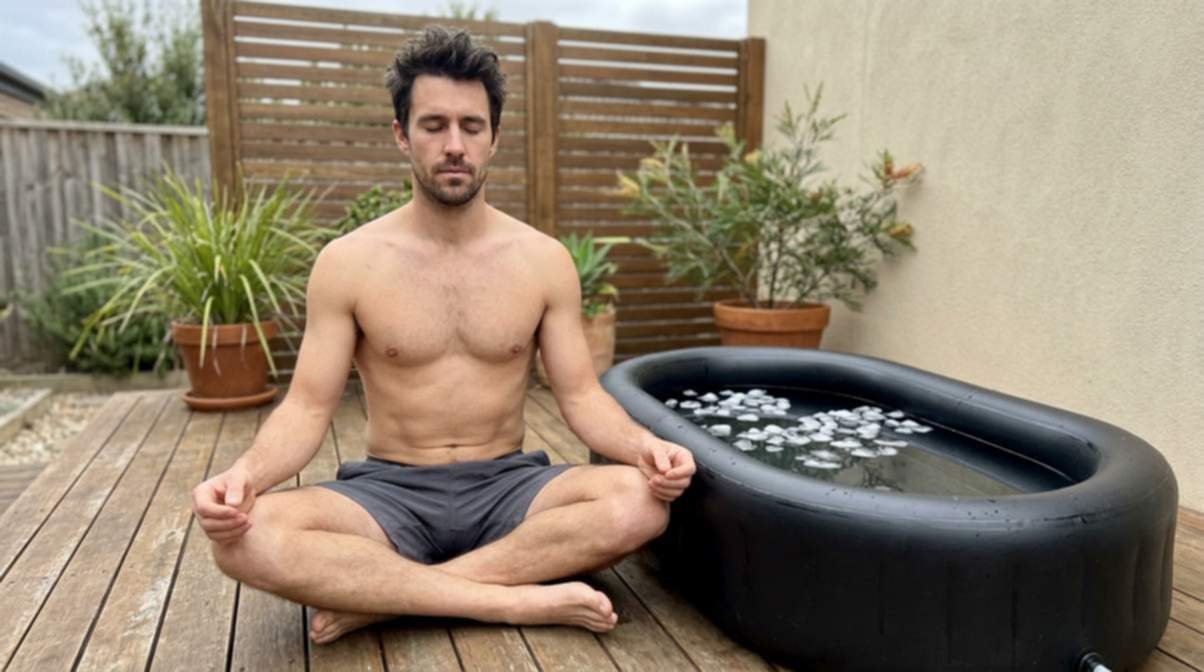
The first shock of cold water is blunt. Your chest tightens. Your breathing wants to race. Every part of you wants out. The Wim Hof Method tries to give that moment a structure: breathe, focus, enter the cold gradually, and learn to stay calm without forcing it.
That structure is useful. The marketing around it is where things get messy. The official Wim Hof Method site frames the method around three pillars – breathing, cold exposure and mindset – but not every claim made around the method is equally supported by research.
Here for the gear, not the theory? Browse our full range below.
This guide explains the Wim Hof Method in plain English: how the breathing works, how to pair it with cold exposure, what the evidence actually supports, and where you need to be careful. If you are still choosing a tub or chiller, our tested comparison of the best ice baths in Australia is the natural next stop.
Safety Warning
Read this before trying the method Cold water immersion is not risk-free. Start at 12-15°C for 1-2 minutes, use a thermometer and keep the first month conservative. Do not practise Wim Hof breathing, hyperventilation or breath holds in water, in the shower, while driving or anywhere fainting could injure you. Avoid cold plunging if you have cardiovascular disease, uncontrolled blood pressure, Raynaud’s disease, cold urticaria, pregnancy, open wounds, epilepsy, or a history of fainting unless cleared by a clinician. If you are over 50, on blood pressure medication, or unsure about your heart health, speak with a GP first. Never plunge alone as a beginner. Have someone nearby, especially during your first month.
Royal Life Saving Society Australia warns that cold water immersion can trigger shock responses including hyperventilation, increased heart rate, increased blood pressure and, in extreme cases, cardiac arrhythmias. It also flags gasping and loss of breathing control as drowning risks. Royal Life Saving Society Australia should be treated as the baseline safety authority for Australian readers.
Quick Summary Table
| Part of the method | What it means | Beginner protocol | Biggest caution |
| Breathing | Cycles of strong breathing followed by breath retention and a short recovery breath. | Practise seated or lying down. Start with 1-3 rounds. Stop if dizzy or panicked. | Never do it in water or before entering water if you feel light-headed. |
| Cold exposure | Cold showers, cold plunges or ice baths used gradually. | 12-15°C for 1-2 minutes. Build duration before lowering temperature. | Cold shock can cause gasping, panic and cardiovascular stress. |
| Commitment / mindset | Consistency, attention and staying calm under controlled stress. | 2-4 short sessions per week is enough for most beginners. | Do not confuse mental toughness with ignoring warning signs. |
| Evidence-backed recovery use | Cold water immersion for muscle soreness has the clearest protocol evidence. | 11-15°C for 10-15 minutes for DOMS after hard training. | Skip immediate post-lifting plunges if muscle growth is the priority. |
| Unsupported claims | Some claims around immunity, disease prevention and athletic performance are overstated. | Treat WHM as a wellness practice, not medical treatment. | Do not replace medical care, therapy or prescribed treatment. |
What Is the Wim Hof Method?
KEY TAKEAWAY The Wim Hof Method is a structured practice built around three pillars: breathing, cold exposure and commitment or mindset. The method is best understood as controlled stress training, not a cure-all health system.
The Wim Hof Method was developed by Dutch extreme athlete Wim Hof, often called “The Iceman”. In simple terms, it combines a specific breathing pattern with progressive cold exposure and a mindset component. The official site describes its mini course as teaching the three key pillars: “the cold, breathing technique, and mindset”.
The breathing pillar usually involves repeated strong inhales, relaxed exhales, a breath hold after exhaling, then a short recovery breath. The cold exposure pillar can be as mild as a cold shower or as intense as an ice bath. The commitment pillar is the part most people skip: gradual exposure, regular practice and enough discipline to stop when your body gives you a warning sign.
That last point matters. The method is often sold as extreme, but the safer version is boring on purpose: short sessions, measured water temperature, slow progress, no ego and no underwater breath holds. For a broader breakdown of evidence-backed cold exposure benefits, see our guide on whether ice baths are good for you.
How Wim Hof Breathing Works
KEY TAKEAWAY Wim Hof breathing uses repeated deep breaths and breath retention to shift carbon dioxide levels, stress hormones and perceived control. It can feel powerful, but light-headedness is a safety signal, not a badge of progress.
A common Wim Hof breathing round looks like this:
- Sit or lie down somewhere safe and away from water.
- Take 30-40 strong but controlled breaths. Inhale deeply, then let the exhale go without forcing it.
- After the final exhale, hold your breath out only as long as it feels safe.
- When you need to breathe, inhale fully and hold for about 10-15 seconds.
- Exhale, rest, and repeat for 1-3 rounds if you still feel calm and clear.
The 2024 systematic review by Almahayni and Hammond describes Wim Hof breathing as 30-40 hyperventilation-style breaths followed by voluntary breath-holding at low lung volume. That wording is important: this is not the same as slow nasal breathing or standard meditation breathing. It intentionally changes your breathing chemistry.
During fast breathing, carbon dioxide drops. That can cause tingling, light-headedness, visual changes or a floating sensation. Some people interpret that as proof the method is “working”. A safer interpretation is simpler: your body is being pushed. Stay within a range where you can stop easily and stay aware.
What Wim Hof breathing is not
It is not a safe way to hold your breath underwater. It is not a medical treatment. It is not proven to oxygenate your body in a way that unlocks hidden performance on command. It is a high-ventilation breathwork technique that may acutely influence stress physiology, but it also carries fainting risk when misused.
Cold Exposure Guide for Beginners
KEY TAKEAWAY For cold exposure, beginners should start warmer and shorter than social media suggests: 12-15°C for 1-2 minutes, 2-4 times per week. Add time slowly before lowering temperature.
Cold exposure is where most people go too hard too soon. You do not need near-freezing water to benefit. You need cold enough water to trigger a controlled response while still being able to breathe, think and exit safely.
For a beginner, the goal is not suffering. The goal is control. You should be able to slow your breathing within the first 30-60 seconds. If you are gasping, panicking or unable to talk, the water is too cold or the session is too long.
| Experience level | Temperature | Duration | Frequency |
| First 2 weeks | 12-15°C | 1-2 minutes | 2-3 sessions/week |
| Weeks 3-4 | 10-12°C | 2-4 minutes | 2-4 sessions/week |
| Comfortable beginner | 8-10°C | 3-5 minutes | 2-4 sessions/week |
| Experienced user | 5-8°C | 2-5 minutes | 2-4 sessions/week |
| Recovery protocol | 11-15°C | 10-15 minutes | After endurance or hard training, not immediately after hypertrophy-focused lifting |
For more exact timing by goal, use our ice bath duration guide. That guide covers shorter wellness plunges, 10-15 minute recovery sessions and why more time does not mean more benefit.
What the Research Supports
KEY TAKEAWAY The strongest evidence around the Wim Hof Method is for short-term physiological changes, especially stress hormone and inflammatory marker shifts. For cold water immersion more broadly, evidence is clearer for reducing muscle soreness than for disease prevention or long-term immunity.
Inflammation and immune response
The best-known Wim Hof study is Kox et al. 2014 in PNAS. Participants trained in meditation, breathing and cold exposure showed voluntary activation of the sympathetic nervous system and a reduced inflammatory response during a controlled endotoxin experiment. Useful finding, yes. Proof that WHM prevents disease in real life, no. It was a controlled lab setting, not a long-term public health trial.
The 2024 WHM systematic review by Almahayni and Hammond included nine papers covering eight individual trials. The review concluded that WHM looks promising for inflammatory response outcomes, mainly through epinephrine and cytokine changes, but exercise performance findings were mixed and the evidence base is still small.
Stress, sleep and wellbeing
Cold exposure research outside the strict Wim Hof protocol is also relevant. The 2025 Cain et al. PLOS One systematic review and meta-analysis analysed 11 studies with 3,177 participants and reported time-dependent effects on inflammation, stress, immunity, sleep quality and quality of life. The authors also noted constraints: few RCTs, small samples and limited diversity in study populations.
A 2022 randomised trial by Kopplin and Rosenthal tested breathing, cold exposure and their combined use for perceived stress. It found the combined approach was useful for perceived stress in adults, but the trial does not prove that every WHM protocol works for every person.
Muscle soreness and recovery
Cold water immersion has clearer protocol data for delayed onset muscle soreness. Machado et al. 2016 found that cold water immersion was slightly better than passive recovery for muscle soreness, with the best results around 11-15°C for 11-15 minutes.
More recently, Wang et al. 2025 reviewed 55 RCTs and found that 10-15 minutes at 11-15°C was most effective for reducing DOMS, while 10-15 minutes at 5-10°C ranked well for creatine kinase and jump performance outcomes. That does not mean every wellness plunge needs 15 minutes. It means recovery protocols and general mood protocols are different tools.
Mood and alertness
Cold exposure can feel mentally sharp because it activates the sympathetic nervous system. In the often-cited Šrámek et al. 2000 study, one-hour immersion at 14°C increased plasma noradrenaline by 530% and dopamine by 250%. The duration matters: that study was a one-hour immersion, not a two-minute backyard plunge. Shorter plunges can still feel alerting, but do not copy-paste those exact percentages onto shorter sessions.
What the Science Does Not Support
KEY TAKEAWAY The Wim Hof Method is not proven to cure disease, guarantee immunity, or reliably improve athletic performance. The honest pitch is narrower: it may help some people with stress tolerance, perceived wellbeing and recovery when used safely.
| Claim | What the evidence says | Safer wording |
| “It boosts immunity.” | Some studies show acute immune and inflammatory marker changes, but long-term disease prevention is not proven. | It may influence short-term immune and inflammatory responses in controlled settings. |
| “It improves sports performance.” | Findings are mixed. A pilot sprint study found physiological changes but no repeated sprint performance improvement. | It may change breathing and stress physiology, but performance benefits are uncertain. |
| “More cold is better.” | Recovery studies point to specific ranges. Longer or colder sessions add risk without guaranteed extra benefit. | Use the minimum effective dose for your goal. |
| “Anyone can do it.” | Cold shock and breathwork risks are real, especially with heart, blood pressure, fainting or seizure concerns. | Healthy adults may try it cautiously; higher-risk people need medical advice. |
| “Breath holds in water build resilience.” | Hyperventilation and underwater breath-holding can cause shallow water blackout and drowning. | Never do WHM breathwork in or near water. |
If a brand claims ice baths solve everything, be sceptical. The useful parts of cold exposure are already interesting without dressing them up as a miracle. For the inflammation angle specifically, see our guide on whether cold plunging reduces inflammation.
Biggest Safety Rule – Never Mix Breath Holds & Water
KEY TAKEAWAY The Wim Hof breathing component should be done before cold exposure only when you are seated or lying down away from water. Once you are in the water, breathe slowly and normally – no hyperventilation, no breath holds, no underwater practice.
This is the non-negotiable part. Breathwork can make you light-headed. Cold water can make you gasp. Put those together in the wrong order and the risk jumps.
A Singapore coroner reported that a man who drowned while practising a Wim Hof-style breathing method underwater likely suffered shallow water blackout after hyperventilating and holding his breath. The case is not a reason to panic about every cold shower, but it is a clear warning against breathwork in water. CNA’s report explains that hyperventilation can reduce the normal urge to breathe, which can lead to fainting before the person realises they are in danger.
For cold exposure itself, the early phase is the highest-risk phase. A review on respiratory responses to cold water immersion describes cold shock as an initial gasp, hypertension and hyperventilation response that can act as a precursor to drowning.
The official Wim Hof Method site also now stresses risk control and recommends learning through official channels and certified instructors, especially because third-party teachers may not use proper safety measures.
Australian Cold Exposure Notes
KEY TAKEAWAY Australian conditions change the protocol. Melbourne winter tap water can already be cold enough for a beginner, while Brisbane, Perth and Darwin often need ice or a chiller to hit effective temperatures.
The Wim Hof Method was not designed around Australian summers, backyard plunge setups or servo ice runs. That matters because water temperature is the dose. A “cold” bath in Darwin can be warm recovery water. A Melbourne winter hose can already feel like a proper plunge.
| Region / season | Likely issue | Practical adjustment |
| Melbourne / Hobart winter | Tap water may be close to beginner range. | Measure first. You may not need much ice. |
| Sydney autumn or spring | Water often sits in the cool but not icy range. | Use a thermometer and add ice only if needed. |
| Brisbane / Perth summer | Ambient heat quickly warms tubs. | A chiller or regular ice top-ups may be needed. |
| Darwin / tropical north | Tap water is usually too warm for meaningful cold exposure. | A chiller is the cleaner solution for regular practice. |
| Outdoor setup anywhere | Sun, wind and overnight temperature shift the water dose. | Use a lid, shade and a thermometer. Do not guess. |
If you are weighing up cold showers versus a plunge setup, our cold shower vs cold plunge guide gives a lower-cost entry point.
Partway through and want options in front of you? Our full range is here.
8. A Beginner Wim Hof Method Routine
KEY TAKEAWAY A safe beginner routine separates breathwork from cold exposure: breathe first in a safe dry place, rest until fully normal, then do a short measured cold exposure with normal breathing.
Use this as a cautious starting point, not a competition.
| Week | Breathing | Cold exposure | Goal |
| 1 | 1 round seated or lying down. Stop if dizzy. | 12-15°C for 1-2 minutes, 2 sessions. | Learn calm entry and controlled breathing. |
| 2 | 1-2 rounds, dry and away from water. | 12-15°C for 2 minutes, 2-3 sessions. | Reduce panic response, not temperature. |
| 3 | 2 rounds if week 2 felt easy. | 10-12°C for 2-3 minutes, 2-3 sessions. | Build consistency. |
| 4 | 2-3 rounds only if fully comfortable. | 10-12°C for 3-4 minutes, 3 sessions. | Find your sustainable baseline. |
| 5+ | Keep breathwork separate from plunging. | Lower temp or extend time, never both at once. | Match protocol to your goal. |
During the ice bath, breathe normally. Slow nasal inhales and long relaxed exhales are fine. Wim Hof-style hyperventilation is not. If you cannot control your breathing after 30-60 seconds, get out and warm up.
When to Use It Around Training
KEY TAKEAWAY Use cold exposure after endurance or high-soreness sessions if recovery is the priority. Avoid plunging immediately after hypertrophy-focused strength training if muscle growth is the goal.
Cold water immersion can reduce soreness, but soreness reduction is not always the same as better training adaptation. The body uses some post-training inflammation and signalling to adapt. Blunting that response too soon after lifting may be counterproductive.
In Roberts et al. 2015, post-exercise cold water immersion attenuated anabolic signalling and long-term adaptations in muscle to strength training. Peake et al. 2017 also reported effects on inflammation and cell stress responses in skeletal muscle after resistance exercise.
Practical rule: if you are lifting to grow muscle, wait 4-6 hours before cold plunging, or use cold exposure on rest days, cardio days or competition recovery days. If you are sore after endurance work, team sport or a high-volume session, the evidence for cold water recovery is stronger.
For a broader risk review, see our ice bath risks and safety guide.
10. How to Finish and Rewarm
KEY TAKEAWAY After cold exposure, rewarm gradually with towels, warm clothes and light movement. Do not rush into a very hot shower if you are dizzy, numb or heavily chilled.
The session does not end when you climb out. Your coordination may be worse than you think, especially if your hands and feet are numb. Keep towels and footwear within arm’s reach before you get in. Stand slowly. Dry off. Put on warm layers. Walk gently or do light air squats if you feel steady.
Get medical help if you have chest pain, fainting, confusion, severe shivering that does not settle, blue lips, or symptoms that feel wrong. Cold exposure should feel challenging and then clean. It should not feel like a medical event.
Frequently Asked Questions
Gear Up For Cold Exposure
Practising the Wim Hof Method at home takes the right gear. Our storefront lists ice baths, chillers, thermometers and accessories to help you begin.
What is the Wim Hof Method?
The Wim Hof Method is a structured practice built around three pillars: breathing, cold exposure and commitment or mindset. The breathing component uses cycles of strong inhales and relaxed exhales followed by breath retention. The cold exposure pillar involves gradual adaptation to cold water. The commitment pillar focuses on consistency and mental focus. The method is best understood as controlled stress training, not a cure-all health system.
How do you do Wim Hof breathing?
Sit or lie down somewhere safe and away from water. Take 30-40 strong but controlled breaths: inhale deeply, then let the exhale go without forcing it. After the final exhale, hold your breath out only as long as it feels safe. When you need to breathe, inhale fully and hold for about 10-15 seconds. Exhale, rest, and repeat for 1-3 rounds if you still feel calm and clear. Never do this breathing in or near water.
Is Wim Hof breathing safe?
Wim Hof breathing can be safe for healthy adults when practised seated or lying down away from water. It intentionally changes breathing chemistry, which can cause tingling, light-headedness or visual changes. These sensations are safety signals, not badges of progress. Stop if you feel dizzy or panicked. The method is not safe for people with cardiovascular conditions, epilepsy, a history of fainting, or during pregnancy unless cleared by a clinician.
Can you do Wim Hof breathing in an ice bath?
No. Never practise Wim Hof breathing, hyperventilation or breath holds in water, in the shower, while driving or anywhere fainting could injure you. Hyperventilation reduces the normal urge to breathe, which can lead to shallow water blackout and drowning. Do the breathing component in a safe, dry place, rest until fully normal, then enter the cold water breathing slowly and normally.
What temperature should beginners use for Wim Hof cold exposure?
Beginners should start at 12-15°C for 1-2 minutes, 2-3 times per week. The goal is control, not suffering. You should be able to slow your breathing within the first 30-60 seconds. If you are gasping, panicking or unable to talk, the water is too cold or the session is too long. Build duration gradually before lowering temperature.
How long should a Wim Hof ice bath be?
For general wellness and adaptation, start with 1-2 minutes at 12-15°C. Build to 2-4 minutes over weeks. For recovery from endurance or high-soreness sessions, research supports 10-15 minutes at 11-15°C. Do not confuse wellness plunges with recovery protocols; they have different goals and durations.
Does the Wim Hof Method boost immunity?
Some studies show acute immune and inflammatory marker changes in controlled lab settings, but long-term disease prevention is not proven. The 2014 Kox et al. study showed voluntary activation of the sympathetic nervous system and a reduced inflammatory response during an endotoxin experiment. This is a promising physiological finding, but it does not prove that the method prevents colds, flu or other illnesses in daily life.
Does the Wim Hof Method help anxiety or stress?
Some research suggests it may help with perceived stress. A 2022 randomised trial by Kopplin and Rosenthal found the combined breathing and cold exposure approach was useful for perceived stress in adults. The method trains stress resilience through controlled exposure, but it is not a substitute for therapy or medical treatment for anxiety disorders.
Should you do Wim Hof breathing before or after a workout?
If you use Wim Hof breathing, do it before a workout only if you are fully recovered and feel normal afterwards. The breathing can be stimulating and may affect coordination or focus. Never do it immediately before entering water or before activities where light-headedness could be dangerous. Many people prefer to separate breathwork and exercise entirely.
Should you ice bath after strength training?
If muscle growth is your primary goal, avoid plunging immediately after strength training. Research (Roberts et al. 2015, Peake et al. 2017) suggests cold water immersion can blunt anabolic signalling and adaptations. Wait 4-6 hours after hypertrophy-focused lifting, or use cold exposure on rest days, cardio days or after endurance sessions where recovery is the priority.
How often should beginners practise the Wim Hof Method?
Start with 2-3 sessions per week for the first 2 weeks, focusing on consistency over intensity. As you adapt, you can increase to 2-4 sessions per week. More is not necessarily better; recovery and adaptation require rest. Listen to your body and skip sessions if you feel fatigued or unwell.
Is the Wim Hof Method scientifically proven?
Parts of the method have scientific support, but many claims are overstated. The strongest evidence is for short-term physiological changes (stress hormones, inflammatory markers). Evidence for cold water immersion reducing muscle soreness is robust. Evidence for long-term immunity, disease prevention or athletic performance is mixed or weak. The method is best viewed as a wellness practice with specific, evidence-backed benefits, not a proven medical treatment.
Wim Hof Method. What is the Wim Hof Method? Official site. Accessed April 2026.
Royal Life Saving Society Australia. Position Statement: Cold Water Immersion Therapy. 2024.
Mayo Clinic Health System. Cold-water plunging health benefits. 2024.
CNA. Coroner cautions against practising Wim Hof breathing method underwater after man drowns. 2022.
Medical disclaimer: This article is general information only and is not medical advice. Cold exposure and breathwork can be risky for some people. Speak with a GP or qualified health professional before starting if you have any medical condition, are over 50, are pregnant, take blood pressure medication, or have concerns about your heart, circulation, fainting or seizures.
