
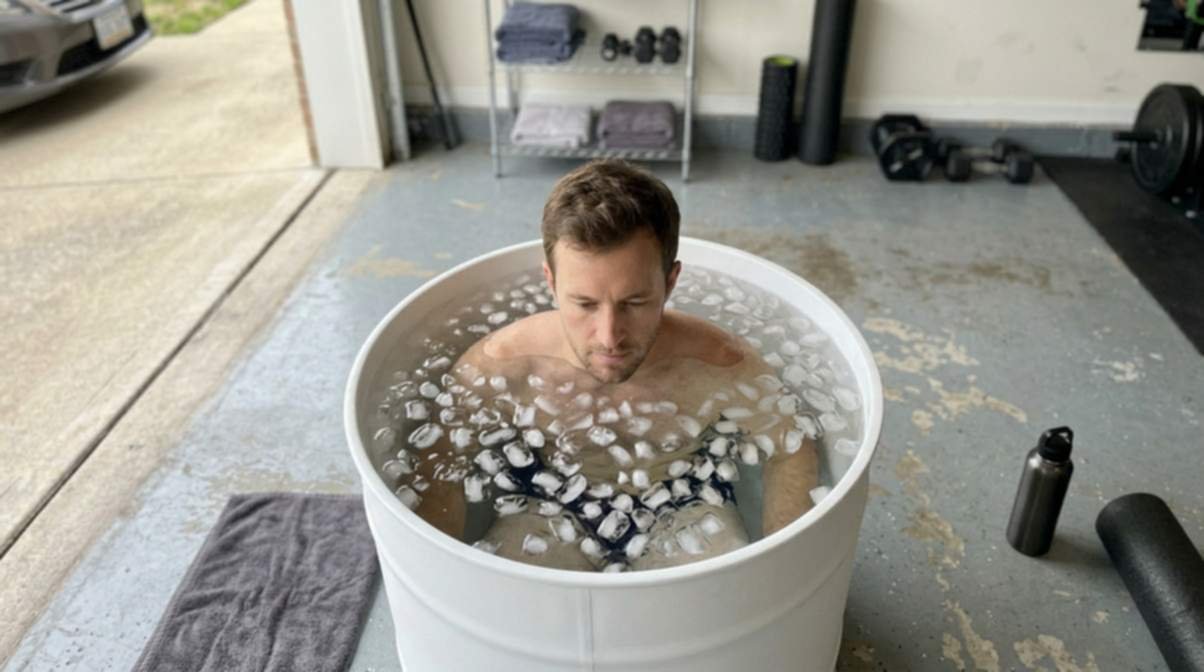
Cold plunging at 11–15°C for 10–15 minutes reliably reduces post-exercise muscle soreness and localised swelling for 24–72 hours after hard training. But a 2025 UniSA meta-analysis of 3,177 participants found that a single cold plunge actually increases systemic inflammation markers immediately and one hour after exposure not decreases them. Any chronic anti-inflammatory benefit appears to come from the body adapting to repeated cold exposure over weeks, not from any single session.
The first few seconds in a 10°C plunge are loud. Skin stings, breath catches, shoulders lift toward your ears. Fifteen minutes later your legs feel strangely fresh, and the claim you’ve read on a hundred supplement blogs cold plunging reduces inflammation feels self-evidently true.
While cold plunging reduces inflammation, the ideal protocol varies. Women typically require warmer temperatures than men for optimal recovery due to differences in body fat distribution and vasoconstriction patterns.
It’s the most repeated benefit in the whole category. It’s also the one the research treats with the most caution. The honest answer to does cold plunging reduce inflammation is: sometimes, in a specific way, over a specific timeframe and the ways it doesn’t matter for how you use it. cold plunges and testosterone ice bath temperature guide how long to stay in an ice bath
This guide walks through what the 2024–2026 research actually supports, what it doesn’t, and the protocols that get the most out of the real benefits without wasting the ones that only come from adaptation. It’s the companion piece to our comparison of the best ice baths in Australia and our full science guide to whether ice baths are good for you. cold plunges and muscle growth cold plunge vs ice bath are ice baths good for you cold plunge vs sauna cold plunges and blood pressure are ice baths dangerous
A quick framing point before we start: soreness, swelling, and inflammation are related but not interchangeable. A lot of blog posts blur them together. We’ll keep them separate, because the science does.
Safety first – Cold water immersion safety (Royal Life Saving Society Australia) Start warm: Beginners should start at 15°C, not 5°C. Royal Life Saving Australia, AUSactive and SPASA consider 10–15°C a safe range for most healthy adults. Talk to your GP if you have: heart disease, high or low blood pressure, circulatory conditions, Raynaud’s, autoimmune disease, or if you’re pregnant. The Royal Life Saving position statement lists these as elevated-risk conditions. Over 50? Screen for cardiovascular risk before starting. Cold shock forces the heart to work harder within the first 1–4 minutes. Never plunge alone. Always have someone nearby who can pull you out. Cold shock below 15°C can trigger involuntary gasping and loss of breath control. Don’t mix with alcohol. Alcohol impairs the body’s heat-conservation response and raises hypothermia risk.
The short answer in one table
Before we get into the mechanisms, here’s where the evidence sits right now on cold plunge and inflammation, broken down by the claim people actually make.
| Claim | What the research shows | Protocol | Evidence strength |
| Reduces post-exercise muscle soreness (DOMS) | Yes. Meta-analyses of RCTs show a clear effect on perceived soreness for 24–72 hours after hard training. | 11–15°C, 10–15 min | Strong |
| Reduces localised swelling after injury | Yes, short-term. Cold causes vasoconstriction, which reduces blood flow and oedema at the treated site. | Cold pack or immersion of the area | Strong for acute injury |
| Lowers systemic inflammation markers after a single plunge | No a 2025 meta-analysis (3,177 participants) found CWI increases inflammation markers immediately and 1 hour post-exposure. | N/A this is the opposite effect | Strong (but contradicts hype) |
| Lowers chronic, low-grade inflammation over months | Possibly, via adaptation. Habitual cold exposers show shifted cytokine patterns, but high-quality RCTs in patient populations are lacking. | Regular, repeated exposure over weeks | Weak / emerging |
| Reduces inflammation from autoimmune disease (arthritis, IBD, MS) | Anecdotal and small-sample evidence only. No large clinical trials support this yet. | N/A | Very weak |
| Blunts inflammation after strength training | Yes and that’s a problem if muscle growth is your goal. | Avoid within 4–6 hr of lifting | Strong (negative effect) |
First, which kind of inflammation are we talking about?
Inflammation isn’t one thing. It’s your immune system’s response to damage or threat, and it comes in two broad forms that behave very differently:
- Acute inflammation the short-term response to an injury, a workout, or an infection. Redness, swelling, heat, soreness. It’s useful. It’s how tissue repairs itself.
- Chronic (low-grade) inflammation a persistent, lower-level immune activation that simmers in the background for months or years. It’s linked to cardiovascular disease, type 2 diabetes, metabolic syndrome, autoimmune conditions, and aging.
When marketing says “cold plunging reduces inflammation,” it usually implies the chronic kind the kind people actually want to get rid of. When the research says cold plunging reduces inflammation, it almost always means the acute, local kind after exercise. That’s the gap this guide is trying to close.
1. What happens in your body during a plunge
Skin drops into water below 15°C. Blood vessels in the limbs constrict hard (this is vasoconstriction), pulling blood toward the core. Heart rate and blood pressure jump. Breathing gets rapid and shallow that’s the cold shock response, and it’s why you gasp in the first 30 seconds.
At the tissue level, that reduced blood flow slows the delivery of inflammatory mediators to the area and reduces local swelling. That’s the mechanism behind the soreness effect. It’s real, it’s short-lived, and it’s local.
Systemically, something else is happening. Your body reads extreme cold as a major stressor. Cortisol rises. Noradrenaline rises in some protocols Šrámek and colleagues measured a 530% increase after a 1-hour immersion at 14°C (worth flagging: that’s an hour, not the 10-minute dip most people do). And inflammatory signalling goes up, not down which is exactly what the 2025 UniSA meta-analysis found.
What the research actually supports
Key Takeaway: The strongest evidence for cold plunging and inflammation is narrow: it reduces muscle soreness and local swelling in the 24–72 hours after hard exercise. Everything beyond that chronic inflammation, autoimmune disease, long-term immune benefits is weaker, mixed, or still emerging.
1. Reduced post-exercise muscle soreness (DOMS)
This is the claim with the most solid research backing. Machado and colleagues’ 2016 meta-analysis in Sports Medicine pooled the available randomised trials and found a dose-response relationship: cold water immersion at 11–15°C for 11–15 minutes produced the largest reductions in delayed onset muscle soreness. A 2025 network meta-analysis by Wang et al. in Frontiers in Physiology confirmed this dose-response: medium temperatures (11–15°C) for 10–15 minutes offer the best balance between cooling effect and comfort for reducing exercise-induced muscle damage.
Important nuance most blogs skip: DOMS and inflammation aren’t the same thing. You can feel less sore while your objective inflammatory markers look basically the same. Peake and colleagues’ 2017 study at QUT found that cold water immersion and active recovery produced similar acute blunting of pro-inflammatory cytokines after intense resistance exercise. Cold plunging reduced subjective soreness, but it didn’t beat moving around at low intensity for measurable inflammation.
2. Localised swelling and acute injury
The traditional RICE protocol (rest, ice, compression, elevation) is built on vasoconstriction. Mayo Clinic and Cleveland Clinic both note that cold exposure constricts blood vessels near the skin, which reduces swelling and the soreness that comes with it. For a rolled ankle or a bruised shin, a cold pack or a plunge gives short-term relief. This is well-established clinical physiology and it’s not really in dispute.
3. Long-term adaptation in habitual cold exposers
This is where the most interesting and least-cited research sits. Dugué and Leppänen’s 2000 study in Clinical Physiology compared regular winter swimmers to inexperienced subjects at the end of a winter season. Resting IL-6, leukocytes, and monocytes were all higher in the regulars but so was their cortisol response to thermal stress, and their immune cells reacted differently to challenge. The researchers interpreted this as adaptive immune activation, not a sign of poor health.
Later reviews, including a 2025 Frontiers in Psychiatry protocol on cold-water exposure, describe this as cross-stressor habituation: repeated, controlled cold exposure seems to nudge the immune system toward a more calibrated response, with elevated baseline IL-6 but attenuated IL-1β and IL-6 release when stimulated. It’s the mechanism people usually mean when they say cold plunging has anti-inflammatory benefits and it only shows up after weeks of regular exposure, not after one session.
What this means in practice: if you’re plunging twice and expecting systemic anti-inflammatory results, you’re looking at the wrong timescale. The adaptation is real but slow.
The paradox: cold plunging acutely increases inflammation
Key Takeaway: A 2025 systematic review and meta-analysis by the University of South Australia pooled 11 RCTs and 3,177 participants. It found a statistically significant increase in inflammation markers immediately after CWI (standardised mean difference 1.03) and one hour post-exposure (SMD 1.26), with no measurable drop later. A single cold plunge is an inflammatory stimulus, not an anti-inflammatory one.
This is the finding most competitor pages haven’t caught up with. Cain and colleagues’ 2025 meta-analysis in PLOS One (University of South Australia) is the largest and most recent analysis of how cold water immersion affects general-population health markers. It included trials using baths and showers at 7–15°C for durations from 30 seconds to two hours.
The inflammation results are unambiguous in the wrong direction for the hype. Immediately post-exposure, inflammation markers went up. One hour later, they were higher still. The authors describe this as an acute inflammatory response consistent with the body reading cold as a stressor.
If a brand sells you a plunge with the pitch that you’ll climb out less inflamed than when you got in, that’s not what the best current evidence shows. It shows the opposite on a short timescale. The interesting question is whether repeated exposure, over weeks, produces a lower baseline once the acute spikes resolve and there the evidence is suggestive but not yet strong.
What the science doesn’t support (yet)
1. A reliable drop in chronic inflammation from regular plunging
This is the biggest marketing claim in the cold plunge category, and it’s also the one the 2025 UniSA review is most careful about. The review didn’t find convincing effects of CWI on immune function either immediately or one hour after exposure. Longer-term effects lower sick days, better sleep, better mood were supported by narrative evidence but the RCTs are small and the populations are narrow (mostly young, healthy adults).
The often-cited “29% fewer sick days” figure comes from Buijze and colleagues’ 2016 PLOS One study of cold showers in 3,018 Dutch adults. The strong-sounding number needs a caveat most blog posts skip: the 29% reduction was in self-reported sickness absence from work, not in the number of illness days themselves there was no significant difference in how many days participants reported feeling unwell. People on the cold-shower protocol took fewer days off work while sick, but they weren’t actually getting sick less often. It’s still an interesting finding. It’s not the immune-supercharger result the wellness world has turned it into.
2. Relief for autoimmune or chronic inflammatory disease
People with rheumatoid arthritis, inflammatory bowel disease, fibromyalgia and lupus often report subjective improvements from cold exposure. The anecdotal signal is strong enough that researchers like Mark Harper have surveyed hundreds of outdoor swimmers about it. But there aren’t yet high-quality randomised trials showing that cold plunging is a treatment for any of these conditions. Royal Life Saving Australia actually lists autoimmune disorders as a contraindication category a reminder that for some people, cold is a stressor the body doesn’t need more of.
3. A replacement for NSAIDs or medical inflammation care
Cold plunging isn’t ibuprofen. It doesn’t work through the same pathway, doesn’t produce the same magnitude of effect, and doesn’t treat the underlying cause of chronic disease. If you’re managing inflammatory arthritis or any autoimmune condition, your rheumatologist’s plan sits above anything you do in a plunge tub.
When cold plunging backfires: the strength training problem
One of the clearest negative findings in the whole field is about timing specifically, cold water immersion immediately after strength training. Roberts and colleagues’ 2015 study in the Journal of Physiology (QUT and University of Queensland) ran a 12-week trial where men strength-trained twice a week and followed each session with either 10 minutes of 10°C water immersion or active recovery. The cold plunge group gained significantly less muscle and less strength. The same paper showed that CWI blunted the activation of key anabolic signalling proteins and satellite cell activity in skeletal muscle for up to two days after each session.
The follow-up Peake et al. paper in 2017 (same QUT group, same cohort, different endpoints people often conflate the two studies) looked specifically at inflammation markers in the muscle. The result was pointed: inflammatory cell infiltration, pro-inflammatory cytokine mRNA and cell-stress responses did not differ significantly between cold water immersion and active recovery. CWI wasn’t better than just moving around gently. So the blunted muscle adaptation from Roberts 2015 likely isn’t explained by CWI suppressing inflammation because in the same subjects, CWI didn’t actually suppress inflammation any more than the control condition did.
The practical rule: if hypertrophy or strength is your goal, leave at least 4–6 hours between your last lift and your plunge. For endurance training, general recovery, or non-training days, the interference effect doesn’t really apply. Our ice bath duration guide covers timing in more detail.
The protocol that gets the balance right
Key Takeaway: For soreness and recovery: 11–15°C for 10–15 minutes, 2–3 times a week, at least 4–6 hours away from any strength training. For long-term adaptation effects, stay consistent for 8–12 weeks before assessing results.
| Variable | Recommended range | Why |
| Water temperature | 11–15°C | Machado 2016 and Wang 2025 meta-analyses found this window most effective for reducing DOMS without excessive stress. Below 10°C adds discomfort without clearly better outcomes. |
| Duration | 10–15 minutes | Matches the dose used in positive recovery studies. Shorter is fine for adaptation; longer adds hypothermia risk without benefit. |
| Frequency | 2–3 sessions per week | Enough exposure for adaptive responses to develop over 8–12 weeks. Daily plunging after training may blunt performance gains. |
| Timing vs lifting | 4–6 hours away | Avoids blunting the post-exercise anabolic signal identified in Roberts 2015. |
| Timing vs sleep | Not within 90 minutes of bed | Cold exposure raises alertness; it’s more useful as a morning practice for most people. |
| Getting out | Rewarm passively, don’t rush a hot shower | Rewarming with a sauna or hot shower may cancel some of the metabolic benefits. |
Australian-specific considerations
Your tap water isn’t going to cut it. Australian tap water ranges from around 15°C in Melbourne or Hobart winter through to 25°C-plus in tropical Queensland. Even the coldest tap water in the country sits at the warm end of the therapeutic window. If you want reliable 11–15°C year-round, a chiller unit is effectively required outside the southern winter months.
Climate matters for your chiller. A 40°C summer day in Perth or western Sydney asks a lot of a cheap chiller. Units with undersized compressors struggle to keep set points. If you’re buying for summer use in northern or inland Australia, read compressor specs carefully.
Authority on safety. The 2024 Royal Life Saving Society Australia, AUSactive and SPASA position statement is the most relevant local guidance. It sets 10–15°C as a safe range for most healthy adults, recommends pre-activity screening, and specifically flags pregnancy, heart disease, circulatory issues, autoimmune disorders and Raynaud’s as elevated-risk conditions.
Frequently asked questions
Do ice baths reduce inflammation?
Yes, for acute, localised inflammation like post-exercise muscle soreness and swelling from minor injuries. Cold water immersion at 11–15°C for 10–15 minutes reduces perceived soreness for 24–72 hours after hard training. However, a 2025 meta-analysis of 3,177 participants found that a single cold plunge actually increases systemic inflammation markers immediately and one hour after exposure. The anti-inflammatory effect for chronic, low-grade inflammation is less clear and appears to require weeks of regular adaptation.
Does cold plunging reduce chronic inflammation?
The evidence is weak and emerging. Habitual cold exposers show shifted immune patterns over time, suggesting possible adaptation. However, high-quality randomised trials in patient populations with chronic inflammatory conditions are lacking. A single plunge does not reduce chronic inflammation; if anything, it acutely increases it. Any long-term benefit would require consistent practice over 8–12 weeks.
How long does the anti-inflammatory effect of a cold plunge last?
For reducing muscle soreness (DOMS), the effect lasts 24–72 hours, based on meta-analyses. For any systemic anti-inflammatory effect, the current best evidence (Cain et al. 2025) shows markers are elevated, not reduced, for at least one hour post-plunge. There is no evidence a single session produces a lasting systemic anti-inflammatory effect.
Is a cold plunge or an ice bath better for inflammation?
They are the same thing for practical purposes. “Cold plunge” typically refers to a dedicated tub, often with a chiller. “Ice bath” usually means adding ice to a tub of water. The key variables are water temperature (11–15°C is optimal) and duration (10–15 minutes). The method of cooling is less important than hitting those parameters consistently.
Can cold plunging help with arthritis?
Anecdotal reports from people with rheumatoid arthritis and other autoimmune conditions suggest subjective relief, but there are no large clinical trials supporting cold plunging as a treatment. Royal Life Saving Australia lists autoimmune disorders as an elevated-risk category for cold water immersion. Anyone with an autoimmune condition should consult their specialist before trying cold plunging.
How often should you cold plunge to reduce inflammation?
For post-exercise soreness: 2–3 times per week at 11–15°C for 10–15 minutes, timed at least 4–6 hours away from strength training. For potential long-term adaptation effects on the immune system, consistency over 8–12 weeks is likely needed. Daily plunging is not necessary and may interfere with muscle growth if done too close to resistance workouts.
Does cold therapy reduce inflammation like NSAIDs do?
No. Cold plunging and NSAIDs (like ibuprofen) work through completely different mechanisms. NSAIDs inhibit specific enzymes (COX-1/COX-2) to block prostaglandin production. Cold therapy works via vasoconstriction and possibly long-term immune adaptation. Cold plunging is not a replacement for prescribed anti-inflammatory medication.
Is cold plunging bad for inflammation after strength training?
It can be counterproductive for muscle growth. Research shows cold water immersion immediately after strength training blunts the anabolic signalling needed for hypertrophy and can lead to less muscle and strength gain over 12 weeks. This blunting effect is not clearly linked to suppressing inflammation, as one study found similar inflammatory marker responses between cold immersion and active recovery. The safe rule is to wait 4–6 hours after lifting before plunging.
How cold does the water need to be to reduce inflammation?
For reducing post-exercise muscle soreness, the research points to 11–15°C as the optimal range. Temperatures below 10°C add significant discomfort without proven additional benefit for recovery. Beginners should start at the warmer end of this range (15°C) and gradually work down as they adapt.
Cold plunge vs ice pack which is better for inflammation?
For localised inflammation from an acute injury (like a sprained ankle), an ice pack applied directly to the area is more practical and targeted. For whole-body recovery after exercise, a cold plunge immerses large muscle groups simultaneously, which may be more efficient. The core mechanism vasoconstriction to reduce swelling is the same.
Can I replace anti-inflammatory medication with cold plunging?
No. Cold plunging is not a medically proven treatment for chronic inflammatory diseases like arthritis, IBD, or lupus. Do not stop or replace prescribed medication with cold therapy without consulting your doctor. Cold plunging should be considered a complementary wellness practice, not a medical treatment.
How long before I see anti-inflammatory benefits from regular cold plunging?
For reduced muscle soreness, benefits can be felt after the first session. For any potential shift in baseline immune function or chronic inflammation, the adaptation research suggests a timeframe of 8–12 weeks of consistent practice (2–3 times per week). Immediate systemic anti-inflammatory benefits are not supported by current evidence.
Meta-analyses
Cain, T., Brinsley, J., Bennett, H., Nelson, M., Maher, C., & Singh, B. (2025). Effects of cold-water immersion on health and wellbeing: A systematic review and meta-analysis. PLOS One, 20(1), e0317615. DOI: 10.1371/journal.pone.0317615
Wang, Y., Wang, X., & Pan, J. (2025). Impact of different doses of cold water immersion on recovery from acute exercise-induced muscle damage: a network meta-analysis. Frontiers in Physiology, 16, 1525726. DOI: 10.3389/fphys.2025.1525726
Machado, A. F., Ferreira, P. H., Micheletti, J. K., et al. (2016). Can water temperature and immersion time influence the effect of cold water immersion on muscle soreness? A systematic review and meta-analysis. Sports Medicine, 46(4), 503–514. DOI: 10.1007/s40279-015-0431-7
Piñero, A., Burke, R., Augustin, F., et al. (2024). Throwing cold water on muscle growth: A systematic review with meta-analysis of the effects of postexercise cold water immersion on resistance training-induced hypertrophy. European Journal of Sport Science, 24(2), 177–189. DOI: 10.1002/ejsc.12074
Key individual studies
Roberts, L. A., Raastad, T., Markworth, J. F., et al. (2015). Post-exercise cold water immersion attenuates acute anabolic signalling and long-term adaptations in muscle to strength training. Journal of Physiology, 593(18), 4285–4301. DOI: 10.1113/JP270570
Peake, J. M., Roberts, L. A., Figueiredo, V. C., et al. (2017). The effects of cold water immersion and active recovery on inflammation and cell stress responses in human skeletal muscle after resistance exercise. Journal of Physiology, 595(3), 695–711. DOI: 10.1113/JP272881
Dugué, B., & Leppänen, E. (2000). Adaptation related to cytokines in man: effects of regular swimming in ice-cold water. Clinical Physiology, 20(2), 114–121. PubMed: 10735978
Buijze, G. A., Sierevelt, I. N., van der Heijden, B. C., et al. (2016). The effect of cold showering on health and work: A randomized controlled trial. PLOS One, 11(9), e0161749. DOI: 10.1371/journal.pone.0161749
Šrámek, P., Šimečková, M., Janský, L., et al. (2000). Human physiological responses to immersion into water of different temperatures. European Journal of Applied Physiology, 81(5), 436–442. (Note: 530% noradrenaline and 250% dopamine figures are based on 1-hour immersion at 14°C.) DOI: 10.1007/s004210050065
Authority sources
Royal Life Saving Society Australia — Risks of Cold Water
Mayo Clinic Health System — Cold-water plunging health benefits
Medical disclaimer: This article is for general information only and isn’t medical advice. Cold water immersion isn’t safe for everyone. Talk to your GP before starting, especially if you have heart or circulatory conditions, high blood pressure, autoimmune disease, Raynaud’s, are pregnant, or are over 50. Never plunge alone.
