
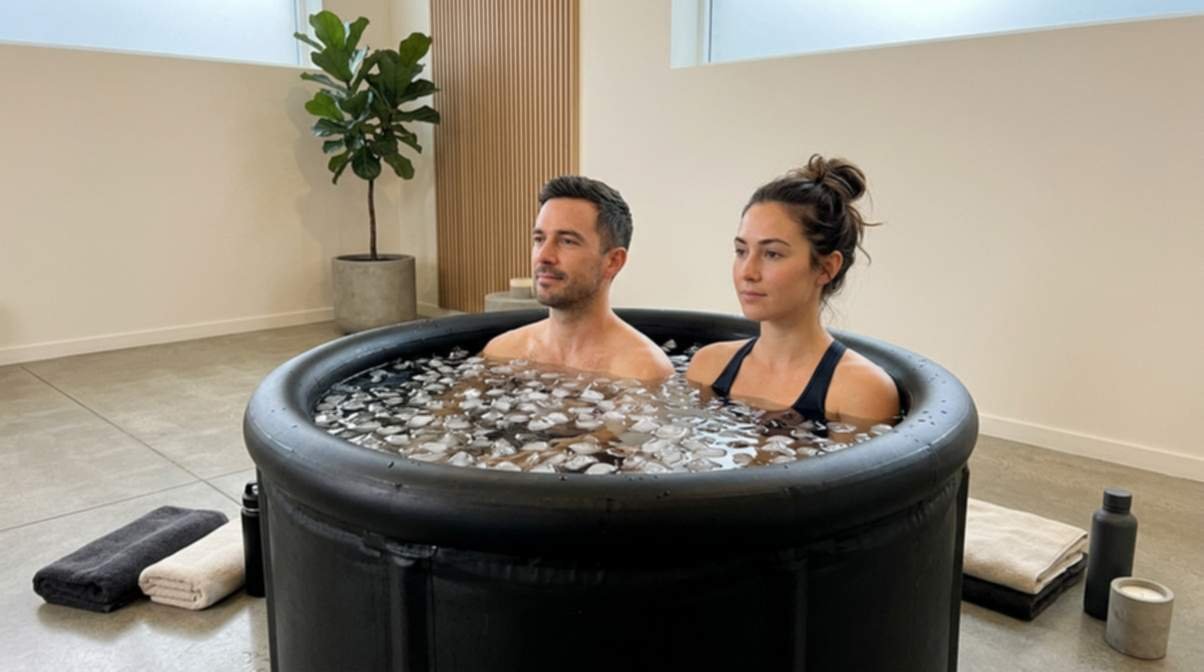
Men and women respond to cold plunges differently because of body composition, thermoregulation and hormonal cycles. Women cool faster and rely more on vasoconstriction, so they generally do best with shorter plunges at slightly warmer temperatures (14–15°C for 2–5 minutes). Men produce more shivering heat and have a larger acute hormonal response, tolerating colder, longer exposures (10–14°C for 5–10 minutes). Almost every popular cold plunge protocol online is built on male data.
Walk past any beach in Bondi or St Kilda on a winter morning and you’ll see them: the cold plunge crew. Wetsuit-free, towels in hand, half of them men, half of them women, all chasing the same dopamine hit. The catch is that almost every protocol they’re following temperature, duration, frequency comes from research on men. optimal cold plunge temperature how long to stay in a cold plunge
Beyond physiological differences, women often explore cold plunges for skin and hair benefits, though the science behind claims like reduced wrinkles or stronger follicles remains limited compared to the proven recovery advantages. cold plunges during pregnancy safety of cold plunges
While cold plunges affect men and women differently, one persistent myth is that they boost testosterone—research actually shows the opposite. For a deeper dive, see our analysis on cold plunges and testosterone levels, which breaks down the peer-reviewed studies.
If you’ve trained, dieted or done strength work using “the science,” you’ve probably hit this gap before. Most cold water immersion (CWI) studies have used male participants, and the female protocols you see online are usually scaled-down male protocols, not female-specific ones.
That’s a problem. Women cool faster, vasoconstrict more aggressively and have hormonal cycles that change cold sensitivity week to week. Men produce more shivering thermogenesis and have a larger acute neuroendocrine spike. Same plunge, different physiology, different result. cold plunge for women
This guide breaks down what the research actually says about cold plunge for women vs men where the differences are real, where they’re overstated and what protocols actually fit each body. If you’re shopping for a tub to set up at home, our comparison of the best ice baths in Australia will sort you out on hardware. This guide is about how to use it.
Safety First – Read This Before Anything Else
Cold water immersion is a stressor. It can be a useful one, but it’s not for everyone, and the rules don’t change based on whether you’ve watched 50 Wim Hof videos. cold plunges and muscle growth
Start at 12–15°C, not 5°C. The Royal Life Saving Society Australia warns that water below 15°C can trigger cold shock response involuntary gasping, hyperventilation and a sudden cardiovascular load within seconds of immersion. Don’t plunge alone. Don’t plunge after alcohol or sleep deprivation.
Speak to your GP first if you’re over 50, pregnant, have any cardiovascular condition (high blood pressure, arrhythmia, history of heart attack), Raynaud’s, an active autoimmune condition, or you’re managing thyroid issues. Cold plunging is not appropriate during pregnancy without medical clearance.
Skip the session if you’re sick, exhausted or fasting. The whole point of cold exposure is controlled hormesis a small, recoverable stress. If your body is already in deficit, you don’t get the adaptation, you get the suppression.
Cold Plunge for Women vs Men
Quick comparison of the key differences. We’ll get into the why for each one below.
| Factor | Men | Women |
| Cooling rate (resting) | Slower more muscle, more metabolic heat | Faster smaller body, less metabolic heat |
| Primary heat-defence | Shivering thermogenesis (active) | Peripheral vasoconstriction (insulative) |
| Subcutaneous fat layer | Thinner, less even | Thicker, more even insulation |
| Acute neuroendocrine spike | Larger in absolute terms | Smaller absolute response |
| Cortisol risk if over-dosed | Lower at typical doses | Higher narrower margin if over-trained |
| Optimal temp (general health) | 10–14°C | 14–15°C |
| Optimal duration (general health) | 5–10 min | 2–5 min |
| Hormonal considerations | Stable cycle | Menstrual phase shifts cold tolerance |
| Strength training interference | Wait 4–6 hr post-lift | Wait 4–6 hr post-lift |
A note on the apparent contradiction in the table: men have a larger acute neuroendocrine response to a single cold exposure (Solianik et al., 2014), while women appear more susceptible to dysregulation from frequent or excessive cold over time, particularly when paired with low energy availability or high training load. Acute response and chronic adaptation aren’t the same thing.
Thermoregulation: Why Women Cool Faster
KEY TAKEAWAY: Women lose heat faster than men of similar fitness, but it’s mostly geometry less muscle, smaller body, higher surface-area-to-mass ratio. Match for body fatness and the gender gap in cooling rate largely disappears.
The most consistent finding in the gender-and-cold literature is that women lose heat faster than men of similar fitness but not for the reasons most blogs claim.
It’s not “women feel the cold more.” It’s mostly geometry. Women have a higher surface-area-to-mass ratio, less skeletal muscle (so less metabolic heat at rest), and a thinner core mass relative to peripheral mass. When you immerse a smaller body in cold water, you’ve got more skin per kilo of warm tissue inside.
A landmark study comparing thermoregulatory responses in men and women immersed in 60–90 minutes of cold water (Tikuisis et al., 2000) found that when subjects were matched for body fatness, the gender difference in core cooling rate disappeared. Body composition does most of the explaining. The fact that women on average have less muscle mass and a higher surface-area ratio not the X chromosome is what drives the faster cooling.
The strategies the body uses to defend core temperature are different though, and that part is sex-linked. Solianik et al. (2014), in the foundational study on this question, immersed 18 men and 14 women to the manubrium in 14°C water and showed that men relied more on shivering thermogenesis (active heat production) while women relied more on vasoconstriction (insulative restricting blood flow to skin and limbs to keep heat in the core). Cooling rate was similar; strategy was different. The men’s neuroendocrine and immune responses were larger in absolute terms.
Newer work supports the same picture. A 2024 study in Frontiers in Physiology on autonomic and cognitive responses during cold-air and cold-water partial immersion (Hossain et al., 2024) found measurable sex differences in heart rate variability and immediate memory under cold load.
What this means for plunging: women’s hands and feet will go numb faster, women will hit shivering threshold sooner, and women will need to exit the tub earlier to avoid a meaningful drop in core temperature.
The Hormonal Difference (And Why Cycle Timing Matters)
KEY TAKEAWAY: Women’s cold tolerance shifts across the menstrual cycle. Easier in the follicular phase, often harder in the luteal phase when progesterone raises baseline body temperature 0.3–0.5°C. Adjust temperature and duration to match how you actually feel that week.
This is where it gets specifically female. Men’s cold tolerance is largely the same week to week. Women’s isn’t.
Across the menstrual cycle, oestrogen and progesterone shift in ways that change baseline body temperature and cold sensitivity:
- Follicular phase (day 1 to ovulation, roughly): oestrogen rising, baseline core temperature lower, cold tolerance highest. The easiest week or two for cold plunging.
- Ovulation (~day 14): energy and pain tolerance high. Most women plunge well here.
- Luteal phase (post-ovulation to menstruation): progesterone rising, baseline core temperature 0.3–0.5°C higher, cold sensitivity often increased. Many women report cold feels harder during this window.
- Menstruation: highly individual. Some women find cold plunging eases cramps; others find it adds to fatigue.
There isn’t a large body of randomised data dictating exact temperature and duration changes by cycle phase most of this is observational and clinical. Dr Stacy Sims, one of the leading voices in female-specific exercise physiology, recommends women keep plunges in the 14–15°C range for general health and shorten exposure to 2–5 minutes, particularly during the luteal phase.
The often-cited concern that frequent cold plunging “disrupts menstrual cycles” or “causes bone loss” in women is mostly extrapolated from low-energy-availability research, not from direct cold-plunge studies. The mechanism is plausible chronic sympathetic activation can suppress reproductive hormones but the evidence is weak when cold exposure is appropriately dosed. The risk isn’t cold itself; it’s cold piled on top of under-eating, under-sleeping and over-training.
Brown Fat, Metabolism and Testosterone
KEY TAKEAWAY: Both sexes get metabolic benefits from cold (brown fat activation, improved insulin sensitivity). The popular claim that cold plunges meaningfully raise baseline testosterone in men isn’t backed by quality RCT evidence. Indirect, slow, modest at best.
Cold exposure activates brown adipose tissue (BAT) a metabolically active fat that burns glucose and fatty acids to generate heat. Both men and women have BAT, but on average women have somewhat more of it relative to body mass, and BAT activity scales with cold exposure history.
For men, the bigger story online is testosterone. The claims range from cautious (“cold can support testosterone via reduced inflammation”) to aggressive (“cold plunges boost testosterone 21%”). The honest read of the evidence:
- There is no robust randomised controlled trial showing that habitual cold plunging meaningfully raises baseline testosterone in healthy men.
- Acute cold exposure can transiently lower testosterone in some studies, while others show neutral or modest positive effects.
- The strongest indirect mechanism cold improves insulin sensitivity, reduces visceral fat over time, and visceral fat reduction tends to support healthier testosterone is real but slow and indirect.
If a brand is selling you ice baths on the promise of a testosterone boost, treat it the same way you’d treat a supplement promising the same: politely sceptical until they show you the trial.
For women, the metabolic story is similar BAT activation, improved insulin sensitivity, mild thermogenic effect but there’s a ceiling. Push the dose too far (very cold, very long, very frequent) and the cortisol response can blunt thyroid activity and disrupt the metabolic benefits you’re chasing. Smarter, not colder, as Sims puts it.
Recovery and Training: Where the Sexes Actually Differ
KEY TAKEAWAY: Acute soreness recovery temps and durations are broadly similar across sexes (10–15°C for 10–15 minutes per the meta-analyses). The 4–6 hour gap between strength training and cold plunging applies to both. Where the sexes diverge is in the chronic dose women have a narrower margin between effective and excessive.
Here’s the most practical difference for athletes.
After a hard session, men experience strong post-exercise vasoconstriction. Add a cold plunge on top particularly within 4 hours of strength training and you blunt the inflammatory and anabolic signalling pathways needed for muscle growth. Roberts et al. (2015), out of the QUT lab, showed that CWI after resistance training attenuated long-term gains in muscle mass and strength compared to active recovery. Peake et al. (2017), same group, showed CWI reduced satellite cell activity (the muscle stem cells that drive hypertrophy).
This isn’t a “men’s problem.” It applies to women too. The protocol wait at least 4–6 hours after strength training before plunging if hypertrophy is the goal is the same for both sexes. We cover this in detail in our how long in an ice bath duration guide.
The tissue context differs slightly though. Women naturally vasodilate more after exercise (oestrogen-mediated), and there’s an emerging argument that brief cold exposure may redistribute blood flow centrally without the same harsh anabolic blunting effect. Evidence here is thin and shouldn’t be over-claimed, but it’s plausible cold plunging for recovery is a slightly more forgiving tool for women than for men. The 4–6 hour rule still applies just possibly with a smaller magnitude of interference.
For pure soreness reduction, the meta-analysis by Machado et al. (2016) showed 11–15°C for 11–15 minutes was optimal across both sexes. The 2025 dose-response meta-analysis by Wang et al. (55 RCTs) found the strongest reduction in delayed onset muscle soreness around 10–15°C for 10–15 minutes again similar across sexes.
So: temperature and duration for acute soreness recovery are broadly similar. Where the sexes diverge is in the chronic dose how often you can hammer the system before it works against you.
5. Cortisol and the Chronic Stress Question
KEY TAKEAWAY: A single well-dosed cold plunge actually lowers cortisol over the hours after immersion in both sexes. The chronic question is different: too-frequent, too-cold, too-long can keep the sympathetic nervous system on a higher baseline tone. Women have the narrower margin.
Acute cortisol response to a single cold plunge is modest in both sexes, and tends to decrease in the hours after the plunge (which is part of why cold feels mood-stabilising). Cain et al.’s 2025 PLOS One meta-analysis out of UniSA (11 studies, 3,177 participants) showed stress markers significantly reduced 12 hours post-immersion.
The chronic question is different. Repeated, intense cold exposure daily, very cold, very long keeps the sympathetic nervous system on a higher baseline tone. For most healthy men this is well-tolerated. For women, particularly those already running high on training stress, low energy intake, or perimenopausal hormonal change, the same protocol can tip into dysregulation: poorer sleep, irregular cycles, persistent fatigue, blunted thyroid output.
This is the key practical message: men and women can both over-do cold. Women appear to have a narrower margin between effective dose and harmful dose, especially if other stressors are stacked. If you’re a woman cold plunging 5–6 days a week and something feels off cycle changes, sleep collapsing, mood dropping pull the dose back before you push it.
6. What the Science Doesn’t Support
A few popular claims in the men vs women cold plunge space that don’t hold up under examination:
- “Cold plunging massively boosts testosterone in men.” No good RCT evidence. Indirect, slow, modest at best.
- “Women shouldn’t cold plunge at all.” Overcorrection. Moderate, well-dosed cold exposure is beneficial for many women the issue is dose, not the modality.
- “Cold plunges cause bone loss in women.” Extrapolated from energy-availability research, not from direct cold plunge studies. No solid evidence at sensible doses.
- “Women should never plunge in the luteal phase.” Many women plunge comfortably across their cycle. Adjusting temperature and duration is sensible; complete avoidance isn’t required.
- “Men can plunge in 1°C ice water with no consequences.” The cold shock response is sex-blind. Royal Life Saving Australia data on cold-water drowning is overwhelmingly male overconfidence is its own risk factor.
Australian-Specific Considerations
A few things worth flagging if you’re plunging in Australia:
- Tap water temperature: In Melbourne or Hobart in winter, mains water can sit at 8–12°C. In Brisbane summer, it’s closer to 22–25°C. If you’re using a tub without a chiller, your starting temperature will vary wildly by season and location.
- Climate load on chillers: A 0.5–1HP chiller may struggle to hold 5°C in a 35°C Brisbane afternoon. If you live in a hot climate, oversize the chiller or expect higher running costs.
- Sea swimming: Winter sea temps along the southern coast (Vic, Tas, southern NSW) sit around 12–15°C within the recommended therapeutic range. North-coast NSW and QLD rarely drop low enough to count as a meaningful cold plunge.
- Royal Life Saving Australia releases regular cold-water safety guidance. Worth reading their current position statement before starting any ocean or open-water cold practice.
Optimal Cold Plunge Protocols by Sex
These are starting frameworks, not prescriptions. Adjust for fitness, history with cold, and how you actually feel.
Cold plunge protocol for women
| Goal | Temperature | Duration | Frequency |
| General health, mood, metabolic | 14–15°C | 2–5 min | 3–4× per week |
| Post-competition recovery | 10–12°C | Up to 10 min | As needed, not daily |
| Symptom relief (cramps, hot flushes) | 14–15°C | 1–3 min | As needed |
Adjust toward shorter and warmer in the luteal phase. Skip if cycle is heavy or energy is low.
Cold plunge protocol for men
| Goal | Temperature | Duration | Frequency |
| General health, mood, metabolic | 10–14°C | 5–10 min | 3–5× per week |
| Post-competition recovery | 10–12°C | Up to 10 min | As needed, not daily |
| Cold adaptation / brown fat | 10–12°C | 5–10 min | 3–4× per week |
Avoid plunging within 4–6 hours of strength training if muscle growth is a priority. Don’t push to extreme cold (sub-5°C) just because you can.
Frequently Asked Questions
Should women cold plunge differently from men?
Yes, in dose, not in principle. Women generally do better with shorter plunges (2–5 minutes) at slightly warmer temperatures (14–15°C) for general health, while men can tolerate longer, colder exposures (5–10 minutes at 10–14°C). Both sexes benefit from cold immersion at appropriate doses the modality is the same, the dosing differs.
What’s the best cold plunge temperature for women?
For general health and metabolic benefits, 14–15°C is the sweet spot for most women. For post-competition recovery, 10–12°C is more effective for reducing soreness. Going colder than 10°C provides no proven extra benefit for women and increases the cortisol load.
What’s the best cold plunge temperature for men?
For general health, 10–14°C works well for most men. For post-competition recovery, 10–12°C for around 10 minutes maximises soreness reduction (per Machado et al. 2016 and Wang et al. 2025 meta-analyses). Sub-5°C is colder than the research supports for any specific benefit.
Can women cold plunge during their period?
Yes, if it feels right. Some women find cold plunging eases cramps via reduced inflammation; others find it adds to fatigue. There’s no medical reason to avoid it during menstruation if you’re tolerating it well. Use a tampon or cup for comfort and hygiene.
Does cold plunging affect testosterone in men?
The evidence is mixed and modest. Acute cold exposure can transiently lower testosterone in some studies. Habitual cold plunging may indirectly support testosterone by reducing visceral fat and improving insulin sensitivity, but no robust randomised trial shows a meaningful baseline T increase. Claims of “21% testosterone boost” are not supported by quality evidence.
Does cold plunging affect women’s hormones?
At sensible doses (2–5 minutes at 14–15°C, a few times a week), no and many women report better mood and PMS symptom relief. At excessive doses (very cold, very long, daily, on top of training and dietary stress), the chronic sympathetic load can disrupt menstrual cycles and blunt thyroid function.
Do men and women lose heat at the same rate in cold water?
No. Women cool faster on average primarily because of lower muscle mass, smaller body size and a higher surface-area-to-mass ratio. When matched for body fatness, the difference shrinks substantially (Tikuisis et al., 2000). The strategies differ too: men shiver more, women vasoconstrict more.
Should women cold plunge in the luteal phase?
Yes, but consider going shorter and slightly warmer. Higher progesterone in the luteal phase raises baseline body temperature by 0.3–0.5°C and many women feel more cold-sensitive. A 14–15°C plunge for 2–3 minutes is generally well-tolerated; pushing to 10°C for 8 minutes is more likely to feel rough.
Is cold plunging safe during pregnancy?
No, not without medical clearance. Cold-induced vasoconstriction can reduce blood flow, and the cold shock response carries cardiovascular risk. There is insufficient research on cold plunging during pregnancy to recommend it, and the risk-benefit doesn’t favour it. Speak to your GP or obstetrician.
Why are most cold plunge studies done on men?
Historical bias in exercise physiology research. The hormonal cycle of women is treated as a confound rather than a variable, so women have often been excluded from studies to “control for variability.” This is changing recent meta-analyses (Cain et al. 2025, Wang et al. 2025) include mixed-sex data but the legacy means most popular protocols are still built on male physiology.
Is it safe for men over 50 to cold plunge?
With medical clearance, often yes. Cardiovascular reserve declines with age and the cold shock response carries more risk in older men. Speak to your GP first, especially if you have hypertension, arrhythmia or any history of cardiac events. Start at 14–15°C, never plunge alone, never after alcohol.
Does cold plunging help women’s recovery more than men’s?
Possibly, slightly. Women’s higher post-exercise vasodilation and different inflammation profile may make brief cold plunges a more forgiving recovery tool. The 4–6 hour gap from strength training still applies if hypertrophy is the goal the magnitude of interference may just be smaller. Evidence here is preliminary and shouldn’t be over-claimed.
Meta-analyses & systematic reviews
- Cain CC, et al. The effects of cold-water immersion on health and wellbeing: a systematic review and meta-analysis. PLOS One, 2025. DOI: 10.1371/journal.pone.0317615
- Machado AF, Ferreira PH, Micheletti JK, et al. Can water temperature and immersion time influence the effect of cold water immersion on muscle soreness? A systematic review and meta-analysis. Sports Medicine, 2016; 46(4):503–514. DOI: 10.1007/s40279-015-0431-7
- Wang Y, et al. Dose-response effects of cold water immersion on physiological recovery: a systematic review and meta-analysis. Frontiers in Physiology, 2025. DOI: 10.3389/fphys.2025.1525726
Sex-specific cold immersion studies
- Solianik R, Skurvydas A, Vitkauskienė A, Brazaitis M. Gender-specific cold responses induce a similar body-cooling rate but different neuroendocrine and immune responses. Cryobiology, 2014; 69(1):26–33. DOI: 10.1016/j.cryobiol.2014.04.015
- Tikuisis P, Jacobs I, Moroz D, Vallerand AL, Martineau L. Comparison of thermoregulatory responses between men and women immersed in cold water. Journal of Applied Physiology, 2000; 89(4):1403–1411. DOI: 10.1152/jappl.2000.89.4.1403
- Hossain MB, et al. Sex differences in autonomic functions and cognitive performance during cold-air exposure and cold-water partial immersion. Frontiers in Physiology, 2024. DOI: 10.3389/fphys.2024.1463784
- Bongers CCWG, Peggen MAG, Minett GM, et al. Core temperature response to cold water immersion in heat stroke patients is nonlinear and unrelated to sex or body size. Medicine & Science in Sports & Exercise, 2025; 57(1):192–200. DOI: 10.1249/MSS.0000000000003547
Hormonal & training studies
- Šrámek P, Šimečková M, Janský L, Šavlíková J, Vybíral S. Human physiological responses to immersion into water of different temperatures. European Journal of Applied Physiology, 2000; 81(5):436–442. DOI: 10.1007/s004210050065 (Note: 1-hour immersion at 14°C — always state the duration when citing the noradrenaline figures)
- Roberts LA, Raastad T, Markworth JF, et al. Post-exercise cold water immersion attenuates acute anabolic signalling and long-term adaptations in muscle to strength training. Journal of Physiology, 2015; 593(18):4285–4301. DOI: 10.1113/JP270570
- Peake JM, Roberts LA, Figueiredo VC, et al. The effects of cold water immersion and active recovery on inflammation and cell stress responses in human skeletal muscle after resistance exercise. Journal of Physiology, 2017; 595(3):695–711. DOI: 10.1113/JP272881
Authority sources
- Royal Life Saving Society Australia — Cold water safety research and guidance.
- Sims SK. Cold Plunging for Women: Why Colder Isn’t Always Better. Dr Stacy Sims, Nov 2025.
- Søberg Institute. Cold-Water Immersion and Women: What a New Study Reveals About Recovery. 2025.
Medical disclaimer: This article is for educational purposes only and does not constitute medical advice. Cold water immersion is a stressor and is not appropriate for everyone. Speak to your GP before starting cold water immersion, particularly if you are pregnant, over 50, or have any cardiovascular, autoimmune or hormonal condition.
