
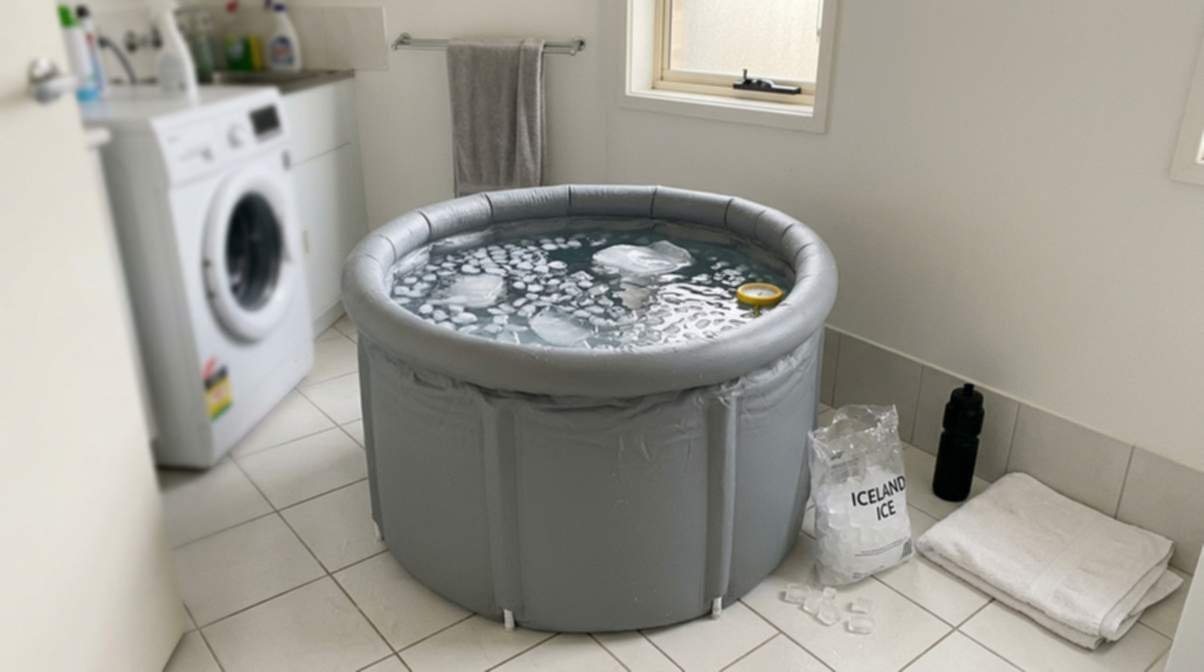
A cold plunge tub in Australia costs anywhere from $150 AUD (DIY inflatable + ice) to $25,000+ AUD (commercial), with most home buyers spending $4,000–$8,000 AUD for a chiller-equipped tub. Running costs sit at roughly $15–$40/month electricity for a chiller, or $10–$25 per session if you’re buying bagged ice. Over 5 years, a chiller-based setup almost always costs less than ice — around half the total spend.
Walk into any wellness shop in Sydney or Melbourne in 2026 and you’ll see cold plunges from $400 to $20,000 sitting next to each other on the same showroom floor. Same temperature, same 3-minute session — wildly different price tags. Which leaves most buyers asking the same first question: how much is a cold plunge tub really meant to cost?
The honest answer is that the sticker price is only half the story. A $200 inflatable looks cheap until you’ve bought 100 bags of ice. A $7,000 chiller-equipped plunge looks expensive until you spread the cost across five years of daily use. And in Australia specifically — with our $0.30–$0.39 per kWh electricity, our 240V outlets, and our 35°C summers — the maths plays out differently than the US-centric content that dominates Google’s results.
This guide breaks down what a cold plunge tub actually costs across five tiers, the running costs you’ll face in AUD, the hidden expenses brands don’t mention, and the 5-year total cost of ownership that should drive your decision. If you’re still working out which model to buy after reading this, see our comparison of the best ice baths in Australia for our specific picks at each price point. best portable ice baths
Cold plunge tub cost in Australia at a glance
All prices in AUD, current to April 2026. Real-world brand examples below in the price tiers section.
| Tier | Upfront cost (AUD) | Cooling method | Best for |
| DIY | $0–$200 | Bath + servo ice | Trying it for a month before committing |
| Inflatable + ice | $200–$600 | Bagged ice | Casual users (1–2 sessions/week) |
| Inflatable + chiller | $1,500–$3,500 | Built-in or add-on chiller | Regular users wanting low setup |
| Premium home tub | $4,000–$10,000 | Integrated chiller + filtration | Daily users, long-term setup |
| Commercial / luxury | $10,000–$25,000+ | Heavy-duty chiller, larger volume | Gyms, recovery centres, multiple users |
Are ice baths and cold plunges the same product?
KEY TAKEAWAY Mostly yes. “Ice bath” and “cold plunge” are used interchangeably in the Australian market and refer to the same practice — full-body immersion in water below 15°C. The only meaningful distinction is how the water gets cold: bagged ice (“ice bath” in the strict sense) or a chiller (“cold plunge” or “cold plunge tub”). Price differences track that distinction more than anything else. cold plunge vs ice bath
If you’re searching for both terms, you’ll get the same products in your results. The terminology is loose. Some brands use “ice bath” for any tub at any price; others reserve it for the inflatable, ice-cooled type and use “cold plunge” or “cold plunge tub” for chiller-equipped models. Don’t get hung up on the words — the cost question is really about whether you’re buying a vessel, a vessel plus a chiller, or a fully integrated system. DIY cold plunge
Three product categories matter for cost: Primal Ice Bath review
- Vessel-only (inflatable, barrel, or hard-shell tub) — you supply the cold via ice. Cheapest upfront, most expensive to keep cold.
- Vessel + add-on chiller — you can buy a basic tub and pair it with a separate chiller unit (usually 0.5HP–1HP). Common mid-tier setup in Australia.
- Integrated cold plunge — premium tubs with built-in chiller, filtration, ozone or UV sanitation, app control, and insulated covers. Plug it in and forget about it.
The 5 cold plunge price tiers in Australia
KEY TAKEAWAY Most home buyers in Australia land in tier 3 ($1,500–$3,500) or tier 4 ($4,000–$10,000). The $600–$1,500 “middle” gap is mostly dead space — it’s where you find tubs cheap enough to feel disposable but expensive enough to regret if they tear. Spend less if you want to test the practice, or spend more for something that lasts.
Tier 1: DIY — $0 to $200 AUD
Your bathtub plus four bags of servo ice is the cheapest legitimate cold plunge in Australia. A 5kg bag of party ice from a service station, BWS, or Coles Express runs $3–$5 in 2026. Four to six bags will pull a typical 200L tub to around 12–15°C. Total per session: $12–$30 in ice alone.
DIY chest freezer conversions sit at the top of this tier — around $400–$1,500 AUD all-in for a second-hand freezer, sealant, and a stock thermostat. They work, but they’re ugly, they need waterproofing, and electrical safety is on you. Not recommended unless you genuinely enjoy that kind of project.
Tier 2: Inflatable + ice — $200 to $600 AUD
Purpose-built inflatable cold plunge tubs sit in this range. They look like a barrel, hold 250–320 litres, and inflate in two minutes with a hand pump. The Ritual Recovery Easy Plunge is a typical example — under $500 AUD, fits people up to 6’7″, but you still need ice for every session. Same per-session ice cost as the DIY tier ($10–$25).
These are good for trying cold plunging for a month or two before committing to a chiller. The downside is the same as DIY: you’re either buying ice constantly, or you’re draining and refilling because the water warms up overnight. Most people who buy this tier upgrade within 12 months.
Tier 3: Portable + chiller — $1,500 to $3,500 AUD
This is where chiller-equipped cold plunging starts. Australian brands like Primal Ice list tubs with chillers from around $1,999 AUD. The Ritual Recovery Stoic + chiller combo lands closer to $4,500. Inflatable construction keeps the cost down, but you get a 0.5HP–0.8HP chiller that holds water at 3–8°C without ice.
Trade-offs at this tier: inflatables are puncture-prone, the chillers are smaller (slower to cool down, may struggle in 35°C+ Brisbane summers), and warranty terms vary. But for a regular user doing 3–5 sessions a week, this is often the sweet spot for value.
Tier 4: Premium home — $4,000 to $10,000 AUD
Hard-shell or insulated timber tubs with integrated chillers, ozone sanitation, app control, and lockable insulated covers. The PlusLife Signature Ice Bath sits at around $7,300 AUD. The PlusLife Portable runs lower, the commercial models considerably higher. Most premium tubs in this tier hold temperature reliably down to 3°C and use 1HP chillers built for sustained AU summer load.
What you’re paying for: build quality that lasts 8–10+ years, faster cooling (a 1HP chiller can pull a 200L tub from 25°C tap water to 3°C in 3–5 hours), better insulation that keeps electricity bills lower long-term, and proper Australian electrical certification.
Tier 5: Commercial and luxury — $10,000 to $25,000+ AUD
Commercial-grade plunges built for gyms, recovery studios, and serious home enthusiasts who want zero compromise. The PlusLife Commercial XL and the iCool TR-4000 (around $25,599 for the tub plus $16,999 for the chiller) sit in this range. These run heavy-duty chillers, multi-stage filtration, and capacity for multiple users at once.
Most home buyers don’t need this tier. If you’re outfitting a gym or running multiple sessions per day with multiple users, the maths works out. Otherwise, you’re paying for capacity and durability you’ll never use.
Hidden purchase costs Australian brands don’t always mention
KEY TAKEAWAY Beyond the sticker price, expect another $200–$800 AUD in delivery, installation, accessories, and electrical work. Most plug-and-play tubs work straight off a normal Australian outlet (we run 240V as standard, unlike US 110V), but older homes may need a dedicated RCD-protected circuit installed.
| Hidden cost | Typical AUD range | When you’ll pay it |
| Delivery (regional/remote) | $0–$300 | If outside metro freight zones |
| Electrician (dedicated circuit) | $150–$300 | Older homes without RCD-protected outdoor outlets |
| Concrete pad / base prep | $200–$1,500 | Premium tubs needing level outdoor surface |
| Cover (if not included) | $150–$400 | Most premium tubs include this |
| Sanitisation chemicals (year 1) | $150–$300 | Hydrogen peroxide, chlorine, or ozone refills |
| Replacement filters (year 1) | $60–$200 | Typically 4–12 filter swaps per year |
| Water bills (refills 4–6× per year) | $30–$80 | Depends on tub volume + state water price |
One Australian advantage worth flagging: because we run 240V as standard, almost every plug-and-play cold plunge sold in Australia works straight off a normal household outlet. US buyers are often forced to install a dedicated 240V circuit at $200–$400 USD; you usually don’t need to. The exception is older homes (pre-2000) that don’t have RCD-protected outdoor outlets — confirm with an electrician before buying.
Running cost reality: ice vs chiller in Australia
KEY TAKEAWAY A chiller-equipped tub costs roughly $15–$40 per month in electricity in Australia (1HP chiller, 200L tub, average tariffs around 33c/kWh). An ice-cooled setup costs $10–$25 per session for bagged ice. If you plunge 3+ times a week, the chiller pays for itself within 12–24 months purely on running cost.
The ice cost trap
A 5kg bag of party ice in Australia costs $3–$5 from service stations, BWS, Coles Express, and Dan Murphy’s in 2026. A typical 200–320 litre cold plunge needs 4–6 bags of ice to pull tap water from around 20°C down to 12–15°C — call it $15–$25 per session. If your tap water is warmer (Brisbane summer can hit 28°C from the tap), you’ll need more ice; if you’re using already-cold water from an overnight refrigerated source, you’ll need less.
At three sessions a week, 52 weeks a year, that’s $2,340–$3,900 in ice alone — every year, indefinitely. Over 5 years: $11,700–$19,500 spent cooling water you then drain into the garden.
The chiller cost reality
A 1HP cold plunge chiller draws roughly 1 kWh per hour at peak load. In normal operation — holding a well-insulated 200L tub at 5°C — the chiller doesn’t run constantly. Realistic daily energy consumption sits at 1–4 kWh, depending on ambient temperature, insulation, and how often you open the lid. At Australian residential electricity rates of 30–35c/kWh in 2026 (lowest in TAS and VIC, highest in SA), that’s $0.30–$1.40 per day or $9–$42 per month.
State-by-state running costs
Electricity prices vary meaningfully by state. South Australia consistently has the highest residential rates (around 39c/kWh average), while Tasmania and Victoria run cheapest. Estimates below assume a 1HP chiller, 200L well-insulated tub, daily plunging, and average ambient temperatures.
| State | Avg residential rate (2026) | Monthly chiller cost | Annual chiller cost |
| TAS | ~28c/kWh | $10–$25 | $120–$300 |
| VIC | ~30c/kWh | $11–$27 | $130–$320 |
| NSW | ~33c/kWh | $12–$30 | $145–$355 |
| QLD | ~32c/kWh | $12–$29 | $140–$345 |
| WA | ~32c/kWh | $12–$29 | $140–$345 |
| ACT | ~28c/kWh | $10–$25 | $120–$300 |
| SA | ~39c/kWh | $15–$36 | $175–$430 |
| NT | ~30c/kWh | $11–$27 | $130–$320 |
Add solar panels into the mix and the chiller cost can drop near zero. If you can run the bulk of your chiller’s cycle on daytime solar (10am–3pm “solar hours” when many AU retailers offer ultra-low or free electricity), you’re effectively getting cold water for nothing.
5-year total cost of ownership: the maths that matters
KEY TAKEAWAY Spread across 5 years, an inflatable + ice setup costs around $15,000–$20,000 AUD total if used 3×/week. A chiller-equipped premium tub at $7,300 AUD plus running costs comes in at $9,000–$11,000. The cheaper-looking option is more expensive by year 3 if you actually use it.
The table below assumes 3 sessions per week, 52 weeks a year, average AU electricity at 33c/kWh, and bagged ice at $4 per 5kg bag. “Consumables” includes filters, sanitiser, and water bills.
| Setup | Upfront | Year 1 running | 5-year total |
| DIY (bath + ice) | $50 | $2,500 | ~$12,800 |
| Inflatable + ice (Tier 2) | $500 | $2,500 | ~$13,200 |
| Inflatable + chiller (Tier 3) | $2,500 | $300 | ~$4,200 |
| Premium home (Tier 4) | $7,300 | $400 | ~$9,400 |
| Commercial (Tier 5) | $15,000 | $600 | ~$18,200 |
Two things stand out from that maths. First, ice-based setups are the most expensive option over any time horizon longer than 18 months if you actually use them. Second, the mid-tier portable + chiller combo is the cheapest 5-year option for most home users — assuming the inflatable doesn’t fail before year 5 (a real risk with cheaper builds).
The consistency cost — why cheap can become expensive
KEY TAKEAWAY The cheapest cold plunge isn’t the lowest-cost-per-session — it’s the one with the lowest barrier to use. Every step between you and the water (driving for ice, refilling, waiting for it to cool) reduces session frequency. A $200 setup that you use twice a month is more expensive per session than a $7,000 chiller you use daily.
Cost per session is the metric that actually matters. The benefits of cold water immersion accumulate with consistency — the UniSA-led 2025 PLOS One meta-analysis by Cain and colleagues found stress reduction effects 12 hours after a session, not 12 weeks. But you have to actually do the session.
If buying ice every morning means you skip three sessions a week, the maths inverts fast. A $7,000 chiller used 365 times in a year costs $19 per session including upfront cost (over a 5-year payback). A $200 inflatable used 50 times in a year (because it’s too much hassle) costs $4 per session, but you’ve also captured a fraction of the actual benefit.
The brutal honest version: most cheap cold plunges sold in Australia end up gathering dust in the shed within 18 months. The chiller-equipped tubs get used. That’s the real cost calculation.
Where to spend, where to save
KEY TAKEAWAY Spend on the chiller. Save on aesthetics. A reliable 1HP chiller and good insulation matter more for daily use than timber cladding or app control. The cheapest legitimate path to consistent cold plunging in AU sits at around $2,000–$3,500 AUD all-in.
Spend on:
- Chiller capacity. 0.8HP minimum for AU summers; 1HP+ if you’re north of Sydney. Underpowered chillers struggle in 35°C+ ambient air and end up running constantly.
- Insulation. An insulated cover and double-walled tub directly reduce your monthly electricity bill. The difference between a poorly-insulated tub and a well-insulated one is often $10–$20 per month — $600–$1,200 over 5 years.
- Filtration and sanitation. 20-micron filters plus ozone or UV sanitation let you keep the same water for 4–8 weeks. Without it, you’re refilling every week — wasted water, wasted time, more chiller cycles to recool.
Save on:
- Cosmetic upgrades. Timber cladding, premium cushions, and decorative covers add hundreds of dollars without affecting the actual experience.
- App control. Nice to have, not essential. A simple thermostat does the job. The plunge takes 3 minutes — pre-cooling via app saves negligible time.
- Hot/cold combo features. Adds significant cost. Only worth it if you’ve already decided you want both modalities — see our hot plunge vs cold plunge guide for the trade-offs.
Before any purchase decision, it helps to understand what duration and frequency you actually need to capture the benefits — our ice bath duration guide and guide to whether ice baths are good for you walk through the science. The right answer to “how much should I spend” depends on how much you’ll actually use it.
frequently asked questions
How much is a cold plunge tub in Australia?
Cold plunge tubs in Australia range from about $150 AUD for a DIY bath-and-ice setup to $25,000+ AUD for commercial-grade units. Most home buyers spend between $4,000 and $8,000 AUD for a chiller-equipped tub that holds temperature reliably without buying ice.
How much does a cold plunge cost to run per month?
Running a chiller-equipped cold plunge in Australia costs roughly $15–$40 per month in electricity, depending on your state’s tariff, tub insulation, and how often you open the lid. Add $5–$15 per month for filters and sanitation chemicals. An ice-cooled setup costs much more — $10–$25 per session in bagged ice.
How much does a cold plunge tub cost compared to gym membership?
A premium home cold plunge at $7,300 AUD plus $400/year in running costs works out to around $9,300 over 5 years — roughly $155 per month. A gym membership with cold plunge access in Sydney or Melbourne typically runs $25–$30 per week ($1,300–$1,560 per year), or about $7,000–$8,000 over 5 years. The home setup costs more but gives you 24/7 access and serves your whole household.
How much does a cold plunge pool cost?
A built-in cold plunge pool — meaning an in-ground installation rather than a freestanding tub — typically costs $15,000–$40,000+ AUD installed in Australia. That includes excavation, plumbing, the pool shell, a high-capacity chiller, and finishing work. Most home buyers go for freestanding tubs because the cost-benefit doesn’t favour permanent installation unless you’re building a wellness room from scratch.
Is it cheaper to buy ice or run a chiller?
A chiller is dramatically cheaper if you plunge regularly. At three sessions a week, bagged ice costs around $2,500 per year in Australia. A 1HP chiller costs $130–$430 per year in electricity depending on your state. The chiller pays for itself within 12–24 months at typical use rates.
How much electricity does a cold plunge use in Australia?
A typical 1HP cold plunge chiller in Australia uses 1–4 kWh per day depending on ambient temperature, tub insulation, and usage frequency. At average AU electricity rates of 30–35c/kWh in 2026, that’s $0.30–$1.40 per day, or roughly $9–$42 per month. Solar panels can reduce this to nearly zero if the chiller runs during daylight hours.
Do I need an electrician to install a cold plunge in Australia?
Usually no. Australian homes run on 240V as standard, so almost all plug-and-play cold plunge tubs work straight off a regular outlet. You may need an electrician ($150–$300 AUD) if your home doesn’t have an RCD-protected outdoor outlet, or if you’re installing a commercial-grade unit that requires a dedicated circuit. Confirm requirements with the brand before purchase.
What’s the cheapest legitimate cold plunge setup in Australia?
The cheapest legitimate setup is a portable inflatable tub with an add-on 0.5HP–0.8HP chiller, total around $1,999–$3,500 AUD from Australian brands like Primal Ice or Ritual Recovery. This gives you reliable cold water without buying ice, and pays back the upfront cost in saved ice within 12–18 months at regular use.
Are cheap cold plunge tubs worth it?
Not usually. Cold plunge tubs in the $600–$1,500 range are a difficult middle ground — too expensive to feel disposable, too cheaply built to last 5+ years. Either spend under $500 on a basic inflatable to test the practice, or skip to the $2,000+ chiller-equipped tier where the build quality justifies the price. The middle tier is where most buyers regret their purchase.
How long does a cold plunge tub last?
An inflatable ice bath typically lasts 1–3 years before the material develops leaks or the chiller needs replacement. A premium hard-shell tub with integrated chiller from a reputable AU brand typically lasts 8–12 years, often with longer warranty coverage on the tub shell than on the chiller (which may need replacing once during that lifetime).
What’s the running cost difference between Sydney and Brisbane?
Sydney and Brisbane have similar electricity tariffs (around 32–33c/kWh in 2026), but Brisbane chillers work harder due to higher ambient temperatures. A 1HP chiller in Brisbane summer may consume 30–50% more electricity than the same chiller in Sydney winter. Expect Brisbane annual running costs to sit at the higher end of the $145–$355 range; Sydney closer to the middle.
Are there any rebates or tax deductions for cold plunge tubs in Australia?
Generally no. Cold plunge tubs aren’t covered by health or wellness rebates in Australia, and the ATO doesn’t allow them as medical deductions for individuals. The only deduction pathways are if you’re a registered fitness or recovery business claiming the tub as a business asset, or if you’re a health professional using it as part of your practice. Speak to your accountant for specific advice.
Pricing is current to April 2026 and verified against AU brand listings. Electricity rates are sourced from independent comparison sites.
Australian electricity and energy data
Canstar (2026). Average Electricity Cost Per kWh in Australia. canstar.com.au/energy/electricity-costs-kwh
EnergyPlans (April 2026). Australian Electricity Price Index 2026. energyplans.com.au/electricity-price-index-australia
Solar Choice (2026). Electricity Cost per kWh in Australia: Homeowner’s Guide. solarchoice.net.au/energy/electricity-cost-per-kwh-in-australia
Research and authority sources
Cain T, et al. (UniSA, 2025). Health and wellbeing effects of cold water immersion: a systematic review. PLOS One. DOI: 10.1371/journal.pone.0317615
Royal Life Saving Society Australia — Position statements on water immersion safety.
Australian brand pricing references
PlusLife Health (2026). Signature, Portable, and Commercial Ice Bath pricing. pluslifehealth.com.au
Ritual Recovery (2026). Easy Plunge, Stoic, Roman, and Centurion pricing. myritual.com.au
Primal Ice (2026). Primal Tub and chiller pricing. primalice.com.au
Bells Pure Ice — 5kg party ice bag distribution across AU service stations, BWS, supermarkets. bellspureice.com.au
Pricing disclaimer: All prices in AUD and current to April 2026. Cold plunge brands update pricing frequently and Australian electricity tariffs change at the start of each financial year. Always confirm current pricing with the brand and your electricity retailer before making purchase decisions.
Medical disclaimer: This article is for general informational purposes only and is not medical advice. Cold water immersion carries real cardiovascular risks. Speak with your GP before starting cold plunging, especially if you have any heart, blood pressure, respiratory or pregnancy-related condition.
