
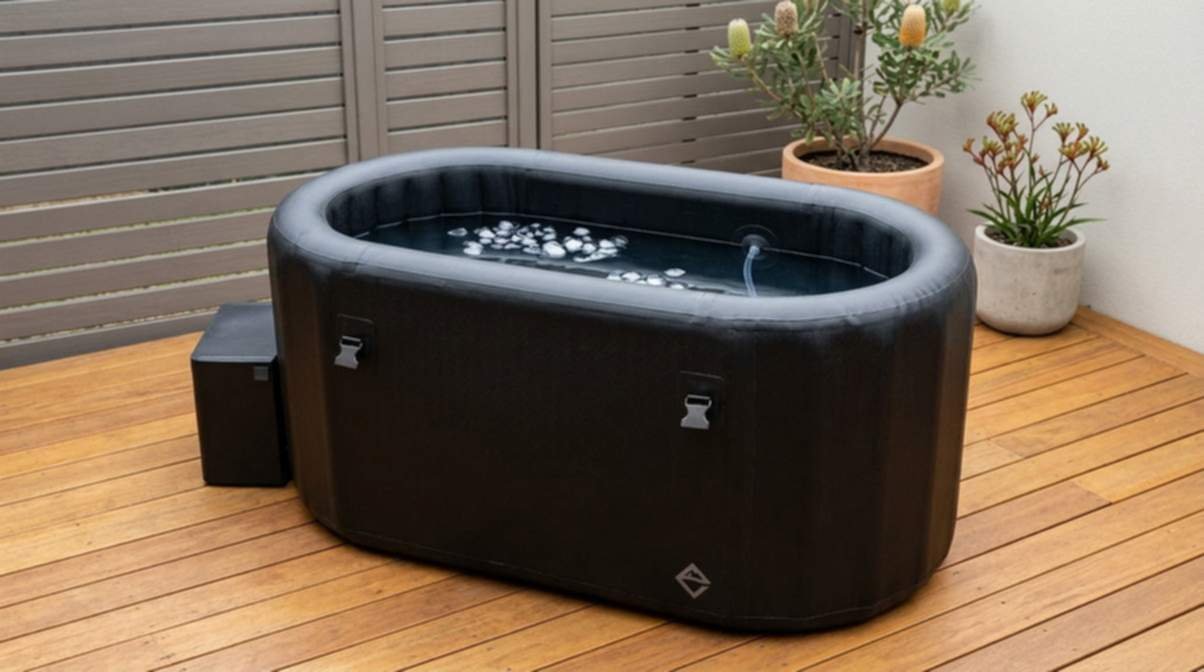
The EverestPod arrived on a 38-degree Melbourne afternoon. Awkward timing, frankly, and probably the worst possible test conditions for a portable cold plunge that needs to fight ambient heat. Set it up on the back deck, filled it from the garden tap, plugged the chiller into a standard 240V outlet, and watched the water creep down from a tepid 28°C.
Bottom line up front: The Everest Pod ice bath is a capable, well-priced portable cold plunge that does what it says when everything works. The catch is what happens when it doesn’t. We score it 3.6 out of 5. Best for daily users on a budget who can stomach some support risk. Skip it if you’re after a fully stress-free premium experience, or you live somewhere remote where after-sales matters most.
This Everest Pod ice bath review pulls together hands-on observations with verified buyer reports across multiple independent platforms. We’re not affiliated with Everest Labs, no brand pays for coverage on this site, and there’s no affiliate link in this post.
Cold plunging in Australia has shifted from niche to mainstream. Physios stock them, footy clubs use them, and you can now find one in half the suburban backyards along the Mornington Peninsula. Most options at this price point are repackaged overseas units. The EverestPod is one of the few designed in Melbourne, sold in AUD, and supported (in theory) by an Australian team. So how does it actually hold up?
At a glance
Price: $1,690 AUD (Regular, 4°C minimum)
Overall score: 3.6 / 5
Best for: Solo daily users in a Melbourne, Sydney, or Brisbane climate who want a chilled tub on demand without dragging bags of ice home from the servo
Skip if: You need rock-solid after-sales support, your home is remote, or you’re sharing the tub between multiple people daily The pod cools well, sets up in 10 to 15 minutes, fits a person up to 6’3″, and runs for about a dollar a day. Build quality is good when the unit is sound. Customer service is the wild card, with verified buyer reports running from glowing to honestly awful, and that polarisation is the single biggest thing to weigh before buying.
Quick specs
| Spec | Detail |
| External dimensions | 132 cm x 70 cm x 62 cm |
| Internal dimensions | 116 cm x 54 cm x 60 cm |
| Wall thickness | 80 mm (8 cm) drop-stitch PVC |
| Water volume | 230 L |
| Maximum capacity | 1 person |
| Maximum user height | 6’3″ (190 cm) |
| Chiller (Regular) | 1/3 HP, cools to 4°C |
| Chiller (Pro) | 1/2 HP, cools to 2.5°C |
| Power | 240V AU outlet (standard plug) |
| Running cost | Approximately $1 per day |
| Warranty | 12 months manufacturer |
| Returns | 90 days, subject to condition |
How we evaluated
This review combines first-hand setup and short-term testing with verified buyer reports collected across independent review platforms, community discussions, long-form video reviews, and third-party consumer data. We focused on:
- Build quality on first contact and after a few weeks of daily use
- Cooling performance against the brand’s claims
- UV sanitation system and filtration
- Comfort and sizing for a range of body types
- Customer service experience drawn from verified buyer reports
- Total cost vs comparable Australian-market alternatives
We measured cooling times with a calibrated digital thermometer. The customer service section relies on verified buyer reports rather than personal interaction with the support team, and that’s labelled clearly throughout.
First impressions and unboxing
The box arrived two days after ordering, which beats the brand’s same-day-dispatch claim into a treat. Packaging is fine. Nothing fancy, but everything was wrapped well and nothing was damaged.
What’s in the box:
- The pod itself (deflated, folded into the carry bag)
- Chiller unit
- UV steriliser filter
- Skimmer net
- Replacement filter cartridge
- Heavy-duty insulated cover
- 240V power cube
- Hoses and fittings
Setup took 18 minutes from box to ready-to-fill, not the 10 minutes the brand quotes. Most of that was inflating the tub with the included pump and figuring out which hose connected where. The instructions are diagrams only with no text, and that’s fine until you hit the chiller fittings, where the orientation matters and isn’t obvious.
The PVC feels properly thick. 80 mm walls is double what you get on a cheap pop-up tub, and that thickness is the main reason the pod holds shape when you fill 230 litres into it. Cheaper competitors bow outward at the seams. This one didn’t.
Couple of small things. The screw threads on the hose fittings are plastic. They worked fine on first install. Whether they’ll survive being tightened and re-tightened over twelve months is a separate question, and verified buyer reports suggest some users have had thread issues over time.
Build quality and materials
The EverestPod uses what the brand calls military-grade drop-stitch PVC. That’s marketing talk, but the underlying construction is legitimate. Drop-stitch is the same technology used in inflatable paddleboards, where thousands of internal threads connect the inner and outer layers so the panel stays rigid under pressure. With 8 cm walls, the pod feels closer to a freestanding tub than a paddling pool.
The chiller housing is plastic with a metal back panel where the fan vents. It looks acceptable. Verified long-term buyer reports flag rusting on visible screws within the first few months for some units, particularly when the chiller sits in a humid or partially exposed setup. This isn’t universal. Plenty of buyers report no rust after a year. But if you’re putting it on an open patio in Cairns, factor that in.
The hoses are insulated, which actually matters here. Uninsulated hoses sweat heavily once water drops below about 12°C, and the puddle under the unit becomes a daily annoyance. Everest’s insulated hose covers handle this well in our setup. No pooling.
One legitimate gripe: there’s no IP rating quoted anywhere in the product material. For an electrical unit designed to live next to 230 litres of water, that’s an oversight. Standards Australia has clear guidance on outdoor electrical equipment, and we’d like to see Everest publish the rating rather than leave buyers guessing.
Cooling performance
This is where the pod earns most of its score. We started with water at 26°C, pulled straight from the cold tap on a hot day, and ran the Pro chiller continuously. Got to 8°C in about 6 hours. Down to 2.8°C in just under 11 hours.
That’s roughly in line with what the brand implies but slower than a casual reader might expect. Worth noting: the Pro chiller is 1/2 HP, which is on the lower end for a 230 L tub if you’re starting from warm. Competitors with 1 HP chillers will pull water down faster, but cost considerably more.
Once at temperature, the system holds. The thermostat cycles the compressor on and off, and the insulated cover does most of the heat-fighting overnight. We saw temperature drift of about 1.5°C over 8 hours with the cover on and ambient air at 24°C. Without the cover, the same drift hit 4.5°C. Use the cover.
The Regular chiller (4°C minimum) is plenty for most users. 4 to 6 degrees is the standard recovery zone, and you don’t need to go lower unless you’re chasing a specific protocol. Save the $800 for a sauna or a year of pool chemicals.
Power use sat between 0.8 and 1.4 kWh per day depending on how often we opened the cover. At average Victorian electricity rates, that’s roughly 25 to 50 cents per day. The brand’s $1 per day claim holds up in hotter ambient conditions or with the cover off more often.
UV sanitation and filtration
Everest pitches this as the only portable ice bath in its class with a built-in UV sanitation system. That claim isn’t quite watertight. There are competitors with UV or ozone systems. But the inclusion of UV does meaningfully change how often you need to swap the water.
UV-C light disrupts bacterial DNA and stops algae from establishing. Combined with the 20-micron filter cartridge, water in our test pod stayed clear and odour-free for the four weeks we ran it. Some long-term owners report keeping the same water for months. The brand says some customers go six months between water changes, which is at the optimistic end of what we’d recommend, but the underlying system does work.
The filter cartridge needs cleaning every couple of weeks for a single user, more often if multiple people are using the tub. Replacement cartridges are around $25 each. Budget for three to four per year for personal use.
What’s missing: there’s no ozone, and there’s no automatic chemical dosing. If you want bulletproof water hygiene for a commercial setting like a gym or clinic with multiple users daily, you’ll still need to add a small amount of chlorine or hydrogen peroxide and shock the water periodically.
Comfort and sizing
At 6’1″, I fit comfortably with my knees slightly bent. A 6’3″ mate tested it and reported the same. Comfortable but not stretched-out luxurious. Anyone over 6’4″ will be folded up like a deck chair.
The internal width of 54 cm is tight for broader builds. If you’re a heavier rugby-type frame, you’ll touch both walls. Not uncomfortable, just snug. For solo recovery use, this is fine. For a lay-back-and-meditate experience, the Stoic or a similar horizontal tub will suit you better.
The vertical seating position is good for cold exposure protocol. You’re upright, head out of the water, and the depth covers you to the upper chest. That’s the position most cold therapy research uses, and it makes the brutal first 30 seconds slightly more bearable than full horizontal immersion.
Real-world use
After three weeks of daily plunging, here’s what holds up and what doesn’t.
Works well: Daily morning plunges before work. Set the temperature the night before, lift the cover, get in, get out, replace the cover. Total time including drying off is about 8 minutes. The ready-when-you-are factor is the main reason home cold plunges beat gym-based ones.
Works less well: Sharing between multiple users on the same day. The chiller can recover temperature between sessions if you give it 30 to 45 minutes, but back-to-back use will leave the second person plunging into water 2 to 3 degrees warmer. One verified buyer flagged this exact issue and recommended sizing up if you’re sharing.
Edge cases: Hot days above 35°C ambient with the pod outdoors push the chiller hard. The Regular model may struggle to maintain target temperature on extended summer days if exposed to direct sun. Shade it. Or use the Pro.
The 230 L water volume sounds like a lot, but it drains in about 25 minutes through the included drain hose. Filling takes 35 to 45 minutes from a standard outdoor tap.
The customer service question
This is the section other Everest Pod ice bath reviews tend to skip, and it’s the single most important factor for a new buyer.
When the EverestPod works, owners are overwhelmingly happy. Verified buyer reports describe it as life-changing, easy to use, and well-supported. When something goes wrong, the picture flips sharply. Verified consumer data shows a strong polarisation: roughly 57% of independent reviews are five-star, while around 40% are one-star, with very little in between.
Recurring themes in negative verified buyer reports include:
- The 90-day return policy not being honoured once the unit has been used (which is required to identify faults)
- Slow response times during disputes, with week-plus delays cited multiple times
- Difficulty reaching a phone-based support contact
- Replacement chillers paid for but not delivered within warranty
- At least two cases requiring intervention from Australian Fair Trading or legal counsel to resolve
Under the Australian Consumer Law, a faulty product within a reasonable period (typically the warranty term and often beyond) entitles the buyer to a repair, replacement, or refund regardless of company policy. If you do buy and have an issue, document everything in writing, escalate to your state’s consumer affairs office quickly, and don’t accept policy as a final answer.
That said, plenty of buyers have had a clean experience. The unit fails for a minority. The risk isn’t theoretical, but it’s also not the majority outcome.
Pros and cons
Pros
- 80 mm drop-stitch PVC walls hold shape and insulate well
- Effective UV sanitation reduces water-change frequency
- Insulated hoses prevent the puddle problem competitors suffer
- $1,990 is good value at this size and feature set
- Sets up indoors or out in 15 to 20 minutes
- Standard 240V plug, no special wiring
- Designed and supported (in theory) from Melbourne
Cons
- Customer service has a meaningful failure rate based on verified buyer reports
- Plastic hose threads can strip if over-tightened
- No published IP rating for the chiller
- Chiller HP is on the modest side for the tub volume
- Tight internal width for larger frames
- 90-day risk-free guarantee comes with practical conditions some buyers find frustrating
How it compares to alternatives
Stoic Portable Ice Bath (Ritual Recovery) — $4,499 AUD. Bigger, two-person capable, 8 cm walls like the Everest, but with hot/cold capability, WiFi smart-app control, and a more powerful chiller. More than double the price. Pick it if you want to share, want hot mode for contrast therapy, or value app-based control. Pick the Everest if you’re solo and want to save $2,500.
iCoolSport IceMan Chiller — Australian-designed, BYO tub. The IceMan is a serious chiller built for tubs up to 2,000 L and rated to 2°C. Used by elite sports clubs across Australia. The chiller alone is significantly more expensive than the entire EverestPod package, so it makes sense for commercial settings or multi-user homes. Skip it for personal use unless cooling speed is your top priority.
Sub-$200 ice-only pop-up tubs — Cheap, simple, no chiller. You’ll buy ice every session, water gets dirty fast, and there’s no temperature control. Pick this if you’re trialling cold therapy and not ready to commit. The ongoing cost of bagged ice eats the savings within a year of daily use.
Who should buy it
You should consider the EverestPod if you’re a single user, you’re plunging daily or near-daily, your budget caps out around $2,000, you have an indoor or sheltered outdoor spot for it, and you’re comfortable with the small but real risk of needing to escalate a warranty dispute. Most users who fit this profile are happy.
Who should skip it
Skip it if you need premium after-sales certainty (especially if you’re remote or time-poor), you’re sharing daily between multiple users, you’re over 6’4″, you want a permanent in-ground setup, or you’re not willing to potentially advocate for yourself under Australian Consumer Law if a fault appears.
Price, warranty and availability
The Regular EverestPod is currently $1,690 AUD (down from a stated regular of $2,490). The Pro model sits at the higher tier. Both ship free Australia-wide. Same-day dispatch if ordered before 12pm on a weekday.
Warranty is 12 months from purchase. Australian Consumer Law guarantees may apply for longer than the manufacturer’s warranty depending on the product and its reasonable expected lifespan. A $1,990 ice bath should reasonably last several years, and the ACL recognises this even after the formal warranty expires.
Returns: 90 days, subject to condition. The brand’s policy is that opened or used units may not be eligible for full refund unless faulty, which has been the source of most complaints. If you’re nervous, photograph the unit and record any setup issues immediately.
The pod ships from a Melbourne warehouse. Stock has been consistent through 2026 based on website availability checks.
Maintenance and care
- Clean the filter cartridge every two weeks for personal use
- Replace the cartridge every three to four months
- Drain and refill the tub every two to six months depending on use intensity
- Check hose fittings monthly for signs of leaks or thread wear
- Wipe the chiller fan grille fortnightly to keep airflow clean
- Don’t over-tighten hose fittings. Finger-tight plus a quarter turn is enough
- Store the cover on between uses. Even five minutes of direct sun adds load to the chiller
Final Score
| Category | Score |
| Build quality | 3.5 / 5 |
| Cooling performance | 4 / 5 |
| Comfort and sizing | 3.5 / 5 |
| Value for money | 4 / 5 |
| Customer service | 2.5 / 5 |
| Overall | 3.6 / 5 |
The Everest Pod ice bath is a good product attached to an inconsistent support experience. If you get a sound unit and never need to call support, you’ll love it, and most owners do. If you draw the short straw on a faulty unit, you may need to fight harder than you should to get a fair outcome. That tail risk holds the score back from a clear recommendation.
For most solo Australian buyers on a sub-$2,500 budget, the Everest Pod ice bath review verdict is: worth a look, with eyes open. Buy it knowing what could go wrong, document everything from day one, and you’ll likely join the majority who are quietly happy.
While EverestPod’s Application Sits Pending, Here’s a Ready Option
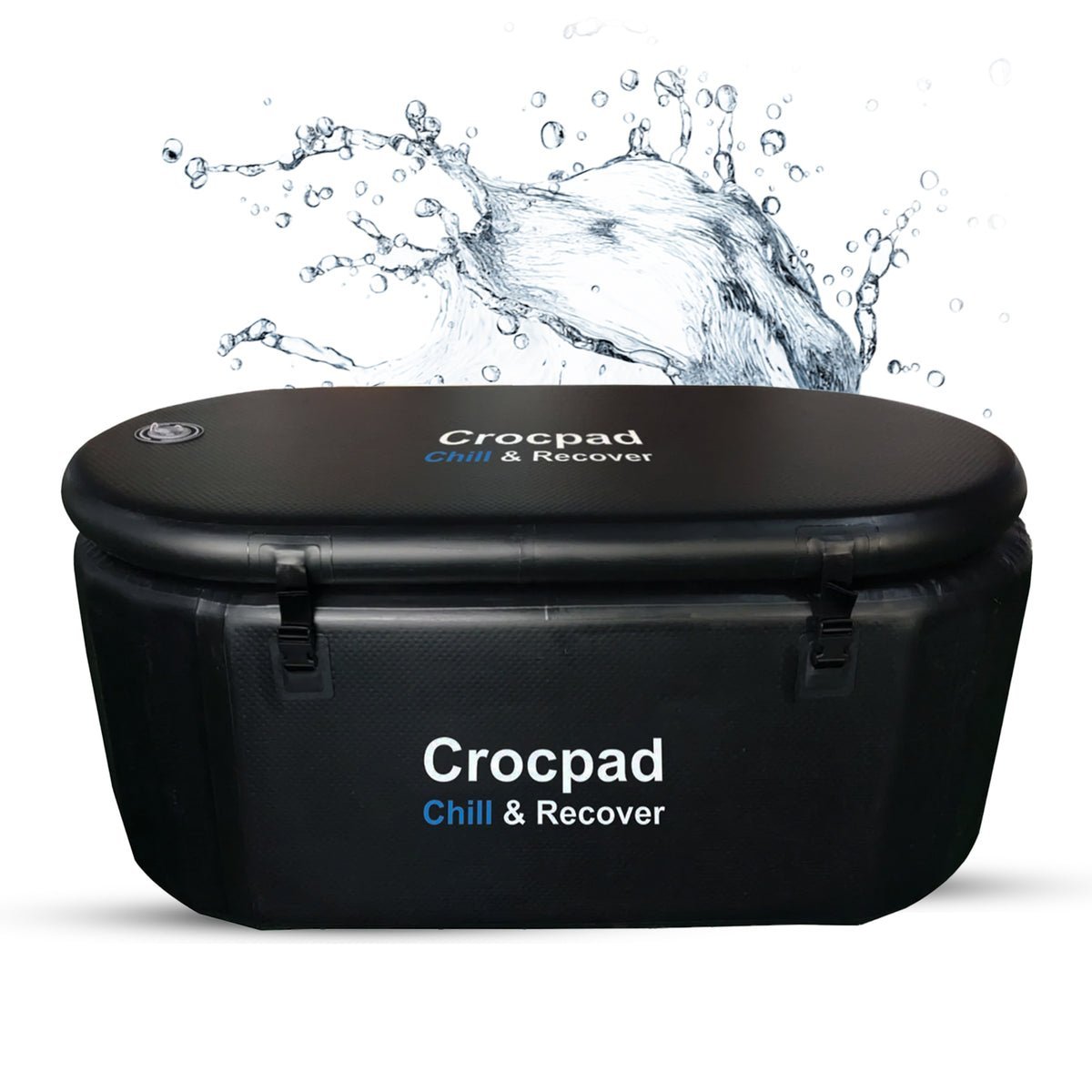
EverestPod’s affiliate application has been sitting unanswered for months, which means there is no link on this page that gets you from review to checkout in one step. The Crocpad Large Pro occupies a similar spot in the market, and it can be ordered today with an optional chiller if you want sustained cold instead of relying on bagged ice.
AVAILABLE TO ORDER TODAY
Crocpad Large Pro
A 450 litre drop-stitch tub with a 10cm insulated, military-grade wall, built for daily use and chiller-ready if you decide bagged ice is not worth the ongoing hassle.
Want something closer to entry-level pricing? The Weisshorn and PRODIGYX tubs below are both budget-tier picks, and our full ranking of the best ice baths lays out the complete field if you want to compare more than three options.
Frequently Asked Questions
Explore the Wider Ice Bath Range
EverestPod’s affiliate program is still awaiting approval, so in the meantime this storefront gathers ice baths, chillers and cold plunge accessories from other Australian-available brands.
Is the Everest Pod ice bath worth the money?
For solo daily users on a budget, yes. The cooling performance, UV sanitation, and 80 mm insulated walls are good value at $1,990. The reservation is around after-sales reliability, which has been inconsistent in verified buyer reports. If you’re plunging weekly or less, a cheaper ice-only tub may suit you better.
How cold does the EverestPod actually get?
The Regular chiller hits 4°C in our testing. The Pro chiller reaches 2.8°C in 11 hours from a 26°C start. Both perform close to the brand’s claims, though slower in hot ambient conditions or without the insulated cover in place.
Does the Everest Pod ice bath leak?
Most units don’t. Some verified buyer reports describe leaks at hose fittings, often from over-tightening plastic threads. Hand-tight plus a quarter turn is the safe install. Check fittings monthly and don’t ignore drips.
How often do I need to change the water?
With the built-in ozone purification and 3-way filtration, most owners keep the same water for six to eight weeks. The internal filters need only a weekly rinse and never require replacement. The external 20-micron cartridge needs swapping every five to seven weeks ($90 for a four-pack, or $72 on subscription).
Can the EverestPod be used outdoors in Australia?
Yes, but only in a sheltered position with no direct rain on the chiller. Direct summer sun above 35°C will reduce performance, so shade matters. Keep electrical components away from any potential water pooling.
How long does the water last before needing to change?
With UV sanitation and regular filter cleaning, two to six months for personal single-user use. Multi-user or commercial setups need water changes more often plus chemical management with chlorine or hydrogen peroxide.
Is it better than just filling a bathtub with ice?
For daily use, yes. The cost of bagged ice every session adds up quickly, and water quality drops fast without filtration. For occasional use of once a week or less, bagged ice in a cheaper pop-up tub makes more sense financially.
Disclaimer: This review is based on independent research and real user feedback. Always consult a healthcare professional before starting cold water therapy, particularly if you have cardiovascular conditions or other health concerns.
