
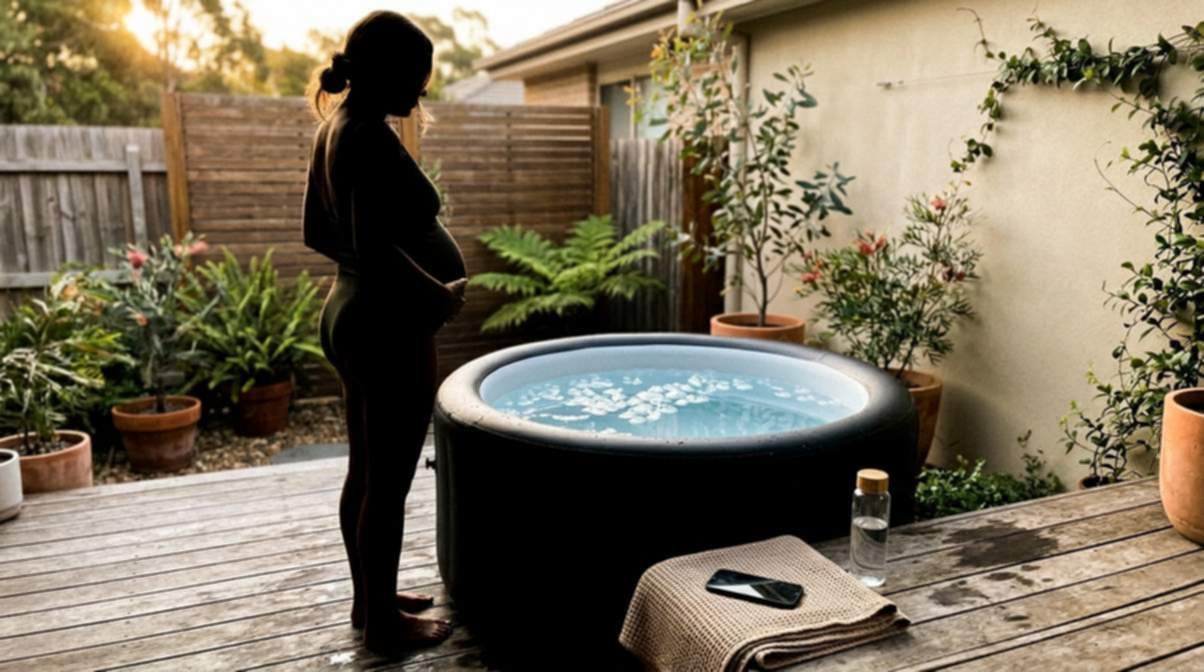
KEY TAKEAWAY: There’s very little direct research on cold plunges during pregnancy. A 2025 scoping review (Shawe et al., Lifestyle Medicine) found only six studies and eight reports worldwide and concluded that experienced cold water swimmers may cautiously continue during a low-risk pregnancy, but beginners should not start. No study has tested ice-bath-temperature immersion (≤15°C) in pregnant women. Always get your GP or obstetrician’s approval first.
You’re pregnant, you’ve been doing cold plunges for months (maybe years), and now you’re Googling “are cold plunges safe during pregnancy” at 11pm. You’re not alone. Cold water immersion has exploded in popularity across Australia, and more expecting mums are asking whether they need to give it up for nine months.
The short answer is: we don’t really know yet. The longer answer which we’ll unpack in this guide involves a 2025 expert consensus, a handful of studies, some real physiological risks, and a lot of nuance that most competitors on page one aren’t sharing with you.
Below, we’ll cover what the research actually says, what the risks are, who should avoid cold plunging entirely during pregnancy, and what safer alternatives look like. If you’re new to cold water therapy in general, our science-backed guide to ice bath benefits is a good starting point. And if you’re shopping for a tub, our tested comparison of the best ice baths in Australia covers all the options.
SAFETY WARNING
Cold water immersion carries inherent risks for everyone, and pregnancy adds significant additional considerations. Read this section before going any further.
- Never cold plunge alone this rule applies to everyone, but especially pregnant women whose centre of gravity has shifted, increasing fall risk on wet surfaces.
- Do NOT start cold plunging during pregnancy if you have no prior experience. The 2025 Shawe et al. consensus explicitly recommends against this.
- Avoid cold plunging entirely if you have pre-eclampsia, high blood pressure, very low blood pressure, gestational diabetes (unless cleared by your doctor), placental complications, or a high-risk pregnancy of any kind.
- Water below 15°C triggers the cold shock response an involuntary gasp reflex, spike in heart rate, and rapid blood vessel constriction. The Royal Life Saving Society Australia warns this can cause cardiac events in vulnerable individuals.
If you’re over 50 or have any cardiac history, consult your GP before any cold water immersion. This guide is informational only. It is not medical advice. Talk to your obstetrician or midwife before making any decisions about cold exposure during pregnancy.
Quick-Reference Summary: Cold Plunges and Pregnancy
| Question | What the Evidence Says | Recommendation |
| Can I cold plunge while pregnant? | No study has directly tested ice bath temps (≤15°C) in pregnant women. A 2025 scoping review found only 6 studies and 8 reports worldwide. | Only if experienced AND low-risk pregnancy AND GP-approved. Never start during pregnancy. |
| What temperature is safe? | No pregnancy-specific temp has been validated. The 2025 consensus covers open water swimming, not ice baths. General CWI safety guidance says ≥15°C is moderate. | Stay above 15°C. A cool plunge (15-20°C) is substantially safer than a true ice bath (0-10°C). |
| How long can I stay in? | No pregnancy-specific duration data exists. General CWI guidelines suggest 2-10 minutes depending on temperature. | Keep it brief under 2 minutes at 15°C. Exit immediately if you shiver uncontrollably. |
| Which trimester is safest? | Limited data. First trimester may carry higher risk due to early placental development. McMurray & Katz (1990) note heat risks are greatest in T1. | No trimester is “safe” per research. If continuing, second trimester may be lowest-risk. Discuss with your doctor. |
| Are cold showers a safer alternative? | Yes. Cold showers allow more gradual exposure, easier exit, and less intense cold shock. No immersion of the abdomen. | Cold showers (20-25°C) for 30-60 seconds are the safest cold exposure option during pregnancy. |
What the Research Actually Says About Cold Plunges During Pregnancy
KEY TAKEAWAY: Direct research on cold plunging during pregnancy is almost non-existent. The best evidence we have comes from a 2025 scoping review that found just six studies and eight reports, none of which specifically tested ice bath immersion in pregnant women.
Let’s be upfront: if you’ve read competitor articles claiming cold plunges are “safe and beneficial” during pregnancy, they’re overstating the evidence. Here’s what actually exists.
The 2025 Shawe et al. Scoping Review
The most important piece of research on this topic was published in January 2025 in Lifestyle Medicine. Led by Professor Jill Shawe at the University of Plymouth, this scoping review brought together experts in cold water physiology, obstetrics, neonatology, and midwifery to answer one question: is cold water swimming safe during pregnancy? (Shawe et al., 2025).
They found just six studies meeting inclusion criteria, plus eight grey-literature reports. That’s it. The evidence base is tiny. Most of their recommendations were graded as “level 4” expert opinion, not clinical trial data.
Their key consensus recommendations:
- Only swim in cold water during pregnancy if you were a regular cold water swimmer before becoming pregnant.
- Do not swim alone.
- Avoid cold water swimming if blood pressure is raised or very low.
Crucially, the study authors concluded: “At this stage with the existing knowledge, we are not recommending pregnant women start cold water swimming if they have no previous experience.”
The Gundle & Atkinson Hypothesis (2020)
This paper, published in Medical Hypotheses, proposed that habitual cold water swimmers may experience improved birth outcomes through a dampened cortisol (stress) response (Gundle & Atkinson, 2020). The logic: chronic maternal stress is linked to premature birth and low birth weight, so reducing stress via cold water habituation might help.
Important context: this is a hypothesis paper, not a clinical trial. The authors themselves note that correlation and causation are difficult to untangle women who swim outdoors may simply be healthier, more active, and less stressed to begin with.
McMurray & Katz: Thermoregulation in Pregnancy (1990)
This foundational review in Sports Medicine established that maternal hyperthermia (core temp above 38.9°C) can be teratogenic, particularly in the first trimester (McMurray & Katz, 1990). While this research focused on heat rather than cold, it’s relevant because it confirms that extreme temperature changes during pregnancy carry real risks. The same research group found that pregnancy itself alters thermoregulation pregnant women have reduced heat storage and increased evaporative heat loss.
The takeaway? Your body’s temperature regulation system is already working differently during pregnancy. Adding the stress of cold water immersion on top of that is not a neutral decision.
The Real Risks of Cold Plunging While Pregnant
KEY TAKEAWAY: The main risks include cold shock response (blood pressure spike, involuntary gasp), reduced blood flow to the uterus via vasoconstriction, hypothermia risk, and increased fall hazard. Women with pre-eclampsia, high blood pressure, or placental complications should avoid cold immersion entirely.
Cold Shock Response
When you enter water below 15°C, your body triggers a cold shock response within the first 1-4 minutes. This involves an involuntary gasp reflex, hyperventilation, rapid heart rate increase, and a spike in blood pressure (Royal Life Saving Society Australia). For a pregnant woman, this sudden cardiovascular stress is concerning because pregnancy already places additional load on the heart and circulatory system.
Vasoconstriction and Placental Blood Flow
Cold immersion causes blood vessels to constrict that’s the mechanism behind many of its touted benefits. But during pregnancy, vasoconstriction could theoretically reduce blood flow to the uterus and placenta. No study has directly measured placental perfusion during maternal cold immersion, which is precisely why expert caution exists.
Hypothermia
The Royal Life Saving Society Australia defines hypothermia as a core body temperature below 35°C, which can occur after 30 minutes of cold water exposure. While a brief 2-minute plunge is unlikely to cause hypothermia in a healthy person, pregnancy alters thermoregulation. McMurray & Katz (1990) showed that pregnant women have different heat-conservation mechanisms, meaning their response to cold may not be the same as before pregnancy.
Fall Risk
This one is often overlooked. Pregnancy shifts your centre of gravity forward, and wet surfaces around ice baths are slippery. A fall during pregnancy can have serious consequences. If you do plunge, make sure someone is physically present and the area is non-slip.
Who Should Avoid Cold Plunging Entirely During Pregnancy
Based on the available evidence and expert consensus, you should not cold plunge during pregnancy if you:
- Have never done cold water immersion before becoming pregnant
- Have pre-eclampsia or pregnancy-induced hypertension
- Have very low blood pressure
- Have placental complications (placenta praevia, abruption)
- Are carrying multiples (twins, triplets)
- Have been classified as high-risk by your obstetrician
- Have a history of preterm labour
Can You Do a Cold Plunge While Pregnant? Potential Benefits (With Caveats)
KEY TAKEAWAY: Some women report improved mood, reduced swelling, and better stress management from cold exposure during pregnancy. However, these are anecdotal or extrapolated from general population studies no pregnancy-specific benefit has been proven in a clinical trial.
Stress Reduction and Mood
Cold water immersion activates the sympathetic nervous system and triggers noradrenaline and dopamine release. In non-pregnant populations, this is associated with improved mood and reduced depressive symptoms. Gundle & Atkinson (2020) hypothesised that this stress-dampening effect could benefit pregnant women, but this remains unproven.
Reduced Swelling (Oedema)
The Shawe et al. (2025) review noted that standing water immersion at 28-29°C was linked to greater reduction in pedal oedema (swollen feet/ankles) compared to resting on land with legs elevated. Note: that’s 28-29°C much warmer than an ice bath. A cool bath, not a cold plunge, may help with pregnancy swelling without the risks of extreme cold.
Insulin Sensitivity
Some research suggests cold exposure may improve insulin sensitivity. A study by Wainstock & Yoles (2019) found seasonal differences in glucose challenge test results in pregnant women, with those exposed to cooler conditions showing improved glucose regulation. This could theoretically reduce gestational diabetes risk, but no interventional study has tested this with deliberate cold immersion in pregnant women.
The honest bottom line: there may be benefits, but they haven’t been proven in pregnant populations, and they need to be weighed against real risks. If a brand tells you cold plunging is “safe and beneficial” during pregnancy without mentioning the near-total absence of evidence, that tells you something about their priorities.
What Most Articles Get Wrong About Cold Plunging When Pregnant
KEY TAKEAWAY: Most competitor content either overstates the benefits or overstates the dangers. The truth is that the evidence is insufficient in both directions. Be sceptical of any article that sounds certain.
We reviewed the top-ranking pages for “are cold plunges safe during pregnancy” and found consistent problems:
- Conflating cold water swimming (open water, 10-18°C) with ice bath immersion (≤10°C). These are very different levels of cold stress.
- Citing Gundle & Atkinson (2020) as proof that cold plunging improves birth outcomes. It’s a hypothesis paper, not a trial.
- Recommending specific temperatures (e.g. “12-15°C is safe”) without any pregnancy-specific data to support those numbers.
- Ignoring the Shawe et al. (2025) scoping review entirely the single most relevant piece of research available.
- Being published by cold plunge brands with a financial interest in reassuring pregnant customers.
We’re not saying cold plunging during pregnancy is definitely dangerous. We’re saying nobody has enough data to tell you it’s definitely safe, and any article that pretends otherwise is doing you a disservice.
Safer Alternatives to Ice Baths During Pregnancy
KEY TAKEAWAY: Cold showers (20–25°C for 30–60 seconds), cool baths (25–30°C), cold compresses on specific areas, and swimming in a temperature-controlled pool are all lower-risk options that may offer similar mood and swelling benefits.
Cold Showers
A cold shower gives you control over exposure time, intensity, and exit. You can keep your abdomen out of the direct stream, and the water temperature is typically 15-25°C depending on your tap water and location. For most of Australia, tap water temperatures range from about 12°C in Melbourne winter to 25°C+ in Darwin summer. Start with 30 seconds of cool water at the end of a warm shower and see how you feel.
Cool Bath (Not Ice Bath)
The Shawe et al. review noted reduced oedema from immersion at 28–29°C. That’s a cool bath, not an ice bath. Fill a tub with water at room temperature or slightly below (20–28°C), sit for 10–20 minutes, and you may get swelling relief without cold shock risk.
Targeted Cold Compresses
For localised pain, swelling, or headaches, a cold compress applied for 10–15 minutes is effective and carries none of the systemic risks of whole-body immersion. Keep a cloth between the pack and your skin.
Pool Swimming
Swimming is one of the most recommended exercises during pregnancy. A temperature-controlled pool (26–30°C) gives you the anti-gravity benefits of water immersion reduced joint load, improved circulation, oedema relief without any cold stress whatsoever.
Guidelines If You Choose to Continue Cold Plunging While Pregnant
KEY TAKEAWAY: If your GP approves and you were a regular cold plunger before pregnancy, keep the water above 15°C, limit sessions to under 2 minutes, never plunge alone, and stop immediately if anything feels wrong.
These guidelines are based on the Shawe et al. (2025) consensus recommendations, general cold water safety advice from the Royal Life Saving Society Australia, and common sense. They are not a substitute for your obstetrician’s advice.
- Get written approval from your GP or obstetrician. Not a nod an actual conversation about your specific pregnancy.
- Only continue if you were already an experienced cold water immersion practitioner before pregnancy.
- Keep water temperature above 15°C. A cool plunge is substantially different from an ice bath. If you’re unsure how cold your water is, check our ice bath temperature guide.
- Limit sessions to under 2 minutes.
- Never plunge alone. Have someone who can physically help you exit.
- Enter gradually. Do not jump or drop into cold water.
- Keep your abdomen above water if possible. Partial immersion (legs and lower body) reduces cold exposure to the uterus.
- Stop immediately if you feel dizzy, nauseous, have uncontrollable shivering, or experience any abdominal cramping or pain.
- Warm up gently afterwards. Light movement, warm clothing. Avoid hot showers immediately after (rapid rewarming can cause blood pressure drops).
For context on how long you should stay in at various temperatures (outside of pregnancy), our duration guide covers the general evidence. During pregnancy, err on the side of shorter and warmer than any general guide suggests.
Australian-Specific Considerations
Australian tap water temperatures vary dramatically by region and season. In Melbourne and Hobart, winter tap water can sit around 10-14°C already cold enough to trigger a cold shock response without adding any ice. In Brisbane, Perth, and Darwin, summer tap water can be 25°C+, which is more like a cool bath than a cold plunge.
If you live in southern Australia and fill an outdoor tub in winter, your “cold plunge” may already be well below the 15°C threshold that experts recommend avoiding during pregnancy. An ice bath chiller set to 3–5°C is a completely different stimulus. Know what temperature you’re actually getting into.
For open water swimmers, Australia’s coastal waters range from about 14°C (southern Vic/Tas in winter) to 28°C (northern QLD in summer). The Shawe et al. guidelines about continuing only if already experienced apply here. Ocean swimming adds risks that ice baths don’t currents, waves, marine life, and distance from help.
The Royal Life Saving Society Australia’s Position Statement on Cold Water Immersion Therapy (2024) explicitly lists pregnant women as an “elevated risk” group. This isn’t a blanket ban, but it means facilities offering CWI should be screening pregnant participants and may require medical clearance.
If you’re new to ice baths and considering your first setup, our guide to the best ice baths in Australia covers units with adjustable temperature controls important for maintaining a consistent, moderate temperature if you’re using one during pregnancy with medical approval.
Cold Plunging After Pregnancy: Postpartum Considerations
Many women want to get back into cold plunging as soon as possible after giving birth. A few things to keep in mind:
- Wait until your 6-week postnatal check-up and get clearance from your GP or midwife.
- If you had a caesarean section, the wound needs to be fully healed before whole-body immersion.
- If you’re breastfeeding, cold plunging is generally considered safe, though no study has specifically tested this. Anecdotally, many women report no issues.
- Postpartum mood benefits may be meaningful. Cold water immersion triggers dopamine and noradrenaline release, which could support women experiencing low mood or postnatal depression. This is speculative but biologically plausible.
For more on the specific considerations for women, including menstrual cycle effects and hormonal responses, see our complete female guide to ice baths.
Frequently Asked Questions
Can I do a cold plunge while pregnant?
Only if you were a regular cold plunger before pregnancy, your pregnancy is low-risk, and your GP or obstetrician has specifically approved it. The 2025 Shawe et al. consensus recommends against starting cold water immersion during pregnancy if you have no prior experience.
Can you cold plunge when pregnant in the first trimester?
The first trimester may carry higher risk because the placenta is still developing and embryonic development is most vulnerable to physiological stressors. McMurray & Katz (1990) noted that the effects of extreme temperature are most hazardous in the first trimester. Most experts recommend extra caution during this period.
What water temperature is safe for a cold plunge during pregnancy?
No pregnancy-specific safe temperature has been established. The Shawe et al. (2025) review covers cold water swimming broadly, not ice baths specifically. Staying above 15°C is a reasonable precaution, and many practitioners recommend 20–25°C (a cool bath rather than a true cold plunge) for pregnant women.
Can you do a cold plunge while pregnant if you have pre-eclampsia?
No. Pre-eclampsia involves high blood pressure, and cold immersion causes a sudden spike in blood pressure via vasoconstriction. The 2025 expert consensus explicitly recommends avoiding cold water swimming if blood pressure is raised.
Are cold showers safe during pregnancy?
Cold showers are generally considered a safer alternative to full immersion. You control the exposure time and intensity, your abdomen doesn’t need to be submerged, and you can exit immediately. A 30–60 second cool rinse at the end of a warm shower is a low-risk option.
Can cold plunging cause miscarriage?
No study has directly linked cold water immersion to miscarriage. However, the cold shock response triggers significant cardiovascular stress (blood pressure spike, heart rate increase), and the theoretical risk of reduced uterine blood flow exists. The lack of evidence doesn’t mean the risk is zero it means it hasn’t been studied.
Is it safe to swim in cold ocean water while pregnant in Australia?
The Shawe et al. (2025) consensus says experienced swimmers may cautiously continue during a low-risk pregnancy, but should not swim alone and should avoid cold water if blood pressure is abnormal. Ocean swimming adds extra hazards (currents, waves, distance from help) that ice baths in a controlled setting don’t.
How long can I cold plunge while pregnant?
No pregnancy-specific duration guideline exists. General caution suggests under 2 minutes if the water is below 15°C. Exit immediately if you experience uncontrollable shivering, dizziness, nausea, or any abdominal discomfort. For general duration guidance, see our ice bath duration guide.
What are the benefits of cold plunging during pregnancy?
Anecdotally reported benefits include improved mood, reduced swelling, and better stress management. However, none of these have been proven in pregnancy-specific clinical trials. The Shawe et al. (2025) review found some evidence for reduced oedema from water immersion at 28–29°C much warmer than an ice bath.
Can cold plunging during pregnancy harm the baby?
This hasn’t been directly studied. The theoretical risks involve reduced placental blood flow via vasoconstriction and cold-shock-induced cardiovascular stress. No study has found direct fetal harm from brief maternal cold exposure, but no study has specifically looked for it in ice bath conditions either. The absence of evidence is not evidence of absence.
Sources
Shawe J, Felton M, Harper JC, Harper CM, Stidson R, Tipton M, et al. Cold water swimming and pregnancy: A scoping review and consensus recommendations. Lifestyle Medicine. 2025;6(1):e70009. doi:10.1002/lim2.70009
Gundle L, Atkinson A. Pregnancy, cold water swimming and cortisol: The effect of cold water swimming on obstetric outcomes. Medical Hypotheses. 2020;144:109977. doi:10.1016/j.mehy.2020.109977
McMurray RG, Katz VL. Thermoregulation in pregnancy: Implications for exercise. Sports Medicine. 1990;10(3):146–158. doi:10.2165/00007256-199010030-00002
McMurray RG, Berry MJ, Katz VL, Graetzer DG, Cefalo RC. The thermoregulation of pregnant women during aerobic exercise in the water: A longitudinal approach. European Journal of Applied Physiology. 1990;61(1–2):119–123. PubMed: 2127018.
Wainstock T, Yoles I. Pregnant women may be sweeter in the summer: Seasonal changes in glucose challenge tests results. A population-based study. Diabetes Research and Clinical Practice. 2019;147:134–137.
Royal Life Saving Society Australia, AUSactive, SPASA. Position Statement: Cold Water Immersion Therapy. 2024. royallifesaving.com.au
Royal Life Saving Society Australia. Risks of Cold Water. royallifesaving.com.au
Harvard Health Publishing. Cold plunges: Healthy or harmful? 2025. health.harvard.edu
Cleveland Clinic. Benefits and Risks of Cold Plunges. 2024. clevelandclinic.org
Medical Disclaimer: This article is for informational purposes only and does not constitute medical advice. Cold water immersion carries inherent risks. Always consult your GP, obstetrician, or midwife before engaging in cold water immersion during pregnancy. Individual circumstances vary.
