
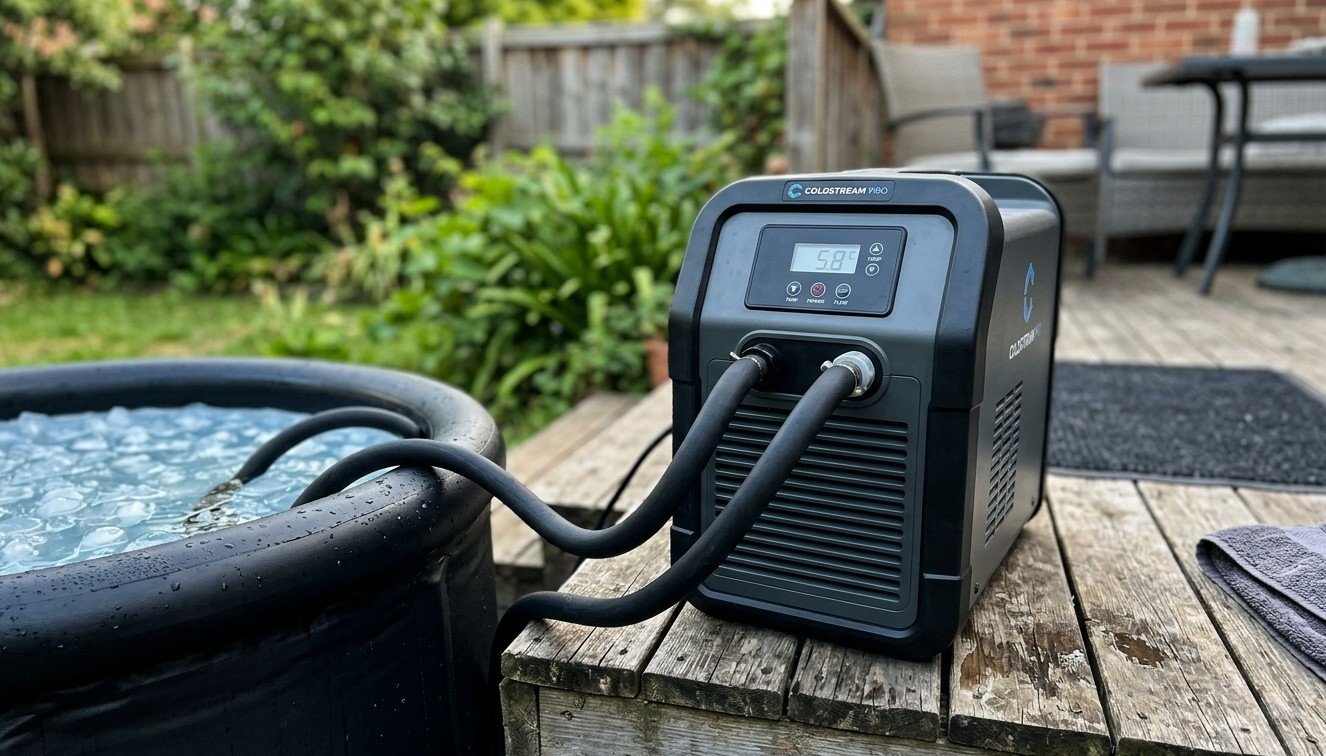
Search “ice bath chiller Australia” and you will get a dozen lists ranking eight or nine units as though someone has run them all through a Brisbane summer. We went looking for the evidence behind those rankings and found something worth telling you up front: on Amazon AU, exactly one dedicated cold plunge chiller has accumulated a meaningful number of customer ratings. One. Everything else in that category is sitting on a handful of reviews or none at all.
That does not make the other units bad. It means nobody can honestly tell you they are good yet, and any article that ranks them one through nine is inventing a hierarchy that the data does not support. So this guide does something different. It explains how to size a chiller for Australian conditions, shows you what is genuinely available here, and is straight with you about where the evidence runs out.
KEY TAKEAWAY: A chiller is a refrigeration unit that pumps your plunge water through a cooling circuit and holds it at temperature, removing the need to buy ice. For a single-person tub of roughly 300–400 litres in most Australian capitals, 1/2 HP is the sensible starting point, and BTU/hr tells you far more about real performance than horsepower does. Undersizing is the most expensive mistake in this category, because a chiller that cannot reach your target temperature simply runs continuously and gets replaced. Above about 25°C ambient, which covers a Darwin or Cairns summer entirely, you should size up rather than hope.
What a chiller actually does, and what it does not
A cold plunge chiller works on the same principle as your fridge. Water leaves the tub through a hose, passes over a refrigerated heat exchanger, and returns colder. A thermostat holds the set point. Most units sold for plunge use also run the water through a filter cartridge on the way past, which is why chiller owners tend to change water far less often than ice-bath owners do.
Here is the part the marketing tends to skip. A chiller is a temperature-holding device first and a cooling device second. Bringing 350 litres of Sydney tap water from a summer 24°C down to 10°C is a big thermal job that takes hours, not minutes. Once you are at temperature, keeping it there is comparatively easy, which is why an insulated lid does more for your electricity bill than an extra half-horsepower does. If you are plunging daily, you leave it running and it sips power. If you plunge twice a week and switch it off in between, you pay for the full pull-down every time.
What a chiller will not do is fix a bad tub. A thin-walled inflatable loses heat through its walls faster than a modest chiller can remove it, and in that pairing the unit runs constantly and still drifts upward on a hot afternoon. Insulation and chiller capacity are the same conversation.
Sizing: why horsepower is the wrong number to shop on
Horsepower is the figure printed on the box, so it is the figure everyone compares. It describes the compressor, not the cooling. Two units both badged 1/2 HP can differ substantially in what they actually remove from your water, because the outcome depends on the heat exchanger, the airflow across the condenser, the pump flow rate and the refrigerant circuit as a whole.
The number that tells you something useful is BTU/hr, the actual heat removal rate. If a listing publishes it, that seller is giving you real information. If a listing publishes only horsepower and a hero image, treat the specification as marketing until proven otherwise.
The classic error runs like this. Someone buys the smallest unit that the listing claims will handle their volume, installs it in a Perth garage in February, and discovers it runs around the clock without ever reaching the set point. Three months later they buy the larger unit they should have bought first. In this category, sizing down to save money reliably costs more.
| Your setup | Practical starting point | What pushes you up a size |
|---|---|---|
| Single person, ~200–300 L, insulated hard-shell or drop-stitch tub | 1/3 to 1/2 HP | Uninsulated tub, full sun, target below 8°C |
| Single person, ~300–400 L, typical portable tub | 1/2 HP | Ambient regularly above 25°C, several plunges a day |
| Two-person or 400 L+, or a shared household | 3/4 to 1 HP | Back-to-back sessions, tub kept outdoors uncovered |
| Tropical north, any volume | Size up one bracket | Ambient rarely drops overnight, so the unit never gets a break |
Two practical notes that get missed. Chillers reject heat into the air around them, so an enclosed cupboard or a tight garage corner will choke performance no matter what you paid. And most units draw enough current that you want a dedicated outlet rather than a daisy-chained extension lead, which is worth checking before the box arrives.
The Australian climate problem nobody accounts for
Nearly every chiller sizing chart you will find online was written for a northern-hemisphere buyer, and it quietly assumes a temperate baseline. Australia does not offer one. A 1/2 HP unit that comfortably holds 10°C on a Hobart winter morning is a different proposition in a Townsville February, when the ambient barely drops overnight and the condenser never gets the cool air it needs to shed heat efficiently.
Two things follow. First, your starting water temperature matters more here than the charts suggest, and it swings hard by city and by season, which we have broken down separately in our guide to Australian tap water temperature by city. Second, shade is a genuine specification. Moving a tub out of direct afternoon sun changes the load on the chiller more than most upgrades do, and it costs nothing.
If you are in Brisbane, Darwin, Cairns or Perth and you want a reliable sub-10°C plunge through summer, budget for a size up and an insulated lid rather than assuming the listing’s litre rating applies to you. It was almost certainly measured somewhere cooler.
What is actually available in Australia
The Australian chiller market splits into two channels that behave very differently.
Direct from the specialist brands
Brands including iCoolsport, Proactive Recovery, Chill Bunny and Primal Ice sell chillers into Australia directly, and this is where the serious equipment sits. You generally get published cooling figures, local warranty handling and someone to call when a compressor plays up. If you are building a permanent setup you intend to use for years, this is the channel that will serve you, and it is worth reading a brand’s warranty terms properly before committing, because refrigeration warranties frequently exclude the compressor after the first year.
Marketplace listings
The marketplace channel is faster to buy from and easier to return through, but the range is thin and, as we will come to, the review evidence is thinner still. It suits people who want to try chilled plunging without committing to a specialist purchase, and people who already own a compatible tub.
The review-data problem, in numbers
We went through the dedicated cold plunge chillers currently listed on Amazon AU and recorded what the customer rating pool actually looks like. This is the clearest picture available of what real Australian buyers have said, and it is sobering.
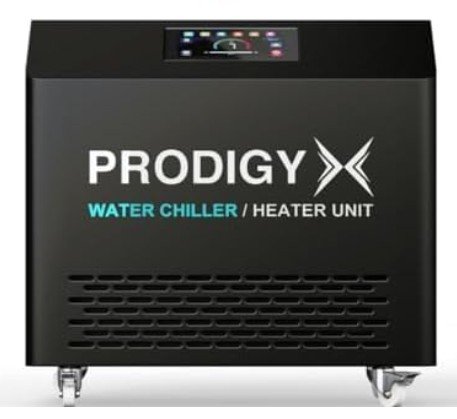
Most reviewed
Prodigy X Water Chiller for Cold Plunge
4.1 out of 5 across 89 ratings. The only chiller on this channel with a feedback pool big enough to read a pattern from.
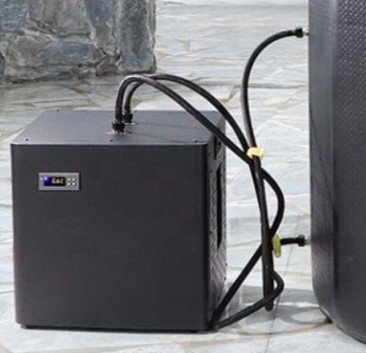
Tub and chiller in one
Portable 0.3 HP Cold Plunge Tub with Chiller
4.3 out of 5 across 86 ratings, though that score covers the tub as well as the chiller unit.
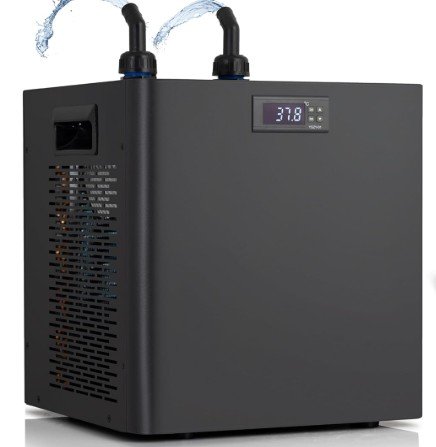
Limited feedback so far
Polar Revive Chiller 2.0
3.3 out of 5 from just two ratings. That is an anecdote rather than a verdict, so treat it as unmeasured.
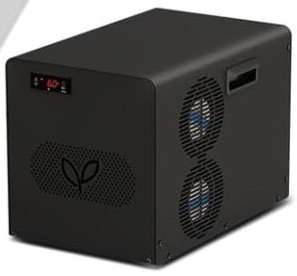
Largest tub here
370 L PolarChill Cold Plunge with T2S Chiller
Five stars, but from too few ratings to display. A perfect score on a handful tells you nothing yet.
Read those cards the way we do. The Prodigy X unit is not necessarily the best chiller sold in Australia, and we are not claiming it is. It is the only one on this channel with enough independent buyer feedback that a 4.1 average means something. A 5.0 on three ratings is not better than a 4.1 on eighty-nine; it is simply unmeasured.
We should be equally straight about the limits of this evidence. Marketplace ratings skew positive, they capture the first few weeks of ownership rather than the third summer, and they tell you almost nothing about the thing that actually matters with refrigeration, which is whether the compressor is still working in year three. For a purchase in this bracket, warranty terms and the existence of local service are worth more than any star average, and that is precisely why the specialist channel earns its premium.
Chiller or ice? The question worth answering first
Before you shop at all, work out whether you need one. The honest answer for a lot of people is no. If you plunge twice a week and you are comfortable at 12–14°C, bagged ice in a well-insulated tub does the job without a compressor, an outlet or a filter schedule.
The maths flips when frequency rises. Ice is a per-session cost that never stops; a chiller is an upfront cost plus a modest, predictable running cost. Somewhere around four sessions a week the chiller starts winning, and beyond daily use it is not close. We have run the Australian electricity numbers properly in our breakdown of what an ice bath actually costs to run in Australia, which is the piece to read before you spend anything.
There is a second, less obvious argument for a chiller: consistency. Ice gives you a temperature that starts too cold and drifts warm across the session. A chiller holds a set point, which matters if you are following a protocol rather than just getting in. Our ice bath temperature guide covers what those targets should be for different goals.
The parts of the setup people forget to budget for
A tub the chiller can actually work with
Not every tub takes a chiller. You need somewhere for water to leave and return, which in practice means either purpose-built ports or a tub the manufacturer states is chiller-compatible. Plenty of budget inflatables have neither. If you are pairing a chiller with an existing tub, check the port situation before you buy, and read our roundup of portable ice baths available in Australia for which units are built for it.
If you want something inexpensive to pair with a chiller while you work out whether you will stick with cold exposure, a foldable Weisshorn portable tub in the 120 x 70 cm size is a common starting point in Australia. Be realistic about the trade-off though: a soft-walled tub loses heat faster, so it asks more of whatever chiller you attach to it.
Filtration and water hygiene
The reason chiller owners change water monthly rather than weekly is filtration, and filters are consumables. Most plunge chillers take a 20-micron cartridge, and replacement filter packs are cheap enough that there is no excuse for running a dirty one.
Filtration alone is not sanitation, though, and this trips people up. A filter removes particles; it does not kill anything. Cold water slows microbial growth but does not stop it, and a tub used by more than one person needs a residual sanitiser. We have covered the practical protocol in keeping cold plunge water clean, and compared the two most common add-ons in ozone versus UV treatment.
Somewhere sensible to put it
A chiller needs airflow, a level surface, weather protection and a power point, and it makes a noise somewhere between a bar fridge and a small air conditioner. On a suburban block that is worth thinking about before you site it under a bedroom window or against a neighbour’s fence. If you are still designing the setup, our DIY cold plunge build guide goes through placement, insulation and plumbing in detail.
If you are buying a chiller this year
Our position, stated plainly. Work out your plunge frequency first, because below roughly four sessions a week ice remains the rational choice. If you clear that bar, size on BTU/hr rather than horsepower and buy one bracket larger than the listing suggests if you live anywhere north of Brisbane. Prioritise a tub with real insulation and a proper lid over a bigger compressor, because insulation works around the clock for free.
On channel: if this is a long-term setup, buy from a specialist brand with local warranty support and published cooling figures. Refrigeration fails eventually, and when it does you will care far more about who answers the phone than about what you saved. If you are testing the idea, or already have a compatible tub, the marketplace route is reasonable, with the caveat that you are buying on thin evidence.
We will keep this page updated as the rating pools on these listings grow, because the honest ranking everyone wants is not possible to write yet. When there is enough evidence to rank them, we will.
Frequently asked questions
What size chiller do I need for a 400 litre ice bath in Australia?
For a single-person tub around 400 litres, 1/2 HP is the practical starting point in temperate Australian conditions. In Queensland, the Northern Territory or northern WA, or if your tub sits in the sun or lacks insulation, step up to 3/4 HP. Compare BTU/hr figures rather than horsepower where the seller publishes them.
How long does a chiller take to cool a plunge from tap temperature?
Hours rather than minutes, and it varies enormously with starting temperature, tub insulation and ambient conditions. This is why most owners leave the unit running continuously and rely on an insulated lid, rather than cooling from scratch before each session.
Can I use an aquarium or hydroponic chiller instead?
Mechanically yes, and plenty of DIY builders do exactly that. The catches are that aquarium units are usually rated for smaller volumes and gentler temperature differentials, materials are not always suited to sanitiser-treated water, and using one this way will generally void the warranty. Size generously if you go this route.
Is a chiller cheaper than buying ice in Australia?
Over a long enough horizon and at high enough frequency, yes. Ice is a recurring per-session cost with no end point, while a chiller is an upfront outlay plus modest running costs. The crossover sits around four sessions a week for most households. Our Australian running-cost breakdown works through the figures.
Do chillers filter the water as well?
Most plunge chillers include an inline filter, typically a 20-micron cartridge, which removes particles such as skin cells and hair. Filtration is not sanitation. A shared tub still needs a residual sanitiser regardless of what the chiller does.
Which ice bath chiller is best in Australia?
There is not enough independent evidence to name one honestly. On Amazon AU, only the Prodigy X chiller has a rating pool large enough to read, at 4.1 out of 5 across 89 ratings. The specialist Australian brands publish better specifications and offer local warranty support, which matters more for refrigeration than a star average does, but they are not compared on a common independent platform. Anyone ranking these one through nine is guessing.
