
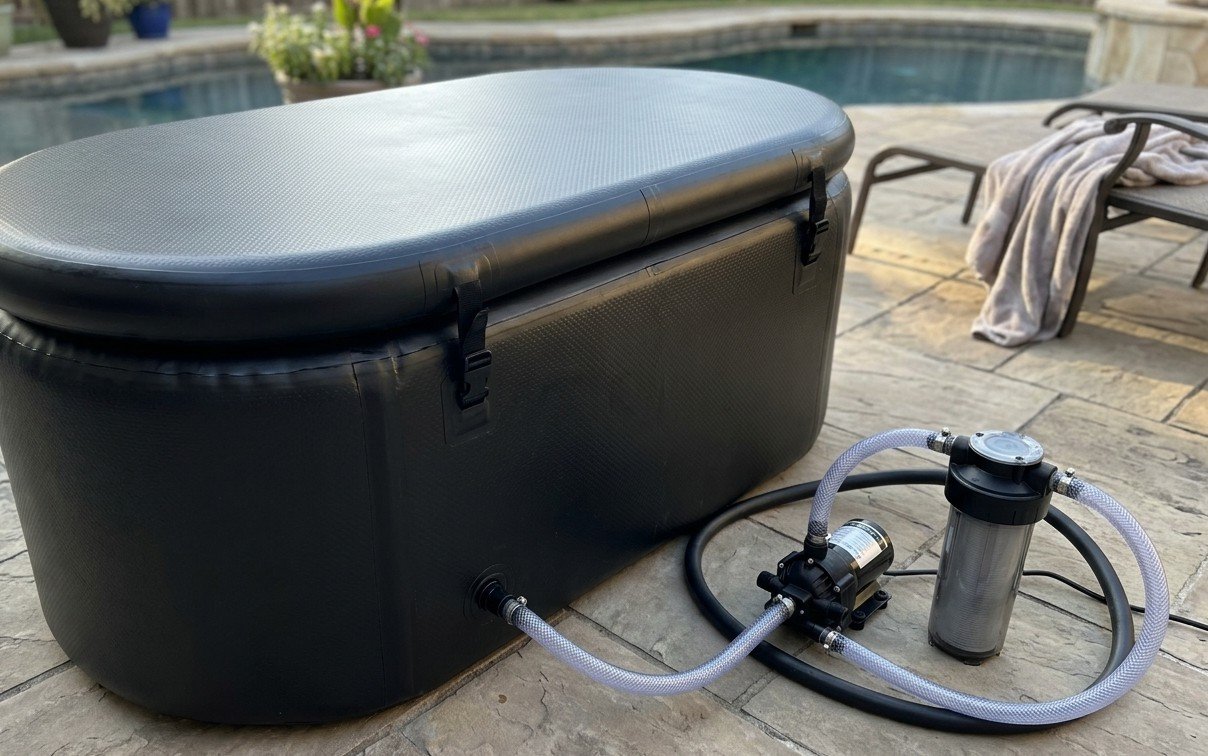
Filtration is the least interesting part of owning a cold plunge and the part that decides how often you drain it. Get it right and you change water monthly. Get it wrong and you are emptying 350 litres every week, wondering why the surface has gone cloudy and slick.
Unlike chillers, where almost nothing sold here carries enough feedback to judge, this category does have some owner data behind it. It is thinner than it first looks, and that is the part worth knowing before you buy: the largest pool of owner ratings behind anything on this page runs to fewer than a hundred people, and the highest-scoring item has three. Star ratings cannot carry this decision, so specification and fit have to.
KEY TAKEAWAY: Three separate jobs get lumped together under “filtration”. A pre-filter catches hair and leaves before they reach your pump. A cartridge filter, rated in microns, removes fine particles from circulating water. A scum absorber sits on the surface soaking up body oils and sunscreen. Most people need at least two of the three. None of them sanitise, so a shared tub still needs chlorine, bromine, ozone or UV on top. Micron rating is the spec that matters: lower numbers filter finer but clog faster, and 20 to 50 microns is the sensible working range for a plunge.
Filtration is not sanitation, and the difference matters
This trips up nearly everyone. A filter is a sieve. It physically removes things large enough to be caught: skin cells, hair, sunscreen residue, the grit off your feet. It does not kill bacteria, and it does nothing to viruses at all.
Cold water slows microbial growth, which is why a plunge is more forgiving than a spa, but slows is not stops. If more than one person uses the tub you need a residual sanitiser in the water as well, and we have set out the practical protocol in keeping cold plunge water clean. If you are weighing up the two most common add-ons, our comparison of ozone versus UV treatment covers what each actually achieves.
What good filtration buys you is time between water changes, and a pump that does not die early. That is worth plenty on its own.
Micron ratings, explained once
A micron rating tells you the size of particle a filter will catch. Lower numbers catch smaller things. It sounds like lower is simply better, and that is where people go wrong.
| Rating | Catches | Trade-off |
|---|---|---|
| 80 mesh pre-filter | Hair, leaves, insects, grit | Coarse by design. Protects the pump rather than polishing the water. |
| 50 micron | Most visible sediment | Long service life, lets fine cloudiness through. |
| 20 micron | Fine sediment, much of what causes cloudy water | The usual sweet spot. Clogs faster than 50. |
| 5 to 10 micron | Very fine particulate | Chokes quickly on a plunge and can starve the pump. Rarely worth it. |
A filter that is too fine restricts flow, and a restricted pump runs hot and fails early. If you are running a chiller, that flow restriction also slows cooling, which people usually misdiagnose as a chiller problem. Our chiller sizing guide goes into why flow rate and cooling performance are linked.
The three jobs, and which you actually need
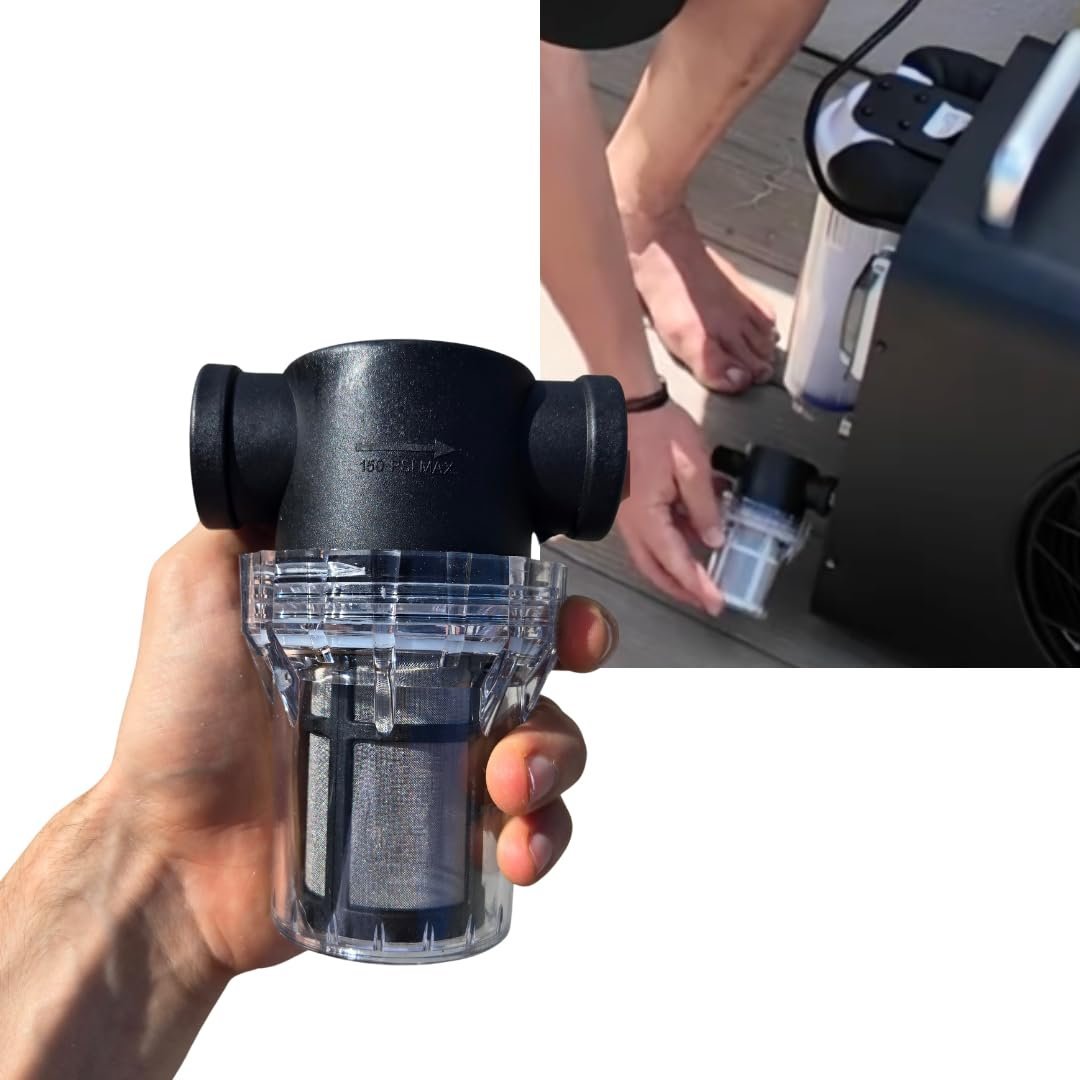
A pre-filter screws onto the intake and catches the coarse stuff before it reaches your pump or chiller. If you plunge outdoors, under a tree, or anywhere with wind-blown debris, this is the single highest-value item on the list. It is also the cheapest.
A cartridge filter is the main event, sitting inline and polishing the circulating water. Most chillers ship with a housing that takes a standard cartridge, commonly 2.5 by 10 inches. Check your housing size before ordering anything, because there is no universal standard.
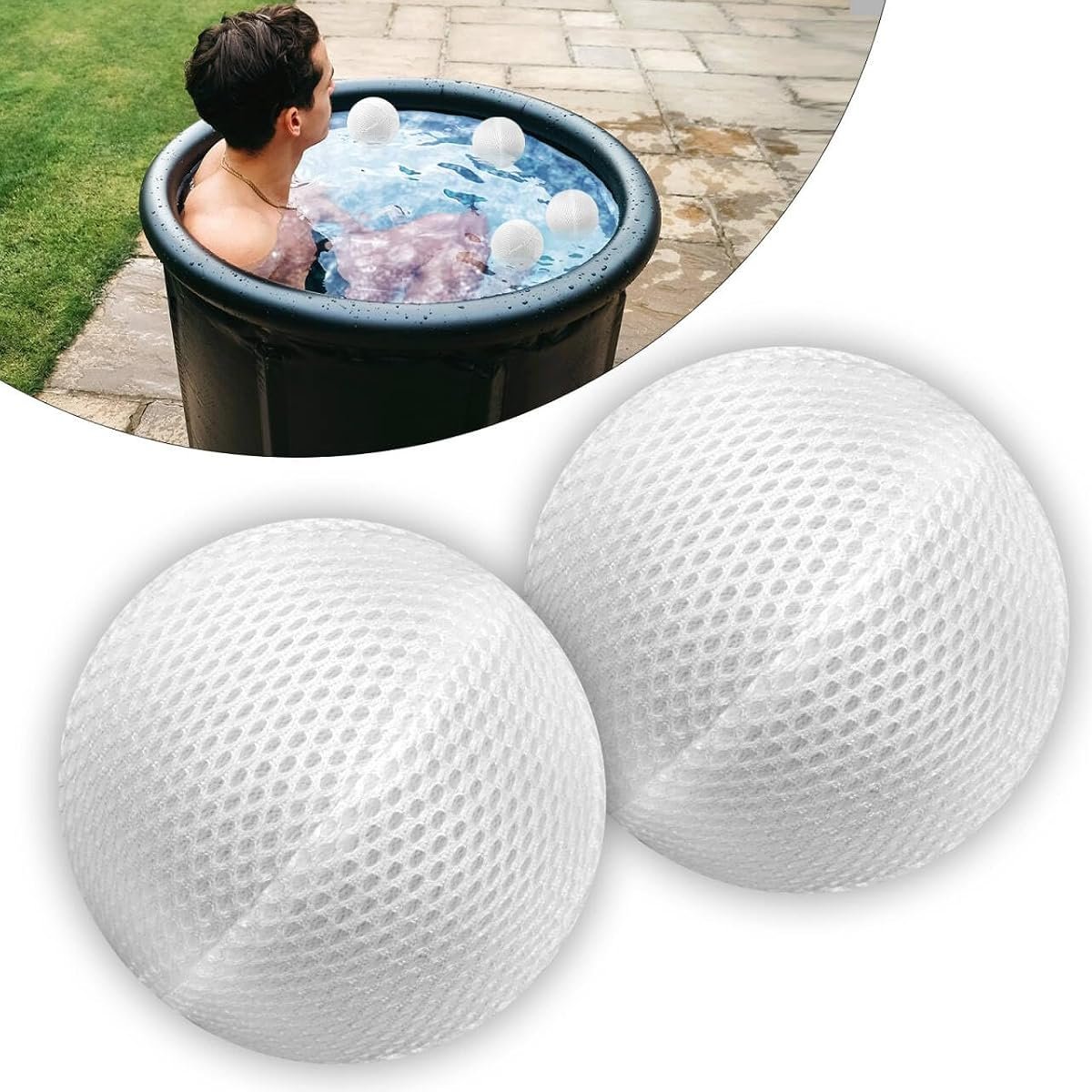
A scum absorber is a sponge or ball that floats on the surface soaking up body oils, sunscreen and moisturiser. These are the things that create the greasy film around the waterline, and no inline filter will catch them because they never sink. For a few dollars this is the accessory that most changes how the water looks.
If you plunge alone indoors with a chiller, a cartridge and a scum absorber will do. Outdoors, add the pre-filter. Sharing the tub, add a sanitiser as well.
What the ratings actually say
We compared the cold plunge filters and pumps currently sold in Australia and recorded how much owner feedback actually sits behind each one. There is real feedback here, unlike the chiller category, but the pools are small in a way that changes how much weight any single score deserves.
The picks below are ordered by what the evidence supports, not by what sells most.
Cheapest fix, highest value
Cold Plunge Pre-Filter, 80 Mesh
3.9 out of 5 across 20 ratings. Screws onto a 3/4 inch threaded intake and catches hair and debris before they reach your pump.
Best for surface oils
Cold Plunge Filter Scum Absorber, 2 Pack
3.8 out of 5 across 45 ratings. Floats on the surface soaking up body oils and sunscreen, which no inline filter will ever catch.
Finest filtration
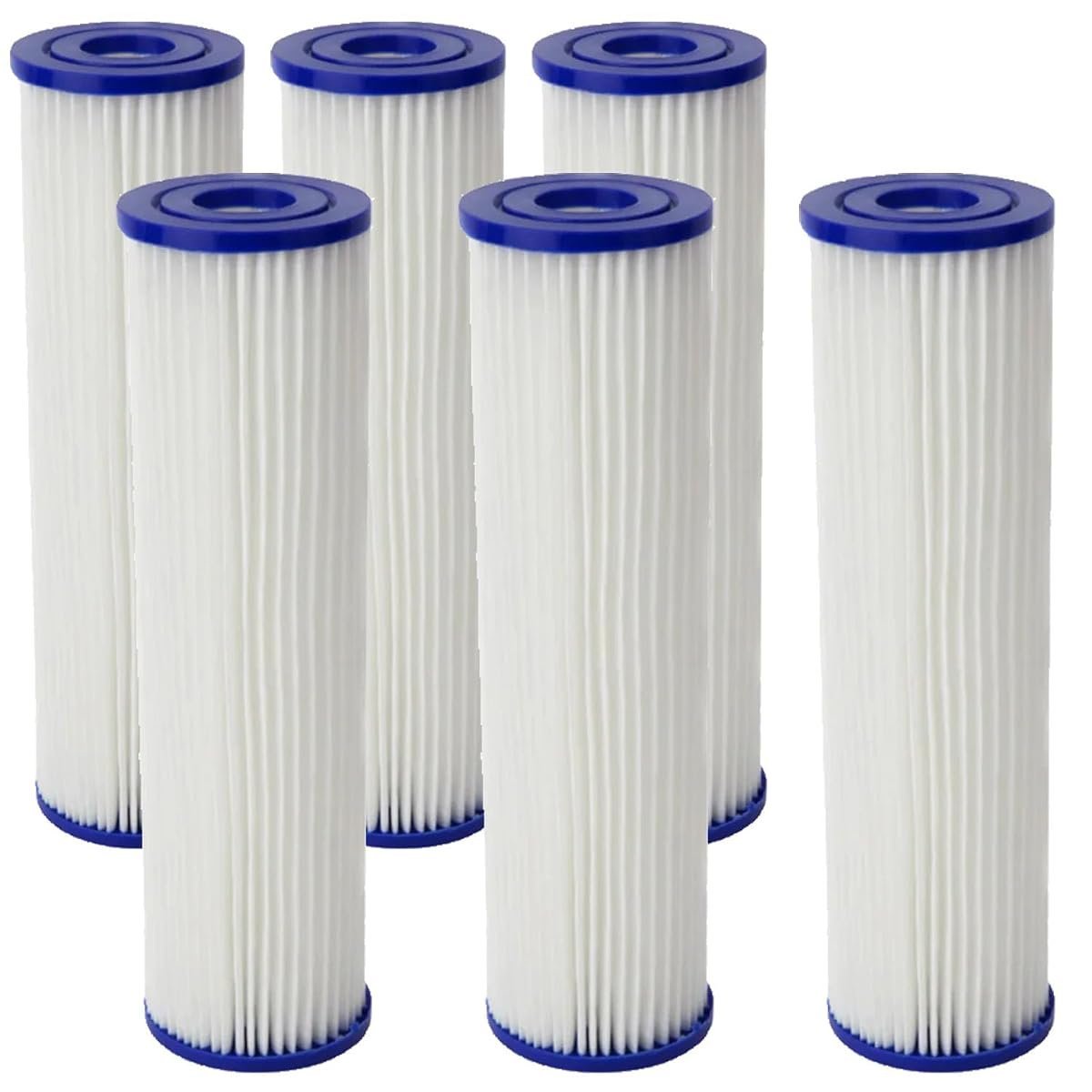
Ice Bath Filter, 6 Pack, 20 Micron
5 out of 5, but from only three ratings. A multipack at the sweet-spot micron rating, which solves the problem of having no spare when one clogs.
Standard cartridge size
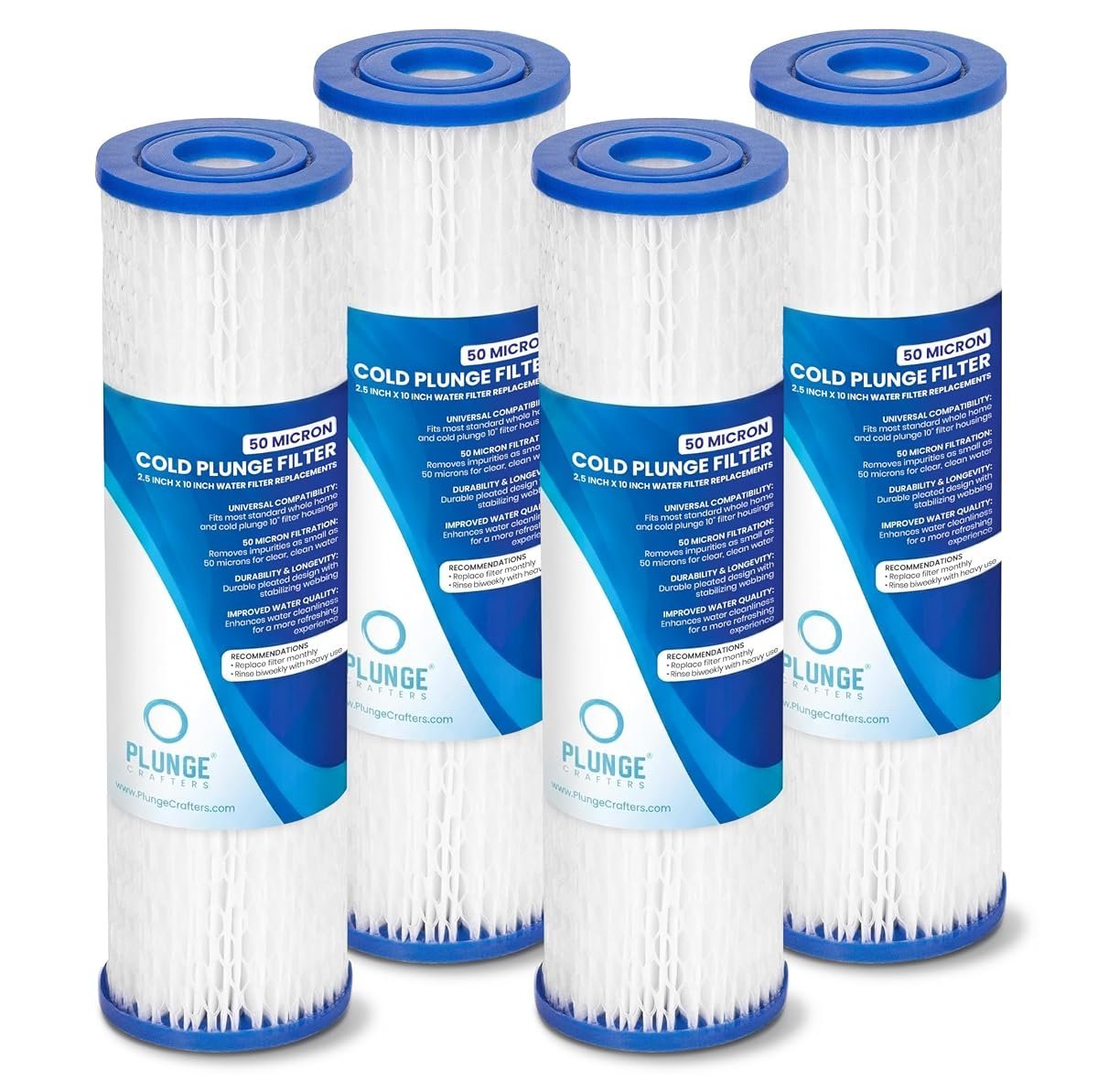
Cold Plunge Water Filter Replacement, 50 Micron
4.6 out of 5 across 70 ratings, the strongest evidence of any filter here. The common 2.5 by 10 inch size that fits most chiller housings. Check yours before ordering.
Lowest rated on this page
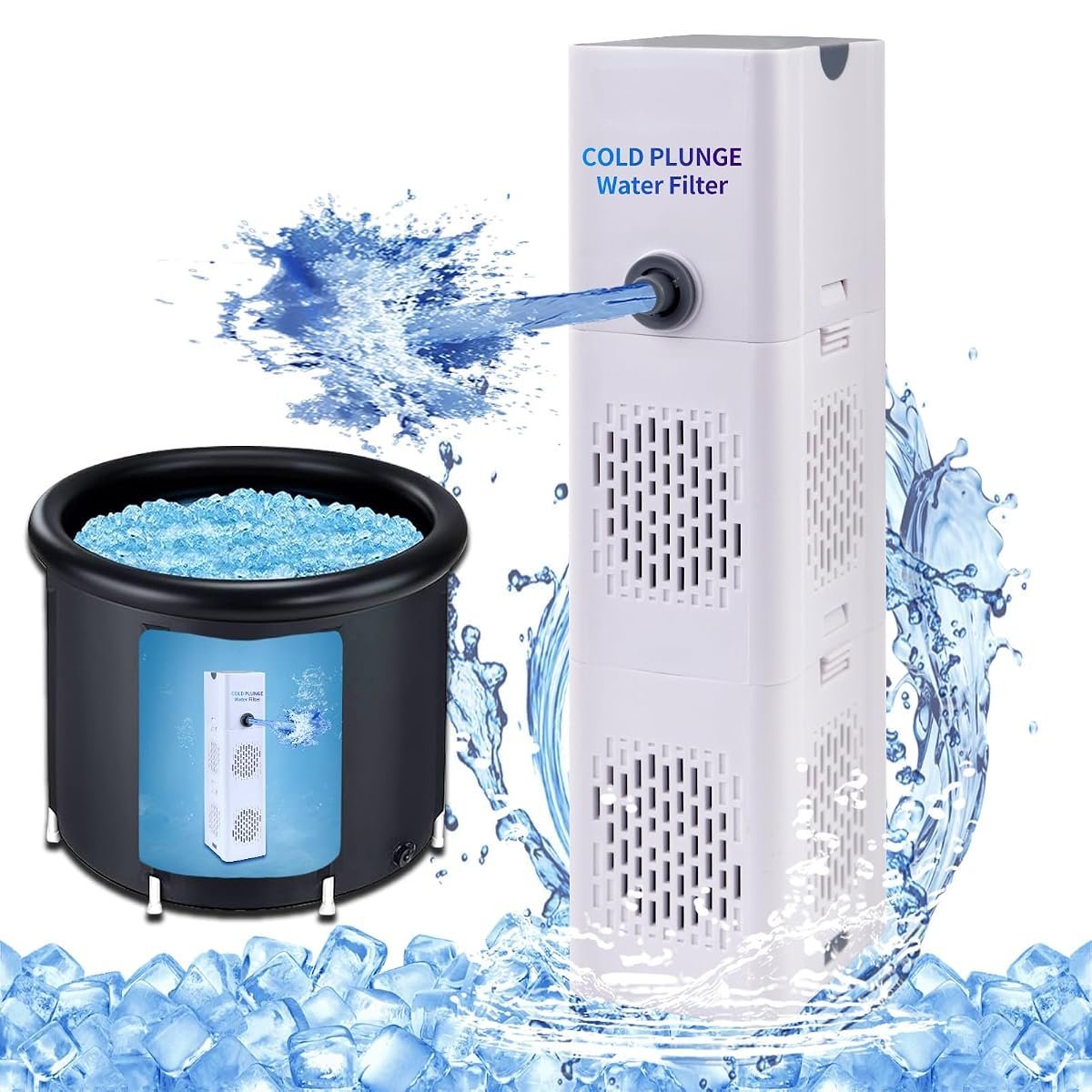
Cold Plunge Filter Pump, 500 GPH
3.1 out of 5 across 47 ratings, the lowest score on this page. Complaints cluster on fit and flow rather than on filtration.
Two things stand out. The only products with enough owners behind them to mean much are the circulation pump, at 4.3 out of 5 across 97 ratings, and the standard-size cartridge at 4.6 across 70. Everything else rests on fewer than fifty people, and the lowest-scoring item on the page draws its complaints from fit and flow rather than from filtration itself.
Be careful with the very high scores on small samples, though. Five stars from three ratings is encouraging and nothing more, and it is not evidence that the unit outperforms something rated 4.6 across seventy.
Pumps: flow rate, and the aquarium question
If your tub did not come with a chiller, you still want water moving. Stagnant water stratifies, so the top sits warmer than the bottom, and anything the filter might have caught simply settles instead.
The specification to shop on is flow rate in litres per hour. As a rough working figure, aim to turn over your tub volume three to four times an hour. For a 350 litre plunge that means something in the region of 1,000 to 1,500 L/h, and buying well above that does no harm beyond noise and power draw.
Plenty of Australian owners use submersible aquarium or pond pumps for this, and mechanically they work. Two cautions. Aquarium pumps are not always rated for continuous duty at the temperatures and chemical loads a sanitised plunge involves, and using one this way will generally void its warranty. Buy on the generous side and expect to replace it sooner than the box suggests.
If you need circulation
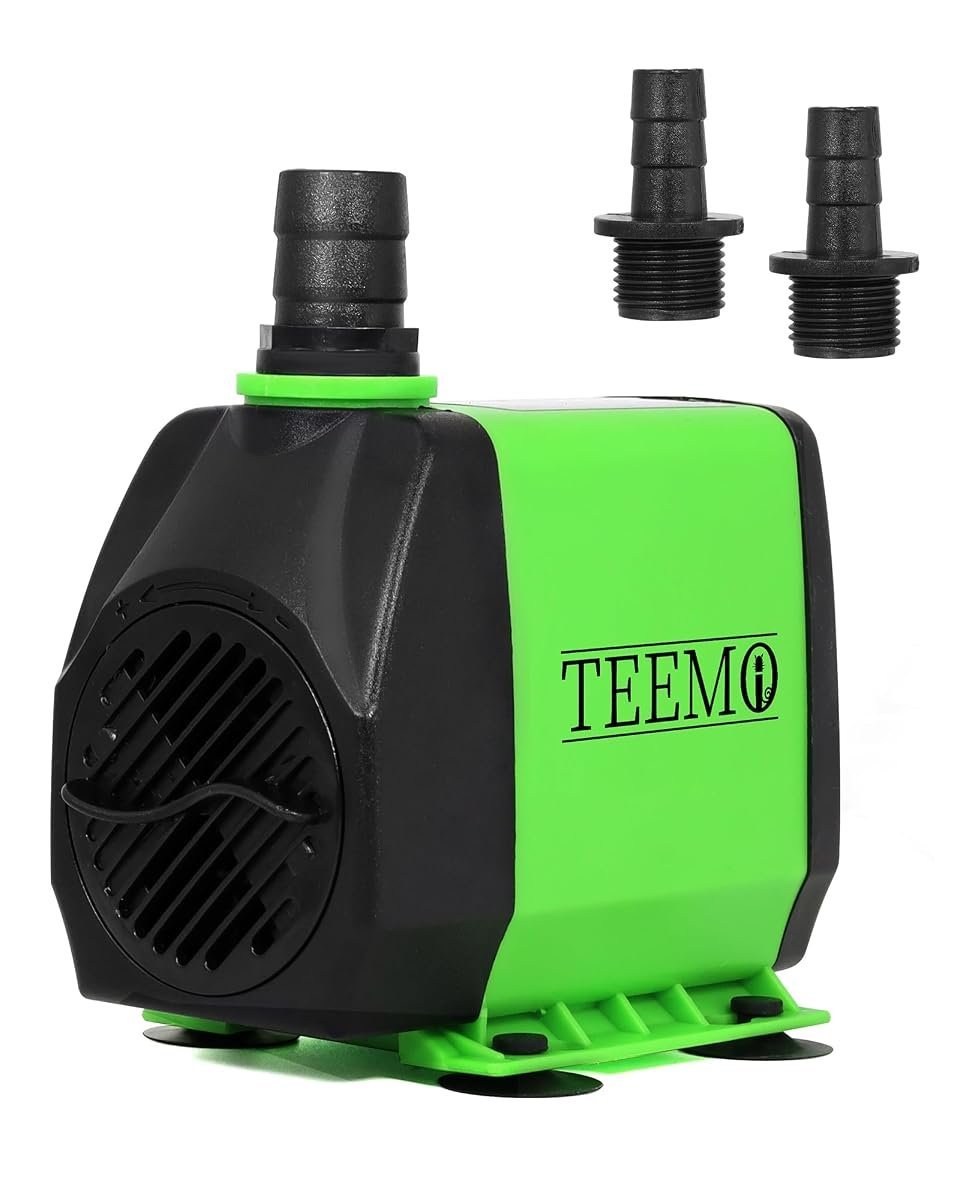
Submersible Pump, 3000 L/H Adjustable
4.3 out of 5 across 97 ratings, the largest feedback pool here. Well above the turnover a 350 litre plunge needs, and the flow is adjustable down.
For ozone setups
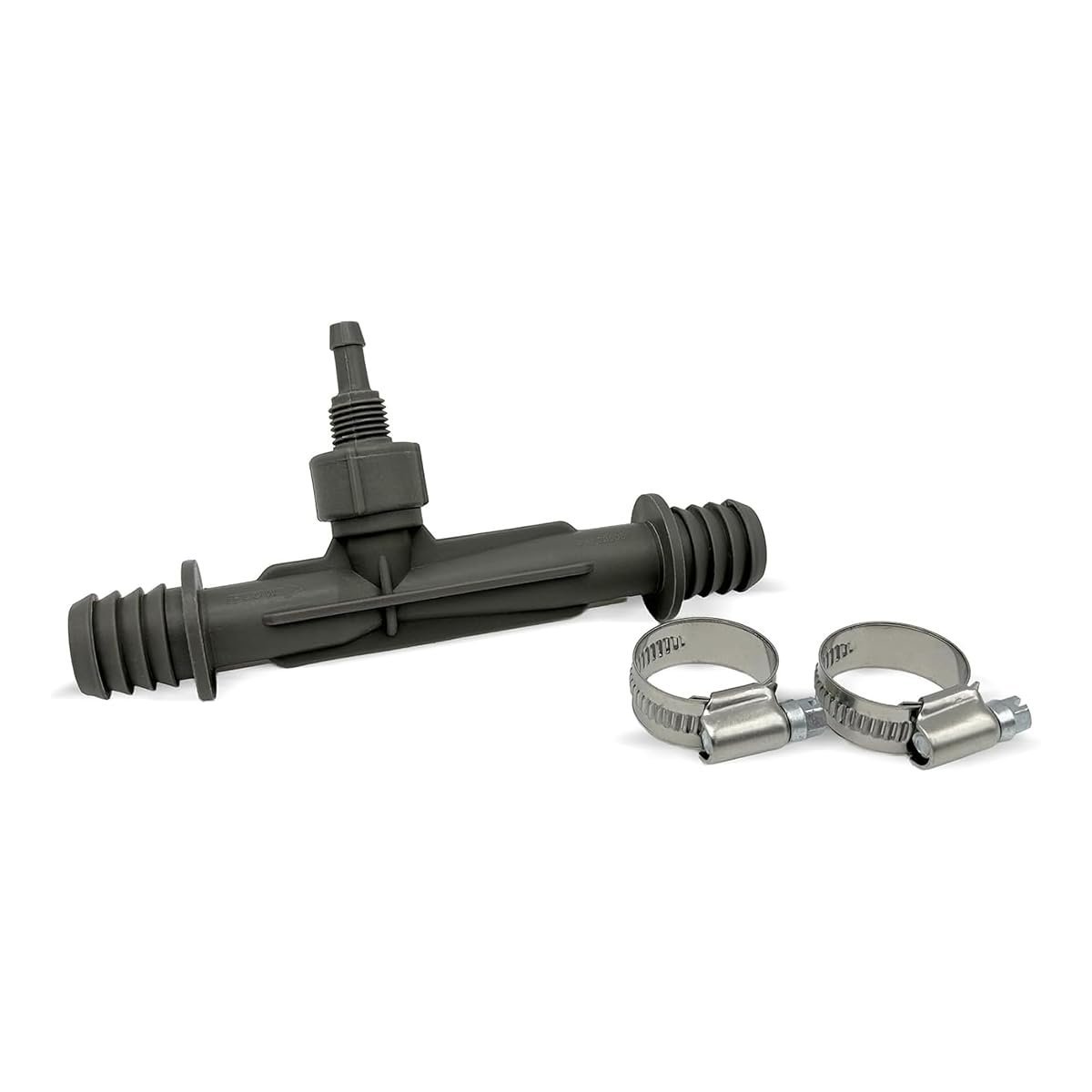
Ozone Venturi Injector for Cold Plunge
4.6 out of 5 across 43 ratings. Draws ozone into the circulation line. Only relevant if you are already running an ozone generator.
A maintenance rhythm that actually holds
- Every session: lift out the scum absorber, squeeze it, drop it back. Ten seconds.
- Weekly: rinse the cartridge under a tap, working the pleats open. Rinse the pre-filter screen.
- Monthly: soak the cartridge in a filter cleaner overnight rather than just rinsing. This roughly doubles its life.
- Every two to three months: replace the cartridge. A cleaned filter is never a new filter, and a tired one restricts flow long before it looks dirty.
- Water change: monthly with good filtration and a sanitiser, fortnightly without.
Buy cartridges in multipacks. The single most common reason people run a clogged filter is that the replacement was not in the cupboard when the old one gave up.
Our take
Start with a pre-filter and a scum absorber. Together they cost very little, they need no plumbing, and between them they handle the two problems that actually make plunge water look and feel unpleasant. Add a cartridge in the correct size for your housing, at 20 to 50 microns, and keep spares.
Do not buy the finest filter you can find, do not assume filtration replaces sanitiser, and do not lean on star ratings in a category where most products have fewer than fifty of them. Measure your housing, match the micron rating to how often you are willing to rinse the cartridge, and let the specification decide.
If you are kitting out a tub from scratch rather than retrofitting one you already own, our best ice bath accessories in Australia roundup covers the filter housings, cartridge kits and pump bundles worth buying alongside the filtration advice above.
Frequently asked questions
What micron filter is best for an ice bath?
Twenty to fifty microns for the main cartridge. Twenty catches most of what causes cloudy water; fifty lasts longer but leaves finer particulate behind. Anything below about ten microns clogs quickly on a plunge and restricts flow enough to strain the pump.
How often should I change an ice bath filter?
Rinse weekly, deep-soak monthly, replace every two to three months with regular use. Replace sooner if flow drops noticeably, since a restricted filter strains the pump and slows a chiller.
Does a filter remove bacteria from a cold plunge?
No. Filters remove particles, not micro-organisms. Cold water slows bacterial growth but does not prevent it, so any tub used by more than one person needs a residual sanitiser such as chlorine or bromine, with ozone or UV as a supplement.
Can I use an aquarium pump for a cold plunge?
Mechanically yes, and many Australian owners do. Aquarium pumps are not always rated for continuous duty with sanitiser in the water, and using one this way usually voids the warranty. Size generously and expect a shorter service life than the specification implies.
What size pump do I need for a 350 litre ice bath?
Something turning over the volume three to four times an hour, so roughly 1,000 to 1,500 litres per hour. Going higher is harmless apart from noise and a slightly larger power draw.
Do I still need a filter if I have a chiller?
Yes, and more than ever. Most chillers include a cartridge housing precisely because circulating unfiltered water through a heat exchanger fouls it. A clogged filter also restricts flow, which slows cooling and is frequently mistaken for a failing chiller.
Disclaimer: This guide is based on independent research, specification cross-checking and verified buyer reports. Always consult a healthcare professional before starting cold water therapy, particularly if you have cardiovascular conditions or other health concerns.
