
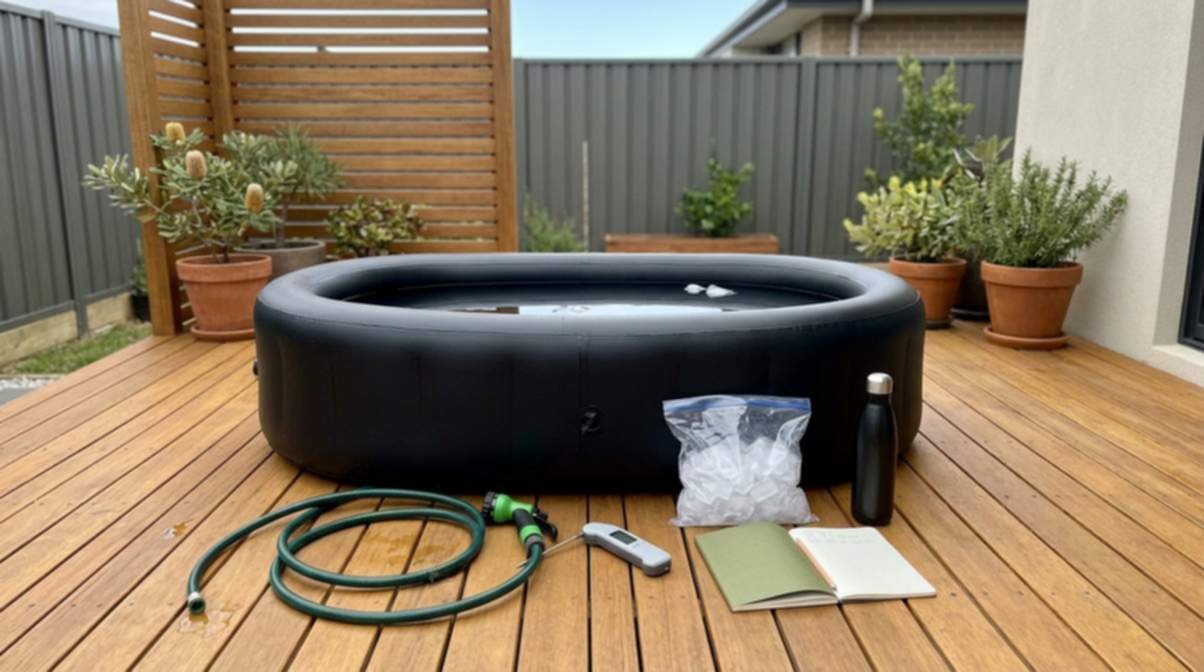
KEY TAKEAWAY: For a proper cold plunge, aim for 10-15°C. Melbourne and Hobart tap water can be cold enough in winter; Sydney, Adelaide, Canberra and Perth are borderline in winter and need ice most of the year; Brisbane, Gold Coast, Cairns and Darwin usually need ice or a chiller year-round.
You fill the tub, turn on the tap, dip a toe in, and it feels cold enough. Then the thermometer says 22°C. That is the awkward Australian ice bath problem: cold tap water can feel sharp on your skin but still sit well above the temperature used in most cold water immersion research.
This guide gives you a city-by-city estimate of Australian tap water temperature, then turns that into a practical answer: do you need ice, how much should you add, and when does a chiller make more sense? For product-level setup advice, use our tested comparison of the best ice baths in Australia.
Two caveats before the table. First, tap water temperature is not fixed. It changes with city, season, pipe depth, storage, time in the network, and whether your pipework has been sitting in sun. Second, the only number that matters is the water in your tub after it is filled and stirred. Use a thermometer, not vibes.
The Australian Drinking Water Guidelines say major Australian reticulated supplies typically range from 10°C to 30°C, with long above-ground pipelines sometimes reaching far higher temperatures. That is why a Darwin summer and a Hobart winter are not the same ice bath problem.
Want to check your own water instead of guessing? The Jiawu Floating Pool Thermometer is our pick for getting an accurate reading before you get in.
Safety Warning: Cold Water Is Not a Flex
SAFETY WARNING: Cold water below 15°C can trigger a gasp reflex, rapid breathing, panic, and extra cardiac strain. Start around 15-16°C for 1-2 minutes, enter slowly, keep your head above water, and never plunge alone. If you are over 50, pregnant, have high blood pressure, heart disease, Raynaud’s, fainting history, arrhythmia, epilepsy, or any medical condition, get GP advice before cold water immersion. Royal Life Saving Australia warns that cold water shock can happen under 15°C, and its cold water immersion position statement says 10-15°C is generally safe for most people when monitored and controlled, while colder water increases risk.
Australian Tap Water Temperature by City
KEY TAKEAWAY: If your tap water is already 10-15°C, you may not need ice. If it is 16-20°C, you need a small ice top-up for a true cold plunge. Above 20°C, ice or a chiller is usually required.
| City | Typical winter cold tap | Typical summer cold tap | Do you need ice? | Ice estimate for 250L to 12°C* |
|---|---|---|---|---|
| Sydney | 12-16°C | 21-24°C | Winter: maybe. Summer: yes. | 0-10 kg winter; 25-35 kg summer |
| Melbourne | 9-12°C | 18-22°C | Winter: often no. Summer: yes. | 0 kg winter; 20-30 kg summer |
| Brisbane | 16-20°C | 24-28°C | Yes, almost all year. | 10-25 kg winter; 35-50 kg summer |
| Perth | 14-18°C | 22-26°C | Usually yes, especially summer. | 5-20 kg winter; 30-40 kg summer |
| Adelaide | 11-14°C | 21-24°C | Winter: often no. Summer: yes. | 0-5 kg winter; 25-35 kg summer |
| Canberra | 7-11°C | 20-23°C | Winter: no. Summer: yes. | 0 kg winter; 25-35 kg summer |
| Hobart | 8-11°C | 15-18°C | Winter: no. Summer: small top-up. | 0 kg winter; 10-20 kg summer |
| Darwin | 25-26°C | 29-30°C | Yes. A chiller is smarter for frequent use. | 40 kg winter; 50-55 kg summer |
| Gold Coast | 16-20°C | 24-28°C | Yes, almost all year. | 10-25 kg winter; 35-50 kg summer |
| Cairns | 22-25°C | 28-30°C | Yes. A chiller is usually the clean answer. | 30-40 kg winter; 50-55 kg summer |
*Ice estimate assumes 250L of water, freezer ice around -18°C, a 12°C target, and a 20% real-world buffer. The city temperature ranges are practical estimates based on Australian mains water modelling, published tap-water ranges, and the NHMRC national drinking water temperature range. Measure your own tap before buying ice.
What Temperature Counts as an Ice Bath?
KEY TAKEAWAY: For muscle soreness and recovery, the best-supported target is roughly 11-15°C for 10-15 minutes. Beginners should start warmer, around 15-16°C, and shorter, around 1-2 minutes.
A bath at 22°C can feel cold when you step in, but it is not the same as the cold water immersion protocols used in recovery studies. Machado et al. 2016 found cold water immersion was slightly better than passive recovery for muscle soreness, with the best results around 11-15°C for 11-15 minutes. The study also notes the effect is small and the evidence quality is not perfect, which matters if someone is selling you miracle claims.
Wang et al. 2025 grouped cold water immersion protocols by duration and temperature and compared recovery outcomes after exercise-induced muscle damage. For this blog, the practical point is simple: 10-15°C is a real cold plunge zone, while 20°C-plus tap water is usually just a cool bath.
For a deeper protocol breakdown, link readers to our ice bath temperature guide and our how long in an ice bath guide.
Why Australian Tap Water Temperature Varies So Much
KEY TAKEAWAY: Mains water temperature follows climate slowly. It does not jump around like air temperature each afternoon, but it does rise and fall across the year with a lag.
Tap water is not chilled by the water utility. Once water leaves the reservoir or treatment system, it spends time in pipes, tanks and local plumbing. That means your cold tap is shaped by the ground, the pipe route, the season and your own house.
An ATA household energy report used Bureau of Meteorology-derived climate data to model mains water temperature for 23 Australian locations. It explains that mains water temperature is related to ambient air temperature and changes slowly through the year with a lag, rather than moving hour by hour like outdoor air. The report also includes a capital-city chart showing Darwin staying warm year-round, Hobart and Canberra dropping low in winter, and Sydney, Melbourne, Adelaide, Perth and Brisbane sitting between those extremes. ATA/Energy Consumers Australia report
That is the reason the same inflatable tub behaves differently by postcode. A Melbourne garage in July might fill near plunge temperature without ice. A Brisbane patio in February can fill warm enough that you need multiple bags before it even starts to feel like cold therapy.
City-by-City Notes
KEY TAKEAWAY: The colder southern capitals can get away with tap water in winter. Tropical and subtropical cities should plan for ice or a chiller from day one.
Sydney
Sydney is borderline in winter and usually too warm in summer. If your winter tap reads 12-15°C, you can use it as-is for a beginner plunge. From late spring through autumn, expect to add ice or use a chiller.
Melbourne
Melbourne is one of the easiest major cities for low-cost winter plunging. In winter, tap water may already sit in the useful 10-15°C window. In summer, it usually needs a top-up.
Brisbane and Gold Coast
Brisbane and the Gold Coast are warm-water setups. Winter tap water can still sit above the recovery target, and summer tap water is usually far too warm for a proper plunge.
Perth
Perth can be workable in winter but needs help for most of the year. Summer tap water often starts in the low-to-mid 20s, so a thermometer and a 30-40 kg ice plan are realistic.
Adelaide
Adelaide winter tap water can be usable with little or no ice. Summer is the problem: by the time the bath sits outside, the water often needs a proper ice load.
Canberra
Canberra winter is easy mode for cold water. The bigger problem is not overdoing it when the water is already under 10-12°C. Summer still needs ice.
Hobart
Hobart is the closest thing Australia has to a no-ice city for winter. Summer may only need a small top-up unless the tub is outdoors in sun.
Darwin and Cairns
Darwin and Cairns are chiller cities. You can use ice, but frequent plunging with 40-55 kg of ice per session gets expensive and annoying fast.
How Much Ice Do You Need?
KEY TAKEAWAY: For a 250L tub targeting 12°C, every 2°C above the target usually adds about 6 kg of practical ice. Start with less, stir, measure, then add more.
The physics is simple enough: water takes energy to cool, and ice absorbs a lot of energy as it melts. The useful numbers are the specific heat capacity of water, about 4.186 kJ/kg°C, and the latent heat of melting ice, about 334 kJ/kg. Engineering Toolbox water thermal properties and latent heat of melting values list these values.
Practical formula for a 12°C target:
Ice kg = [water litres x 4.186 x (starting temp – target temp)] / [333.5 + 4.186 x target temp + ice-warming allowance]
For real life, add 20-30%. Your tub, the sun, wind, ice bags sitting in the car, and warm plastic all steal cooling power.
| Starting water temp | Practical ice for 250L to 12°C | What it means |
|---|---|---|
| 15°C | 10 kg | Small top-up. Good for Hobart summer, Adelaide winter, cooler Sydney winter. |
| 18°C | 20 kg | Common for Melbourne summer, Perth winter, Brisbane winter. |
| 20°C | 25 kg | Borderline warm. You will notice a real difference after ice. |
| 22°C | 30 kg | Sydney/Perth/Adelaide summer territory. |
| 24°C | 35 kg | Warm-city summer. Buy ice before filling, not after. |
| 26°C | 40-45 kg | Brisbane/Gold Coast summer or Darwin winter. |
| 28°C | 50 kg | Tropical summer. Ice works, but it is not convenient. |
| 30°C | 55 kg | Chiller territory if you plan to plunge often. |
The 250L number is used because many portable ice baths sit around 200-300L at a sensible fill level. If your tub is 150L, multiply the ice estimate by 0.6. If it is 400L, multiply by 1.6.
Where the Evidence Is Mixed
KEY TAKEAWAY: Cold water can reduce perceived soreness, but that does not mean every colder session is better, or that tap water at 20°C gives the same effect as a 12°C plunge.
The useful recovery evidence is strongest for soreness, not for every claim in cold plunge marketing. Cain et al. 2025 found time-dependent effects on stress, inflammation, immunity, sleep quality and quality of life, but also noted the evidence base is limited by small samples and lack of diversity.
That matters here because tap-water-only plunging is tempting. If your water is 18-20°C, it may feel refreshing and may still help some people build a habit. But if the goal is post-training cold water immersion based on the research target, it probably needs ice.
For the bigger science picture, link readers to are ice baths good for you.
If you would rather measure than estimate, the Jiawu Floating Pool Thermometer is the accurate reading tool we recommend for a home setup.
What Most Ice Bath Ice Guides Get Wrong
KEY TAKEAWAY: Any guide that gives one ice number for all of Australia is guessing. The starting water temperature is the number that changes everything.
Use a 1:3 ice-to-water ratio” is too blunt. A Hobart winter tub and a Darwin summer tub do not need the same ratio.
Cold tap water is enough” is city-dependent. It might be true in Melbourne in July. It is not true in Brisbane in February.
Colder is always better” is bad advice. Below 10°C, cold shock risk rises and most people need shorter sessions.
You can feel the temperature” is nonsense. Air temperature, wind and skin sensitivity distort your perception. Use a thermometer.
Ice is always cheaper than a chiller” depends on frequency. If you plunge once a week, ice may be fine. If you plunge three or more times per week in a warm city, the hassle and cost add up quickly.
Practical Setups by City and Season
KEY TAKEAWAY: The best setup is the one that gets your actual tub water into range without making the habit painful to maintain.
No-ice winter setup
Best for Melbourne, Hobart, Canberra and sometimes Adelaide or Sydney. Fill the tub, stir, measure. If the water is 10-15°C, use it. Keep the session short if the water is close to 10°C or below.
Ice top-up setup
Best for Sydney, Perth, Adelaide, Melbourne summer and Hobart summer. Fill the tub to your normal level, add 10-35 kg of ice depending on the thermometer, stir for 2-3 minutes, then measure again.
Chiller setup
Best for Brisbane, Gold Coast, Darwin, Cairns, or anyone plunging often. The upfront cost is higher, but the routine is cleaner: set the temperature, keep the water filtered, and stop planning your recovery around servo ice bags. See our best ice baths in Australia comparison for tubs and chillers that suit Australian conditions.
Get an Accurate Reading
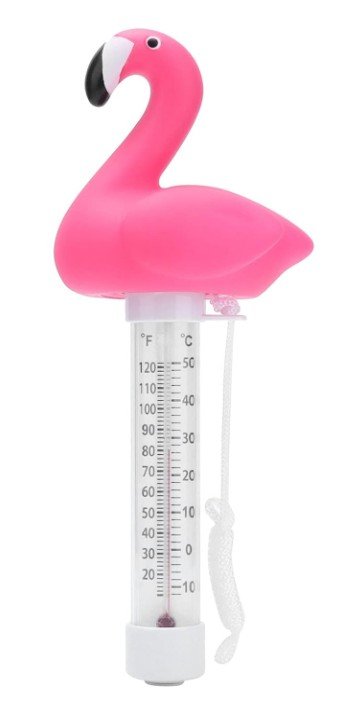
TOP PICK
Jiawu High Accuracy Floating Pool Thermometer
The Jiawu floating pool thermometer is the top-rated pick from our thermometer guide for keeping every session at an accurate, safe temperature.
Frequently Asked Questions
What is the average tap water temperature in Australia?
There is no single average. The NHMRC says Australian drinking water typically ranges from 10°C to 30°C. In practice, Hobart winter tap water can be 8-11°C, while Darwin summer tap water can be 29-30°C. The average for your city depends on climate, season, and local plumbing.
Is tap water cold enough for an ice bath?
It depends on your city and the season. In Melbourne, Hobart, or Canberra winter, tap water can be cold enough (10-15°C) for a proper plunge without ice. In Sydney, Perth, or Adelaide winter, it may be borderline and need a small ice top-up. In Brisbane, Gold Coast, Darwin, or Cairns, tap water is rarely cold enough year-round and usually requires ice or a chiller.
What tap water temperature do I need for cold plunge benefits?
For the recovery benefits supported by research (like reduced muscle soreness), aim for 11-15°C. Beginners should start warmer, around 15-16°C, for shorter sessions (1-2 minutes). If your tap water is above 15°C, you likely need ice to reach an effective temperature.
How much ice do I need for a 250L ice bath?
It depends entirely on your starting water temperature. For a 250L tub targeting 12°C: if your tap water is 15°C, you need about 10 kg of ice; at 20°C, about 25 kg; at 24°C, about 35 kg; and at 30°C, about 55 kg. Always add a 20-30% real-world buffer for heat loss.
How much ice do I need for a 150L ice bath?
Scale the 250L estimates. Multiply the ice amount by 0.6. For example, if the 250L guide says 25 kg for 20°C water, a 150L tub would need roughly 15 kg (25 x 0.6). Always measure your actual tap temperature first.
Does Sydney tap water need ice for an ice bath?
In winter (12-16°C), Sydney tap water may be cold enough for a beginner plunge, but often needs a small ice top-up to reach the optimal 11-15°C range. From late spring through autumn (21-24°C), it definitely needs ice.
Does Melbourne tap water need ice for an ice bath?
In winter (9-12°C), Melbourne tap water is often cold enough without ice. In summer (18-22°C), it usually needs an ice top-up of 20-30 kg for a 250L tub.
Does Brisbane tap water need ice for an ice bath?
Yes, almost all year. Winter tap water (16-20°C) usually needs ice, and summer tap water (24-28°C) requires a significant amount (35-50 kg for 250L). A chiller is a smart investment for frequent use in Brisbane.
Does Perth tap water need ice for an ice bath?
Usually yes, especially in summer. Winter tap water (14-18°C) often needs a small ice top-up. Summer tap water (22-26°C) requires a substantial amount (30-40 kg for 250L).
Can I just use a cold shower instead of an ice bath?
A cold shower can provide a mood and alertness boost, but it is not the same as full-body immersion. Showers typically don’t get as cold as an ice bath, and the water contact is not sustained. For muscle recovery and the full cold shock response, immersion is more effective.
Should I buy ice or a chiller?
If you live in a cool southern city and plunge infrequently (once a week), ice may be fine. If you live in a warm city (Brisbane, Darwin, Cairns) or plan to plunge often (3+ times per week), a chiller is more convenient, cost-effective in the long run, and provides precise temperature control.
Do I need a thermometer for an ice bath?
Absolutely. Perception is unreliable. Air temperature, wind, and skin sensitivity can make water feel colder or warmer than it is. A floating pool thermometer is a cheap, essential tool for safety and consistency.
NHMRC. Australian Drinking Water Guidelines – Temperature. Updated 2025.
Royal Life Saving Society Australia. Position Statement: Cold Water Immersion Therapy. 2024.
Royal Life Saving Society Australia. Risks of Cold Water.
Engineering Toolbox. Water – Thermal Properties.
Engineering Toolbox. Latent Heat of Melting common Materials.
Medical disclaimer: This article is for general information only and is not medical advice. Cold water immersion can be risky, especially for people with cardiovascular, blood pressure, neurological, pregnancy-related or cold-sensitivity conditions. Speak with a GP before starting.
