
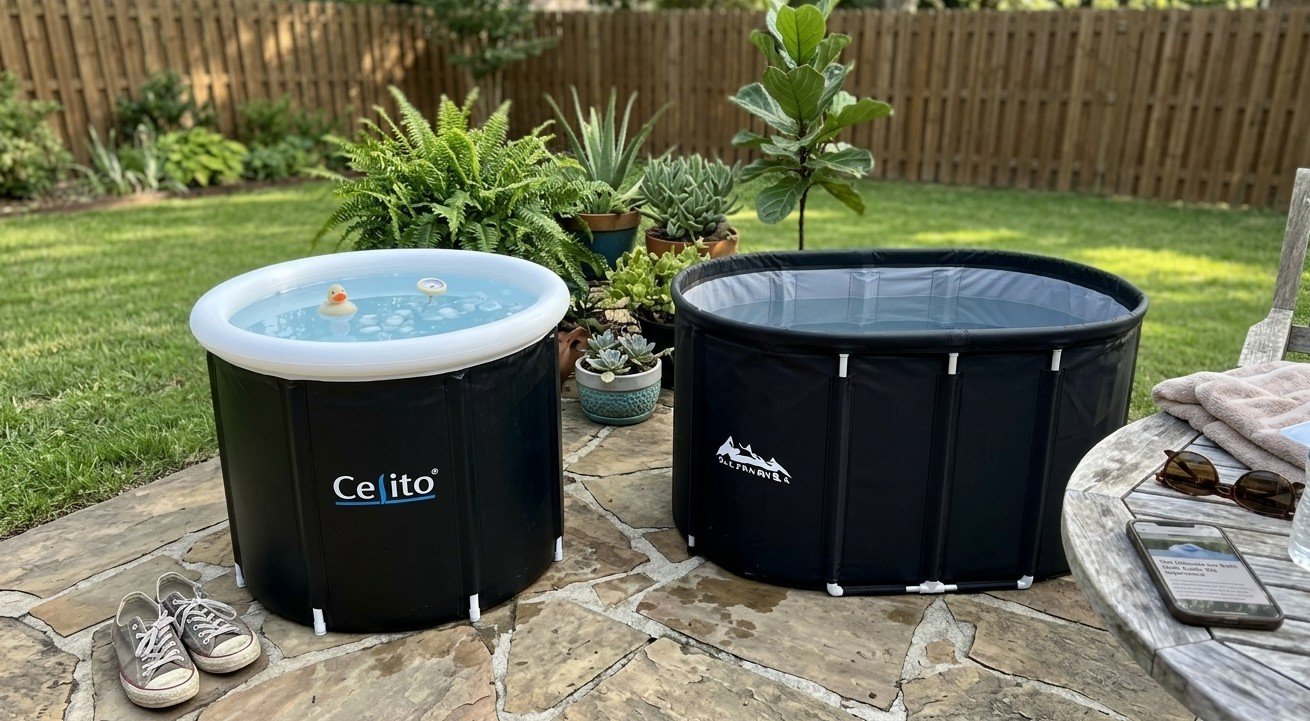
Three hundred litres of water weighs three hundred kilos. The tub holding it weighs 3.3kg. Sit with that ratio for a second, because it explains almost everything about how a Weisshorn ice bath behaves once it leaves the box.
Bottom line up front: the Weisshorn ice bath range scores 3.1 out of 5. It’s a $50 to $97 inflatable bucket that fills easily, drains easily and gets you into cold water for less than the cost of a physio session. Buy one of the three 300L models. Skip the 500L. And do not expect any of them to hold a plunge temperature through an Australian summer without a serious ice budget.
Weisshorn is a house brand from an Australian-owned dropship wholesaler, and its main line is camping gear. Swags, awnings, tents. The tubs are an adjacent product, not a cold plunge company’s flagship, and that shows in the details rather than the basics. The basics are fine. The details are where owners get caught out.
At a glance
Price: $49.95 to $97 AUD depending on model and retailer
Overall score: 3.1 / 5
Best for: first-timers testing whether they’ll actually stick with cold water therapy, and anyone who wants a cool-down soak on a hot afternoon
Skip if: you plunge more than twice a week, you’re tall enough to need full-length immersion, or you live north of Sydney and want to hold single digits outdoors
Three of the four models insulate, one doesn’t, and the one that doesn’t is the biggest. Ease of use is the real strength: filling, draining and cleaning are all straightforward, and owners consistently say so. Temperature control is the real weakness, and no amount of three-layer marketing changes the physics of 300 litres.
Which Weisshorn to buy
Buy a 300L insulated model. The only real question is footprint. Specs and prices below were checked on 17 August 2026, and these are discount listings that move around, so the buttons go to the live price rather than a number that’ll be stale next week.
BEST OF THE RANGE
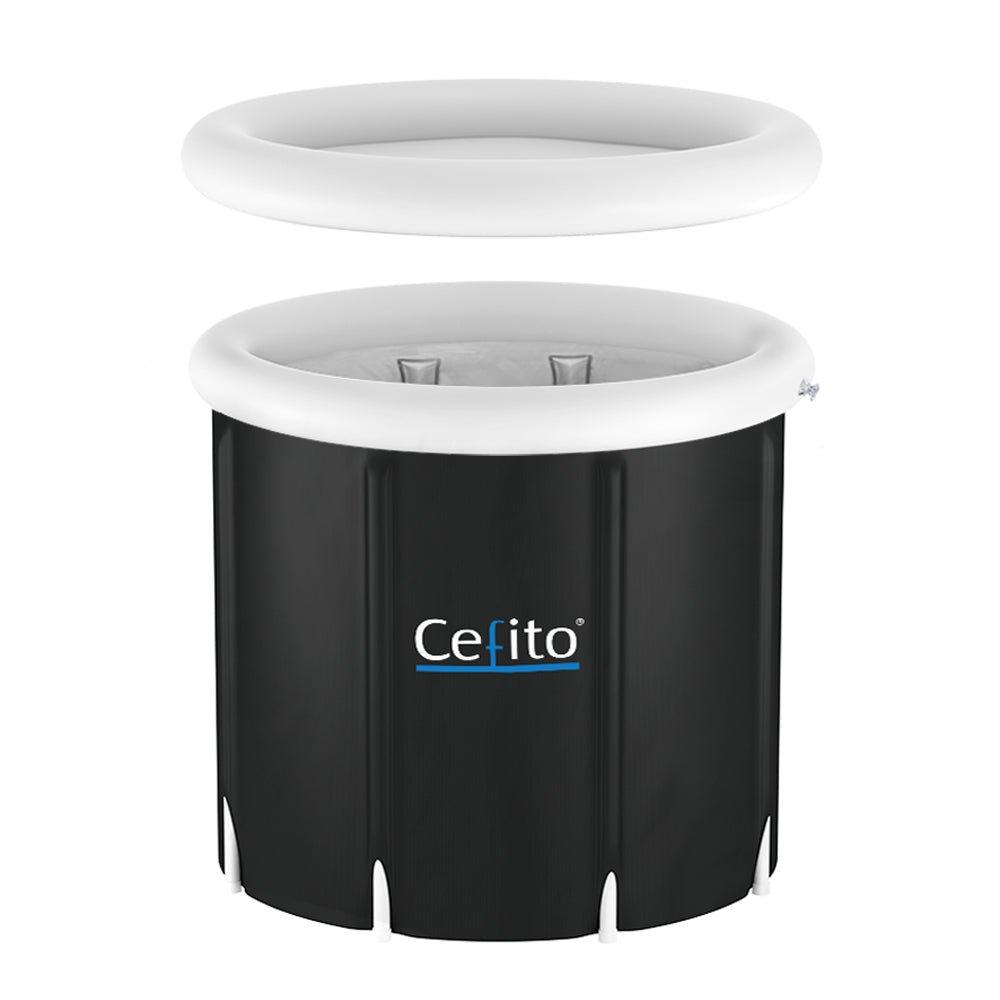
Weisshorn 300L Insulated Tub — 80×80cm
The roomiest of the three 300L tubs, so you sit less folded. Worth the few dollars over the other two.
300 L · 80 x 80cm · ICE-TUB-80X80-BK · three-layer insulated · 3.3kg packed · pump, cover, drain tap and repair kit · 12-month warranty · $55.95 to $64
SMALLEST FOOTPRINT
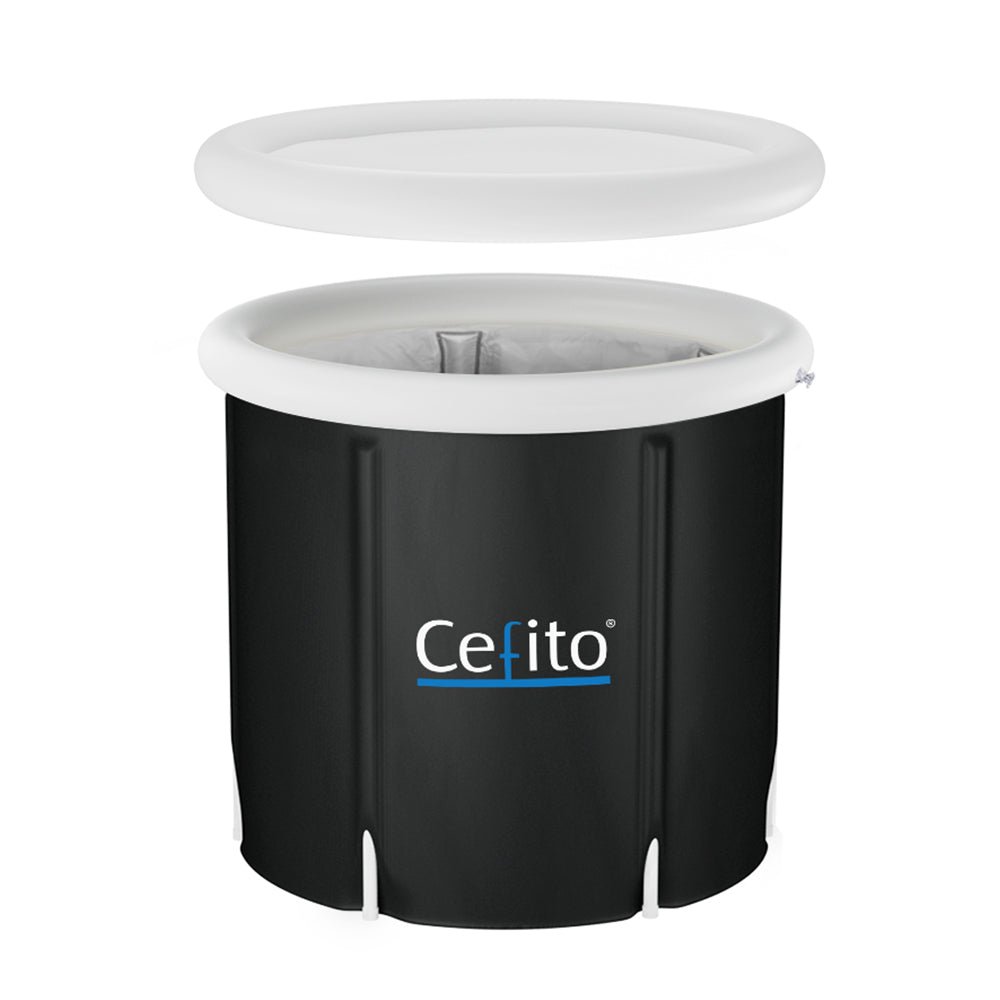
Weisshorn 300L Insulated Tub — 75×75cm
The same 300 litres and the same build in the tightest footprint of the range. Pick it if floor space is the constraint.
300 L · 75 x 75cm · ICE-TUB-75X75-BK · three-layer insulated · pump, cover, drain tap and repair kit · 12-month warranty · $49.95 to $57
LARGEST CAPACITY
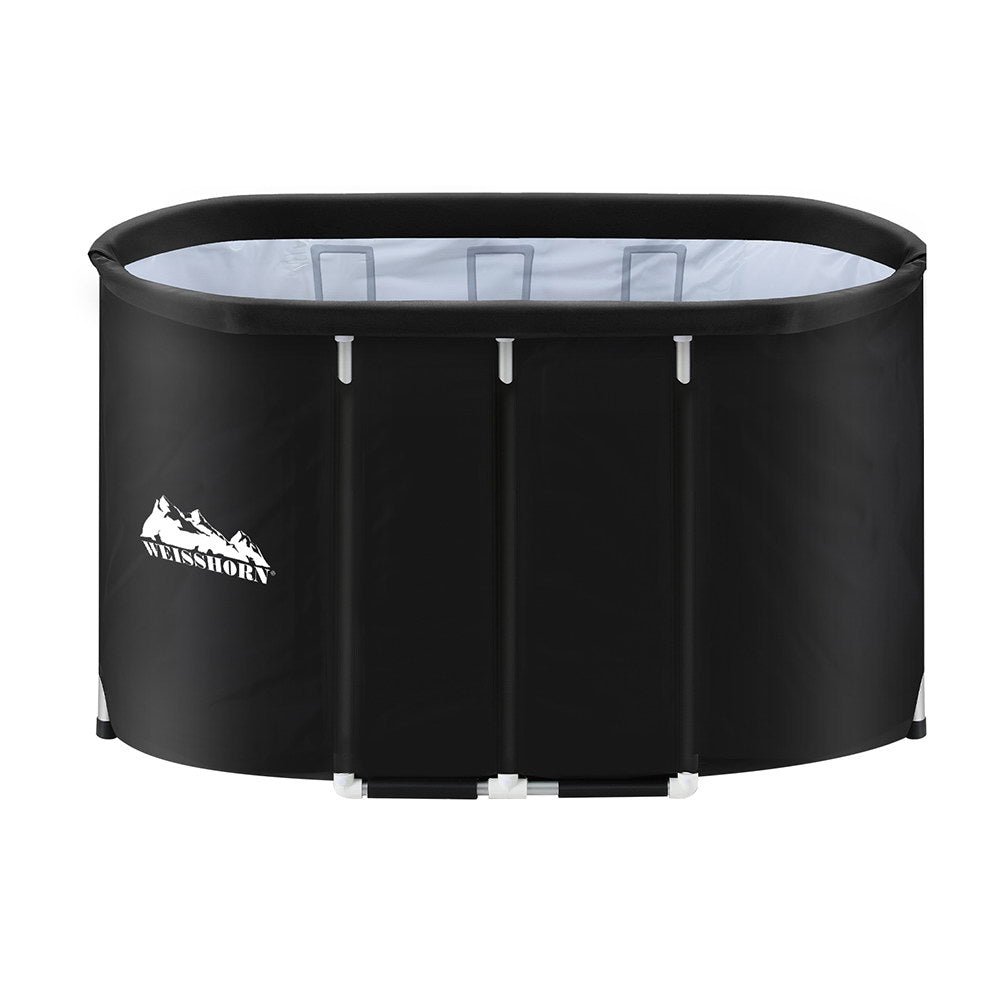
Weisshorn 500L Tub — 120×70×70cm
The only model you can lie down in. Best kept indoors or in deep shade, because nothing in its spec insulates it.
500 L · 120 x 70 x 70cm · ICE-TUB-120X70X70-BK · PVC only, no insulation stated · no pump listed · seating cushion and cover · 12-month warranty · $97
How we evaluated this
- Compared every specification field on all four Australian listings against every other listing for the same SKU. Two contradictions came out of that, both covered below.
- Grouped verified buyer reports into themes rather than cherry-picking the flattering ones. The pool is small, roughly five ratings across the 300L models, and we’ll say plainly what that does and doesn’t tell you.
- Calculated the ice requirement from first principles, using water volume, the specific heat of water and the latent heat of fusion of ice. Nobody selling these tubs publishes that figure.
- Checked live stock and pricing against Bureau of Meteorology climate averages for the ambient conditions these tubs have to fight.
What actually turns up
One flat parcel, about the size of a large sleeping bag, weighing a bit over three kilos. Inside: the folded tub, an accessories bag with the legs and drain fittings, a hand or foot pump on the 300L models, the fabric cover, a repair patch kit, and a user manual.
Setup is the part owners are happiest about. Inflate the wall, screw in the legs, attach the drain tap, fill from the garden tap. Buyer reports describe it as quick and fuss-free, with no assembly puzzle and nothing that needs a second person.
Filling 300 litres from a standard garden tap takes roughly 15 to 20 minutes. Draining through the tap and hose is slower than you’d like but it does the job, and the bottom drain hole helps you get the last of it out when you want the tub dry. Cleaning gets consistent praise too. Smooth interior, nothing to trap grime, wipe and rinse.
So the mechanical side of ownership is sorted. It’s the thermal side that isn’t.
The three-layer insulation claim, and where it stops
Here’s the first contradiction in the range, and it’s the one that decides which model you buy.
The three 300L tubs are all listed as Oxford cloth, pearl cotton and PVC, with three-layer insulation stated in the features. The 500L tub is listed as PVC. That’s it. No pearl cotton, no Oxford outer, and no insulation layers stated anywhere in its specification. The biggest tub in the range is also the thinnest-walled one, which is the reverse of what the pricing implies.
Why does that matter more here than it would in, say, Wales? Because ambient heat is the opponent. Bureau of Meteorology averages put Perth’s mean February maximum at 31.7°C and Brisbane’s at 30.2°C, and those are averages, not the days you’ll actually want a plunge. A dark PVC shell sitting on hot concrete in that is absorbing energy from the air, from the ground and from direct sun at the same time.
Three-layer construction doesn’t refrigerate anything. Nothing in this range does. What insulation buys you is time, and time is the whole currency of an ice-only tub. It’s the difference between a window long enough to talk yourself into getting in, and watching the temperature climb while you stand there in your bathers negotiating with yourself. Our ice bath temperature guide covers what range you’re aiming for and how long you can realistically hold it.
On the 500L model you’re asking the same ice to cool two-thirds more water through a wall with no stated insulation. More volume, less protection, same climate. That works against you twice. There’s one honest reason to buy it anyway, and we’ll get to it.
The ice maths nobody puts on the listing
One owner report sums up the single most common complaint about these tubs: no matter how much ice you think you need, you need more. That’s not a build fault. It’s arithmetic, and it applies to every uninsulated or lightly insulated 300L tub on the market, Weisshorn included.
So let’s do the sum properly, because nobody selling these will.
Water carries 4.186 kilojoules of heat per kilogram per degree. Melting ice absorbs 334 kilojoules per kilogram, and then that melt water has to warm up to your target as well. Run 300 litres starting at a realistic Australian summer tap temperature of 25°C:
| Target temp | Ice needed (300 L) | Ice needed (500 L) |
| 15°C (cool soak) | ~25 kg | ~42 kg |
| 10°C (mild plunge) | ~50 kg | ~84 kg |
| 5°C (proper plunge) | ~71 kg | ~118 kg |
Fifty kilos of ice. That’s ten of the big supermarket bags to hit 10°C, and fourteen to hit 5°C, and those figures assume a perfectly insulated tub with zero heat coming back in from the air, the sun or the slab. Does that sound like a sustainable weekly habit? For most people, no. In a real backyard in February you’ll need more than that, and you’ll need it again tomorrow.
Now you can see why one owner reported giving up and buying a chest freezer instead. That’s a rational response to the numbers, not an overreaction. Two or three plunges a week at bagged-ice prices will pass the cost of the tub inside a month, and then keep going.
Two things make the maths survivable. Start with cold water rather than warm, which in most of the country means filling in the early morning or from a tap that’s been running in shade. And accept a higher target. The evidence for cold water immersion reducing muscle soreness comes from studies using immersion in the roughly 10 to 15°C band, not from anyone chasing 2°C, and the Cochrane review on cold water immersion for muscle soreness is worth reading before you decide 5°C is compulsory. A 12°C tub you get into four times a week beats a 4°C tub you can’t afford to run.
If ice logistics start to grate, and for most regular users they do, that’s the point where a chiller stops sounding extravagant. We went through what’s actually available here in our roundup of ice bath chillers in Australia, including which units have a readable review pool and which don’t.
Build quality, and the valve
3.3 kilos of fabric and PVC holding 300 kilos of water. Physics says that works fine, and for most owners it does. But it doesn’t leave much margin, and buyer reports reflect that.
This tub feels flimsier in the hand than the product photos suggest, and some user reported a leak near the valve. One report isn’t a pattern, and we’re not going to inflate it into one. But it lines up with what the repair kit in every box is quietly telling you: this is inflatable construction, punctures and seal failures are part of the deal, and the manufacturer expects some.
The counterweight: owners who liked theirs really liked it, describing it as good quality for the money and stable to climb in and out of. At $50 to $64 that’s a fair trade. You’re not buying a tub that will still be going in 2036.
The cover is the weakest part of the design
Every model includes a cover, and the cover is where owner feedback is sharpest.
It sits flat on top with no skirt down the sides. So dirt, leaves and general backyard debris blow in around the edges rather than being shut out, which means the water needs changing or treating more often than it otherwise would. Is that a deal-breaker? No. One owner flagged exactly this and was fair about it, noting it just means cleaning more frequently. Annoying rather than ruinous, but it’s the sort of thing you only find out after you’ve bought.
Be clear on what the cover is and isn’t. It’s a debris cover, not an insulated lid. It’ll slow evaporative loss and keep sun off the surface, both of which help, but it isn’t doing the job a rigid foam lid does on a proper plunge tub.
If you’re leaving water in between sessions, and most people do rather than tipping 300 litres down the drain daily, read our guide to keeping cold plunge water clean first. Filtration and sanitiser matter more here than on a well-sealed tub, precisely because of that cover gap.
Legs and footprint: how to actually choose between the three 300L models
This is the second contradiction, and it’s the reason we’ve changed the advice we’d have given six months ago.
The support leg count on these tubs is not reliably documented. One retailer’s feature list gives eight legs for the 70 x 80cm and 80 x 80cm models and six for the 75 x 75cm. But the descriptive paragraph on all three of those same listings says six. And elsewhere the 80 x 80cm is described as having six. The same SKU, three different numbers, depending on which field you read.
So don’t buy on leg count. You can’t trust the figure, and we’re not going to pretend we can resolve it from a desk. If it matters to you, ask the retailer to confirm against the box before you order.
Choose on footprint instead, which is the one dimension every listing agrees on:
- 75 x 75cm is the smallest square. Pick it if floor space is tight, and note it’s usually the cheapest of the three as well.
- 70 x 80cm is the oblong. Slightly more shoulder room in one axis, slightly less in the other. It suits a narrow spot beside a wall or fence.
- 80 x 80cm is the roomiest of the 300L trio. If you’re broad across the shoulders or you just don’t want to sit folded, this is the one, and the price gap over the other two is small.
All three hold the same 300 litres and use the same stated three-layer build. Performance between them is identical on paper. If you’ve been going back and forth for a week, stop. Measure your spot, pick the one that fits, move on.
Real-world use
Something owners kept mentioning that the marketing doesn’t: these tubs get used for more than hard cold plunging.
Sitting in one at 18°C with no ice at all, at the end of a 35-degree day, is a popular use. So is sitting quietly in cool water for ten minutes as a meditation spot. That’s not a compromise, it’s a legitimate reason to own one, and it’s a much easier reason to justify $57 than a heroic sub-5°C protocol you’ll abandon in three weeks.
On siting, the small footprint opens up options a rigid tub doesn’t. One owner keeps theirs in a shower recess, which solves filling, draining and splash in one move, and is a clever answer for a unit or townhouse with no yard. Indoors also removes most of the ambient heat problem, which is the single biggest thing working against these tubs. Another owner keeps theirs as emergency cold water storage for summer power outages, which is a use no product page will ever list and a reasonable second job for something that folds into a cupboard.
What doesn’t work in practice: moving it around. Set it up somewhere it can live. Dragging a filled tub is a puncture waiting to happen and dragging an empty one across abrasive ground isn’t much better. Also don’t plan on sharing it. These are single-occupant tubs, and the 300L models have you sitting knees-up with your feet tucked, not stretched out.
Pros and cons
Pros
- Cheapest realistic entry into cold water immersion in Australia at $49.95 to $64 for a 300L tub
- Filling, draining and cleaning all get consistent praise from owners, and the drain tap plus bottom drain hole combination works
- Three-layer Oxford, pearl cotton and PVC construction on all three 300L models, which is more wall than the cheapest tubs on the market offer
- Setup takes minutes, needs no tools and needs no second pair of hands
- 3.3kg packed, so it folds away into a cupboard between seasons instead of occupying a corner of the yard all winter
- Repair kit, cover and inflation pump included rather than sold separately
- 12 month warranty on all four models, backed by Australian Consumer Law on top
Cons
- Holding a plunge temperature is expensive and awkward. Around 50kg of ice to get 300 litres to 10°C, before ambient heat gain
- The 500L model has no stated insulation at all, despite being the largest and dearest in the range
- The cover has no side skirt, so debris gets in and water needs treating or changing more often
- Build feels lighter than the photos suggest, with at least one report of a valve leak on first use
- Documented leg count contradicts itself across retailer listings for the same SKU
- Review pool is tiny, around five ratings across the 300L models, so there’s no long-term durability record to lean on
How it compares to the alternatives
At this price the competition is other inflatable tubs, not chillered plunges. Three worth weighing up.
Kmart Portable Ice Bath, around $45. Cheaper, and half the water at 150 litres in a 72cm diameter, 73cm tall barrel. Half the volume means roughly half the ice, which is a real advantage nobody talks about. It also means less room and a shallower sit. Pick Kmart for the lowest possible spend and the ability to walk a faulty one back into a store, which is worth more than it sounds with inflatable goods. Pick the Weisshorn for the extra 150 litres and the three-layer wall. Our Kmart ice bath review goes through it in detail.
Advwin 376L multi-layer, around $70 on sale from $109.90. The closest direct rival, and the one that puts real pressure on Weisshorn. More water at 376 litres, a multi-layer wall, an 80 x 75cm footprint, and sold through major Australian chain retailers rather than dropship storefronts. Pick the Advwin for more volume at a similar spend with a big-chain returns counter behind it. Pick the Weisshorn if it’s discounted below the Advwin on the day, which happens often enough to be worth checking both.
A rigid insulated barrel, from around $1,097. A different purchase entirely, and the honest comparison for anyone who’s read the ice maths above and blanched. Rigid insulated walls hold temperature far longer, take a proper fitted lid, and don’t puncture. Twenty times the price. Pick a barrel if you’re committed and plunging several times a week, and our Primal Ice ice bath review covers what that money buys. Pick Weisshorn if you don’t yet know whether you’ll still be doing this in six months, which is the more honest position for most first-time buyers.
For a wider view across price brackets, our best portable ice baths roundup covers the budget end and best ice baths in Australia spans everything from tubs like this up to chillered units.
Who should buy it
Buy a 300L Weisshorn ice bath if you’re testing the waters, and $57 is a cheap way to find out whether you’ll keep doing this before committing four figures. Buy it if you plunge once or twice a week rather than daily, so the ice bill stays tolerable. Buy it if you’re plunging indoors, in a garage or somewhere shaded, because ambient heat is the main thing working against you. Buy it if you want a cool-down soak more than a sub-5°C protocol. And buy it if storage matters, because 3.3kg folded into a cupboard beats a permanent fixture in a small yard.
Who should skip it
Skip it if you’re plunging three or more times a week. The ice cost overtakes the tub inside a month and you’ll end up buying a chiller or a freezer anyway, so start there. Skip it if you need full-length immersion outdoors in a warm climate, because the only model long enough to lie down in is the one with no insulation. Skip it if you want a tub that’ll take a decade of hard use, or if you need a documented durability record before you’ll spend, because the review pool is far too small to give you one. Skip it if two or more people will use it. And skip it if you have a cardiovascular condition and haven’t spoken to your GP, which has nothing to do with Weisshorn and everything to do with cold water.
Price, warranty and availability
Every model was in stock and shipping within Australia when we checked on 17 August 2026.
Pricing is the thing to watch, because the same SKU moves a lot depending on where you buy your Weisshorn ice bath in Australia. The 75 x 75cm model ranged from $49.95 to $57 on the day we checked, and the 80 x 80cm from $55.95 to $64. That’s a 15 to 20 percent spread on an identical tub. These are discount and marketplace listings, promotions rotate constantly, and the cheapest seller this week isn’t reliably the cheapest next week. Our buttons point to the listing that’s been consistently competitive on these SKUs, but open a second tab and check on the day. Costs you nothing.
Warranty is 12 months, stated on every listing. Worth knowing that the manufacturer warranty is the floor, not the ceiling: under Australian Consumer Law consumer guarantees a product has to be of acceptable quality and last a reasonable time regardless of what the warranty card says. If a seam splits at 14 months on a tub that’s been used normally, you may still have a claim. Keep your receipt and photograph any fault before you touch it.
Returns depend on the retailer rather than Weisshorn, and change-of-mind returns on an inflatable you’ve already filled with water are a hard sell anywhere. Which is the argument for the dry inflate and seam check on day one. Remember too that ice is the real running cost here, not the tub: how much a cold plunge tub costs in Australia breaks down the ongoing side across tub types.
Maintenance and care
- Put a mat, offcut of carpet or foam tile under the base. The floor is where inflatable tubs die, and abrasive concrete is the main culprit
- Dry inflate and check every seam and the valve before the first fill. Faults are far easier to deal with before there’s 300 litres involved
- Treat the water if you’re leaving it in. The cover doesn’t seal at the sides, so debris gets in, and untreated water goes cloudy inside a week in warm weather
- Rinse and dry fully before folding it away. Storing damp PVC is how you get mould in the creases
- Keep it out of direct sun when not in use. UV is hard on PVC and the cover only shades the top surface
- Don’t over-tighten the drain tap. Plastic threads strip, and that’s a leak you can’t patch with the repair kit
Realistic lifespan with that care: two to four summers of regular use. Longer if it lives indoors, shorter if it lives on a sunny slab.
Final verdict
| Category | Score |
| Build quality | 2.5 / 5 |
| Temperature holding | 2.5 / 5 |
| Ease of use | 4 / 5 |
| Cover and accessories | 2 / 5 |
| Value for money | 4.5 / 5 |
| Overall | 3.1 / 5 |
The Weisshorn ice bath is a specification-driven buy rather than a reputation-driven one, and the specifications say two useful things the product naming doesn’t. The three 300L models insulate and the 500L doesn’t. And nothing in the range, insulated or not, escapes the arithmetic of cooling hundreds of litres with bagged ice in an Australian summer.
Judged as what it is, a $50 to $64 inflatable tub, it earns its score. Easy to fill, easy to drain, easy to clean, easy to put away, and cheap enough that finding out cold plunging isn’t for you costs about the same as a takeaway dinner for two. Judged as a cold plunge system, it isn’t one, and the brand doesn’t really claim otherwise. That’s the short version of this Weisshorn ice bath review: right product, wrong expectations are what sink people.
Buy the 80 x 80cm if you have the room, the 75 x 75cm if you don’t. Treat the 500L as a full-length soaking tub for shaded or indoor use rather than a bigger ice bath, because on the manufacturer’s own numbers that’s what it is. And go in expecting to buy more ice than you planned, because every owner who’s been disappointed by one of these was disappointed by exactly that.
Reviewed and updated 17 August 2026. Pricing, stock and specifications checked on that date across all Australian listings.
Frequently Asked Questions
Is the Weisshorn ice bath any good?
For the money, yes, with limits. The three 300L models use a three-layer Oxford, pearl cotton and PVC wall, fill and drain easily, and owners rate ease of use highly. The limits are temperature holding and build weight. At $50 to $64 it’s a reasonable way to find out whether you’ll stick with cold water therapy before spending real money.
How much ice does a 300L ice bath need?
Around 50kg to bring 300 litres from 25°C down to 10°C, and roughly 71kg to reach 5°C. That’s ten to fourteen large supermarket bags, and it assumes no heat coming back in from the air or the ground. In an Australian summer backyard you’ll need more. Starting with cold water rather than warm cuts the requirement significantly.
Which Weisshorn ice bath size is best?
The 80 x 80cm 300L model if you have the floor space, because it’s the roomiest of the three insulated tubs and only a few dollars more. The 75 x 75cm if space is tight, and it’s usually the cheapest. All three 300L models hold the same water and use the same stated build, so choose on footprint rather than performance.
Is the Weisshorn 500L ice bath insulated?
No insulation is stated on its listing. The 500L model is described as PVC only, without the pearl cotton and Oxford cloth layers the three 300L tubs list. It’s the largest and dearest tub in the range and the one least equipped to hold temperature, so treat it as a full-length soaking tub for shaded or indoor use.
Do Weisshorn ice baths leak?
Most don’t, but the review pool is small so there’s no reliable failure rate to quote. One owner reported a leak near the valve on first use. Every model ships with a repair kit, which tells you punctures are expected with inflatable construction. Dry inflate and check the valve and seams before your first fill.
How long does a Weisshorn ice bath last?
Expect two to four summers of regular use with reasonable care. Keep it off abrasive concrete, out of direct sun when idle, and dry it fully before storing. The 12 month manufacturer warranty is the minimum, and Australian Consumer Law guarantees may extend your rights beyond it if a tub fails early under normal use.
Where can you buy a Weisshorn ice bath in Australia?
Weisshorn ice bath tubs are sold through several Australian discount and marketplace retailers rather than a single brand store, and all four models were in stock as of 17 August 2026. Prices for identical SKUs vary by 15 to 20 percent between sellers, so check more than one listing before ordering.
Disclaimer: This review is based on independent research, specification cross-checking and verified buyer reports. Always consult a healthcare professional before starting cold water therapy, particularly if you have cardiovascular conditions or other health concerns.
