
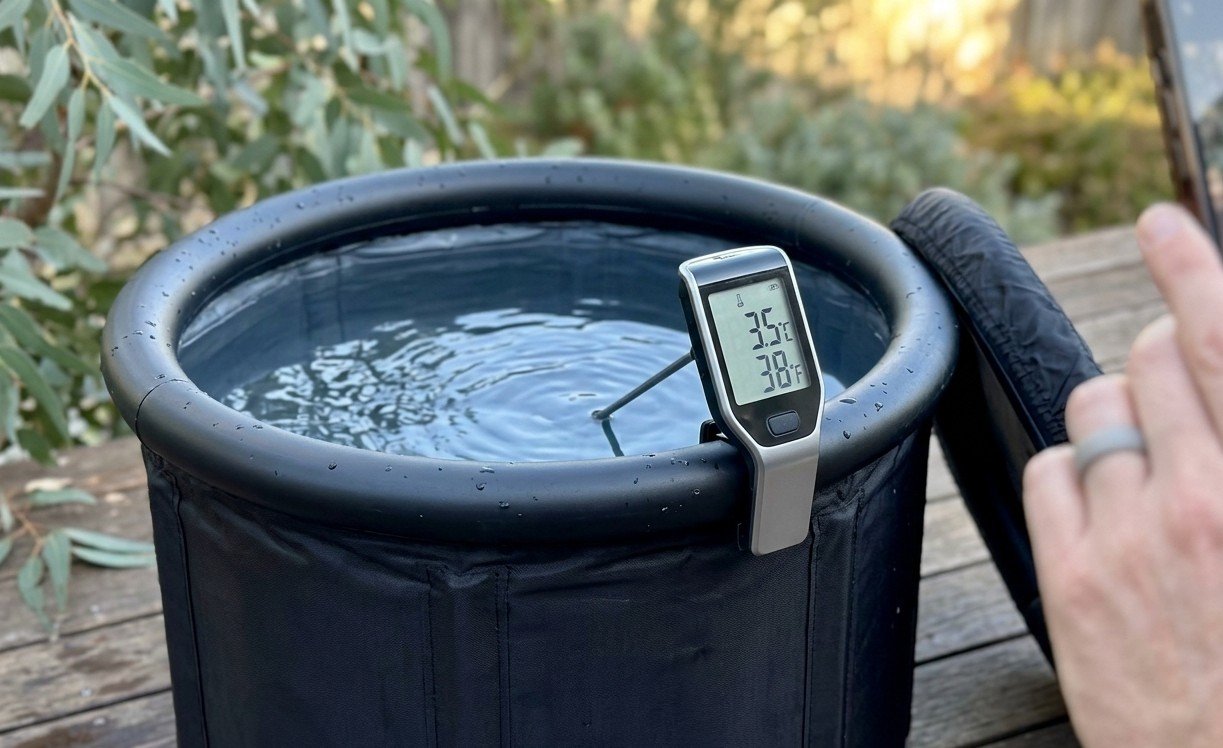
For most people the best ice bath thermometer is a plain floating dial on a cord. It reads continuously, needs no battery or pairing, costs a few dollars, and it is the option owners stay happiest with. Wireless and solar-powered units look like the obvious upgrade and are the ones that most often disappoint.
An ice bath thermometer is any device that tells you the actual water temperature of a cold plunge, and there are four types: a floating dial or digital unit on a cord, a wireless sensor with a remote display, a solar-powered floating unit, and an infrared gun that reads the surface without touching the water. Only the first three read the water your body is actually sitting in.
The reason simple wins here is physical rather than a matter of taste. Every extra component you put in permanent contact with cold water is another way in for moisture, and cold kills small batteries faster than anything else in the kit. Condensation inside a sealed housing, connection dropouts, and a solar panel that never sees enough light in a shaded backyard are the three failures that come up again and again in owner reports across this category.
And the device matters less than how you use it. Water in an unstirred tub stratifies, so the surface can sit two to three degrees above the water around your chest, especially just after ice goes in. Stir first, measure at chest depth, and give the thermometer two minutes to settle. That single habit changes your reading more than any upgrade on this page.
The short answer
Buy a large-dial floating thermometer on a cord. Add a wireless unit only if your tub lives outdoors and walking out to check it is genuinely annoying. Skip solar unless the tub sits in full sun. Use an infrared gun as a supplement, never as your only device, because it cannot read below the surface. Accuracy within one degree is plenty; consistency is what you actually need, so you can repeat a session rather than guess at it. Measure at chest depth, after stirring, after two minutes.
Ice bath thermometers compared
| Thermometer | Type | Reads below surface | Power | Best for |
|---|---|---|---|---|
| Jiawu High Accuracy Floating | Floating dial | Yes | None | Most people, most tubs |
| Water Temperature Gauge for Ice Bath | Floating digital | Yes | Coin cell | Purpose-built for plunge use |
| MEIJUN Wireless Digital | Wireless, remote display | Yes | Battery | Outdoor tubs checked from inside |
| ECOWITT WN34D | Wireless sensor | Yes | Battery | An existing weather station setup |
| TempPro Infrared | Infrared gun | No | Battery | Instant surface checks, spotting stratification |
| Wireless Floating IBS-P01R | Wireless, remote display | Yes | Battery | Widely sold, but weak owner feedback |
| Solar Powered Floating | Solar floating | Yes | Solar | Full-sun tubs only |
Why does ice bath temperature need measuring at all?
Cold water immersion is dose-dependent, and the dose is temperature multiplied by time. Eleven degrees for five minutes is a different session to fifteen degrees for five minutes. If you are guessing at the number, you are not following a protocol, you are just getting cold.
The gap between a session that leaves you sharp and one that leaves you shivering for an hour is often two or three degrees, which is well inside the range you cannot judge by feel. Perceived cold shifts with air temperature, how recently you trained and how acclimatised you are, so your own sense of it is the least reliable instrument you own. Our ice bath temperature guide sets the targets by goal, and how long to stay in an ice bath covers the other half of the equation.
There is a safety argument as well. The cold shock response is driven by how cold the water actually is, not how cold you assumed it was. If you are adding ice by eye to a tub that started at Brisbane tap temperature in February, you can overshoot badly, and Australian tap water temperature by city shows how far the starting point moves across the year.
What types of ice bath thermometer are there?
Four, and they are not interchangeable.
- Floating dial or digital. Sits in the water on a cord and reads continuously. Nothing to pair, nothing to charge, and cheap enough to replace without thinking about it. For a plunge tub this is almost always the right answer.
- Wireless with a remote display. A floating sensor transmits to a screen indoors. Genuinely useful if your tub lives outside and you want to know it has reached temperature before you walk out in a towel. Also the segment where reliability falls away, so buy carefully.
- Solar powered. Sold as never needing batteries. In practice the panels are small and a plunge tub belongs in shade, which is exactly where a solar panel cannot work. A unit that will not hold charge is worse than one that takes a coin cell.
- Infrared gun. Reads surface temperature instantly without touching the water. Useful for a quick check and the fastest way to spot stratification, because you can read the surface, stir, and read again. It cannot see below the surface, so it complements a floating unit rather than replacing one.
The thermometers worth considering
Two of the eight below are included as warnings rather than recommendations, and they are labelled as such. We would rather name the popular option you are going to come across anyway and tell you what owners report about it.
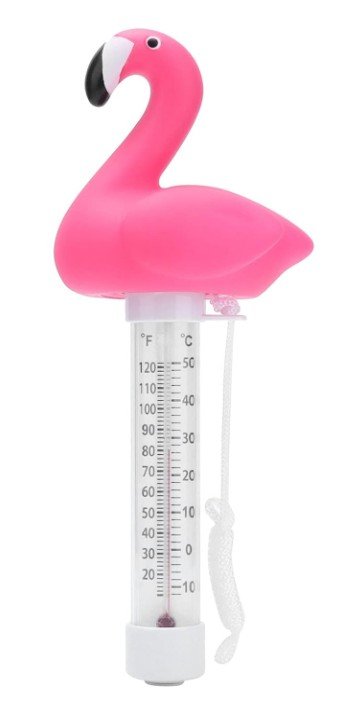
BEST FOR MOST PEOPLE
Jiawu High Accuracy Floating Pool Thermometer
A large dial on a cord, readable while your eyes are watering. No pairing, no charging, nothing to fail. The default choice for a plunge tub, and the option owners stay happiest with.
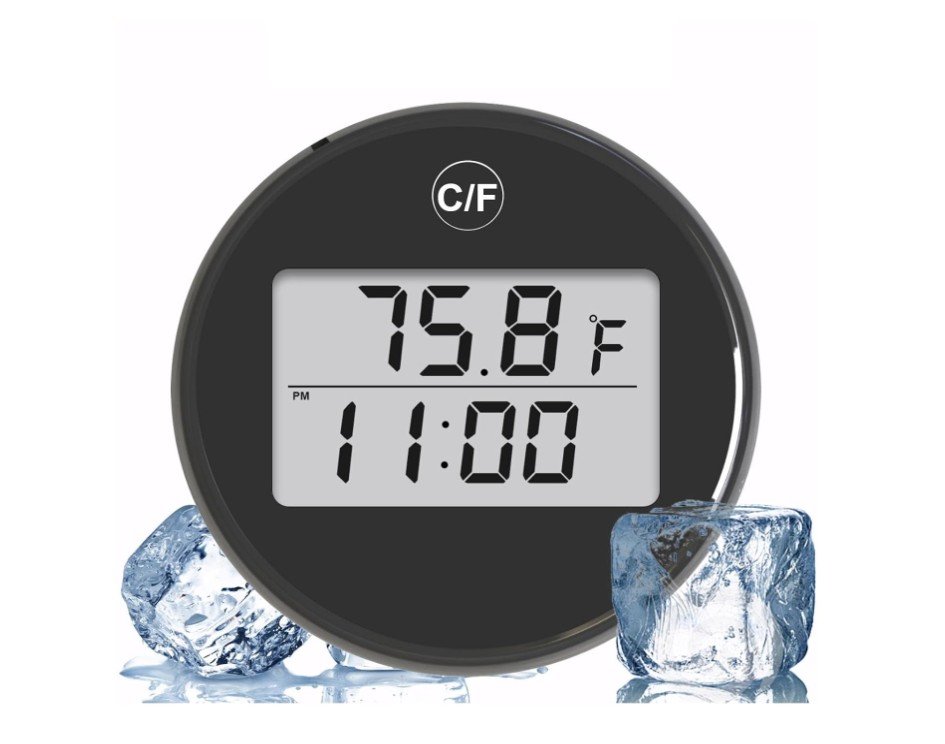
PURPOSE-BUILT FOR PLUNGE USE
Water Temperature Gauge for Ice Bath
Sold for ice baths rather than adapted from pool gear, waterproof and dustproof. The most widely owned unit in this category, which also means the deepest pool of owner feedback to draw on.
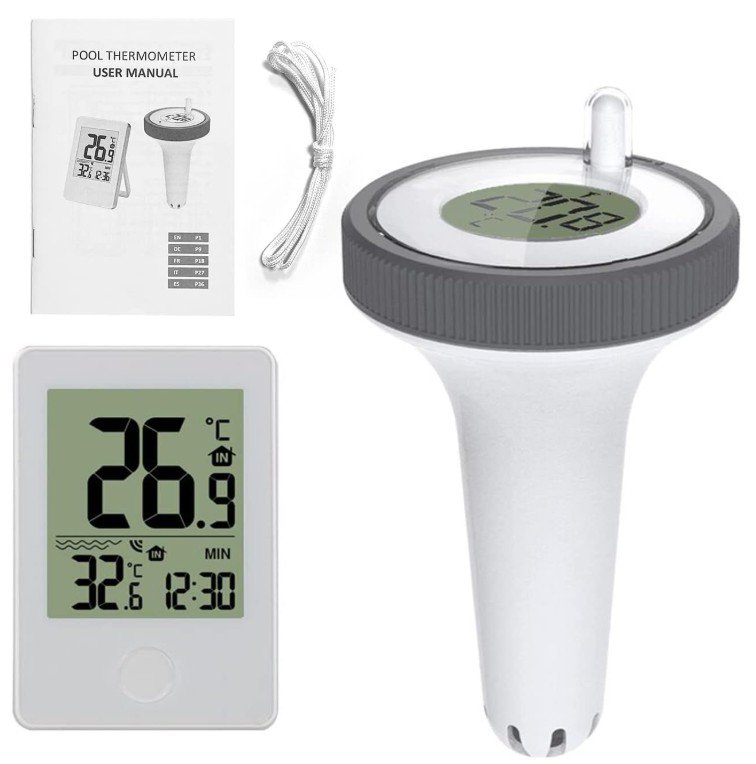
BEST WIRELESS OPTION
MEIJUN Wireless Digital Pool Thermometer
Floating sensor in the tub, display indoors. Solves a real problem if your tub is outside and you want to know it has hit temperature before you walk out in a towel. The more dependable end of a patchy segment.
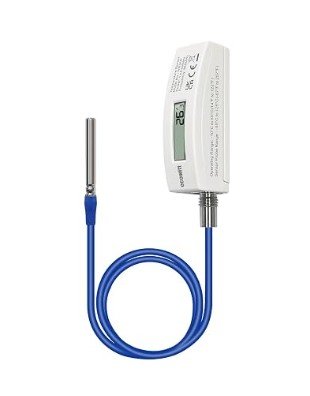
FOR AN EXISTING WEATHER STATION
ECOWITT WN34D Thermometer with LCD
Suits pool, pond and general liquid use, and folds into a sensor network you already run. Worth it only if you have that setup already, otherwise you are paying for integration you will not use.
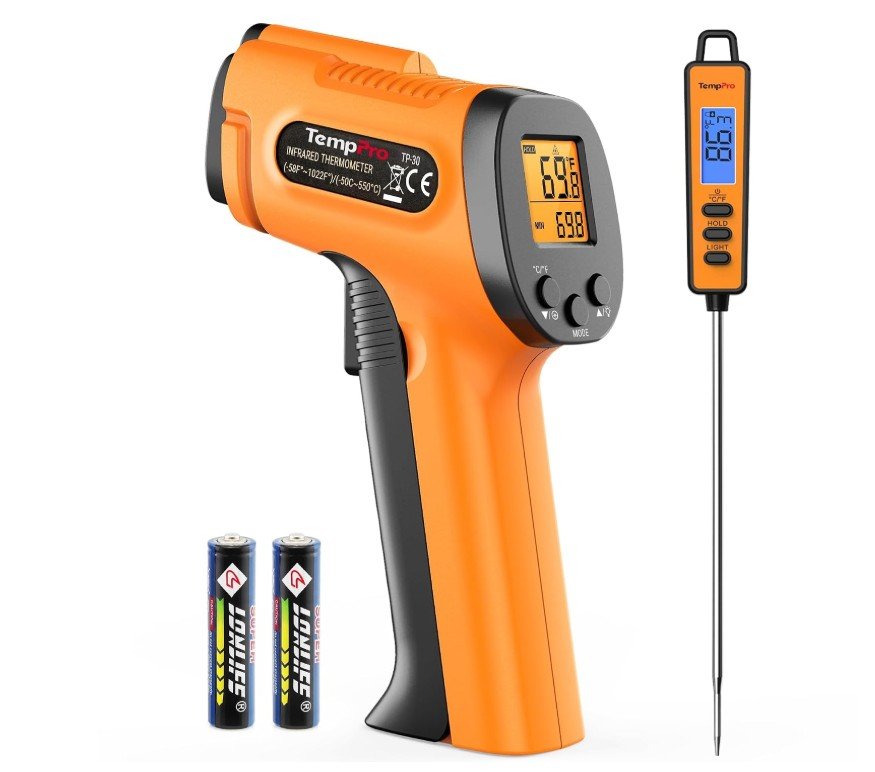
INSTANT SURFACE CHECKS
TempPro Infrared Thermometer
Reads the moment you point it, which makes it the fastest way to catch stratification: read the surface, stir, read again. It cannot see below the surface, so treat it as a second device rather than your only one.
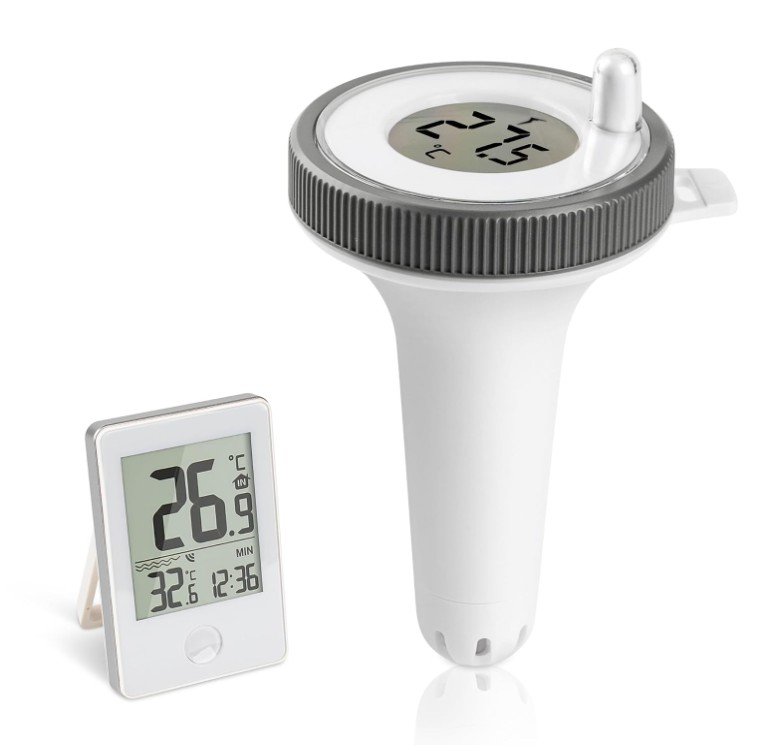
WIDELY SOLD, WEAK FEEDBACK
Wireless Floating Pool Thermometer IBS-P01R
Listed because it sells well and you will come across it. Owner reports cluster on two things: the connection dropping out, and condensation forming inside the housing. Worth knowing before you buy rather than after.
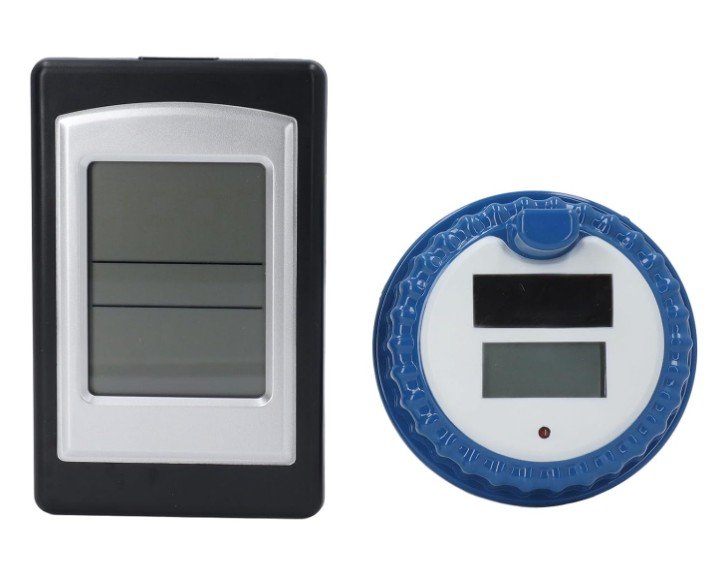
SKIP UNLESS YOUR TUB IS IN FULL SUN
Solar Powered Floating Pool Thermometer
Solar reads as a convenience upgrade and mostly is not. The panels are small, and a plunge tub belongs in shade, which is precisely where they never gather enough light to hold charge.
Buying direct from a plunge brand
Some plunge brands sell their own floating thermometers, which is worth knowing if you are already ordering a tub or accessories and would rather not add a separate delivery.
How accurate does an ice bath thermometer need to be?
Within about one degree is plenty, and people fixate on this far more than they should. You are comparing today’s session against last week’s, not against a laboratory standard, so what you need is a unit that reads the same way every time. A thermometer that is consistently half a degree out is more useful than one that is perfectly accurate on Tuesday and a degree and a half out on Friday.
Two things affect your reading more than the sensor does.
- Stratification. Water settles into layers, so the surface can sit two to three degrees above the water around your chest, especially in an unstirred tub just after ice has gone in. Stir before you read, or your number flatters you.
- Settling time. Give it two minutes. A unit dropped in and read immediately is still reporting something close to the air temperature it was sitting in a moment ago.
If you run a chiller, its built-in display reads the water passing through the unit rather than the water around you, and those two numbers diverge when flow is restricted by a clogged filter. Our guides to chiller sizing in Australia and ice bath filters and pumps cover why that happens.
Our take
Buy a plain floating thermometer with a dial you can read while your eyes are watering, and spend the difference on ice.
If your tub lives outdoors and walking out to check it is genuinely annoying, a wireless unit solves a real problem. Go in knowing the failure rate in that segment is higher, and buy from the better-regarded end of it. Skip solar entirely unless your tub sits in full sun, which for most Australian setups is the opposite of where you want it anyway.
A thermometer is the cheapest item in this whole hobby and the one that makes everything else measurable. It belongs in the first order you place, ahead of every other accessory. Our guide to ice bath accessories sets out the rest of the buying order, and if you are still choosing a tub, best ice baths in Australia is the place to start.
Frequently Asked Questions
What temperature should an ice bath be?
Most evidence-based protocols sit between 10 and 15°C. Colder is not automatically better, and the duration needs to come down as the temperature does. Royal Life Saving Society Australia puts 10 to 15°C as the generally safe range for most people and recommends starting with short exposures and building up.
What is the best thermometer for an ice bath?
A plain floating dial on a cord. It reads continuously, has no battery or pairing to fail, and costs a few dollars. Wireless units are worth it only if your tub is outdoors and you want to check the temperature from inside. Solar-powered units are the weakest option, because a plunge tub belongs in shade and the panels never gather enough light.
Do I really need a thermometer for an ice bath?
If you are following any structured protocol, yes. Perceived cold is unreliable and shifts with air temperature, how recently you exercised and how acclimatised you are. Without a reading you cannot repeat a session or progress it deliberately, and you can overshoot badly when adding ice by eye.
Where should you measure ice bath temperature?
At roughly chest depth, after stirring, after the thermometer has had two minutes to settle. Surface water can read two to three degrees warmer than the water your torso sits in, particularly just after adding ice, so a surface reading flatters the number.
How accurate does an ice bath thermometer need to be?
Within about one degree is plenty. Consistency matters more than absolute accuracy, because you are comparing your sessions to each other rather than to a calibrated reference. A unit that is reliably half a degree out is more useful than one that drifts.
Are wireless pool thermometers worth it for a cold plunge?
Only if your tub is outdoors and checking it means a trip you would rather avoid. Owner feedback across the wireless and solar segment runs well below that for simple floating units, with connection dropouts, condensation inside the housing and cold-weather battery failure the recurring complaints.
Can you use an infrared thermometer for an ice bath?
For a quick surface check, yes, and it is the fastest way to spot stratification by reading before and after stirring. It cannot read below the surface, so treat it as a supplement to a floating thermometer rather than a replacement.
Why does my chiller show a different temperature to my thermometer?
A chiller’s built-in display reads the water passing through the unit, not the water around your body. The two diverge when flow is restricted, usually by a clogged filter cartridge. Trust the thermometer in the tub, and treat a widening gap between the two readings as a sign the filter needs cleaning.
Some links on this page are affiliate links and we may earn a commission at no extra cost to you. It does not affect what we recommend, and two of the units listed above are included as warnings rather than recommendations.
Disclaimer: Always consult a healthcare professional before starting cold water therapy, particularly if you have cardiovascular conditions or other health concerns.
